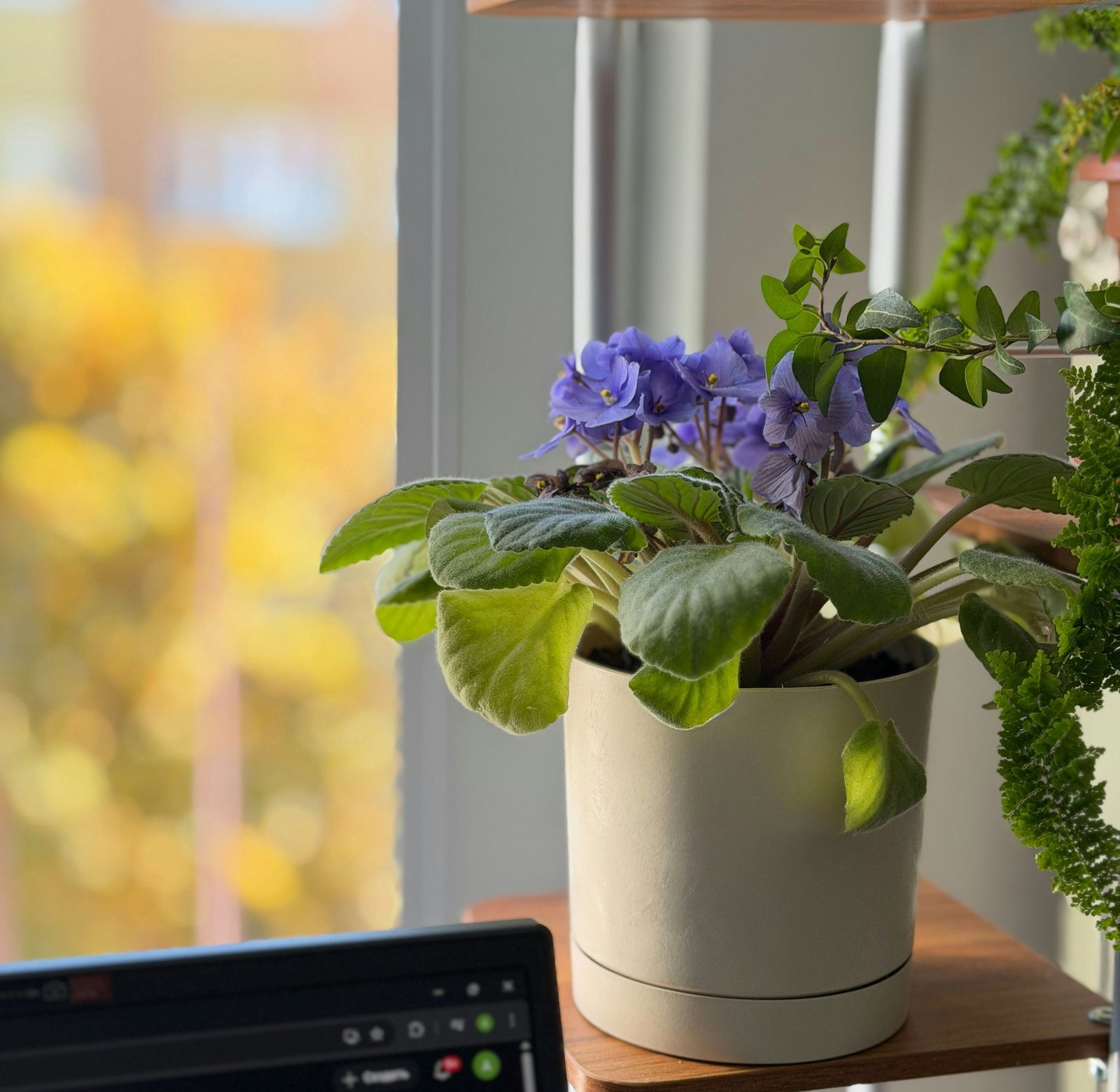
The African Violet is a beloved windowsill classic, famous for producing clusters of pretty purple, pink, or white flowers almost year-round, even in the middle of winter. Compact, tidy, and safe around cats and dogs, it fits on any bright sill and rewards a little attention with near-constant color — which is why it's been a treasured houseplant for generations.
Native to eastern Africa, it has a few particular preferences — especially about how it's watered — that have given it a slightly fussy reputation. In truth, once you know the couple of tricks (chiefly: keep water off the fuzzy leaves and water from below), it's quite manageable and remarkably rewarding.
Caring for Your African Violet
Light. Bright, indirect light is the key to flowering. An east or north window is often ideal. Too little light gives lots of leaves but no blooms; harsh direct sun scorches the delicate foliage. Many enthusiasts grow them under grow lights for reliable, year-round flowering.
Water. This is the crucial part. African violets are prone to spotting and rot if water sits on their fuzzy leaves or crown, so water from below: set the pot in a tray of water and let the soil wick moisture up for a half hour, then drain. Alternatively, water carefully at the soil line, keeping the leaves dry. Use room-temperature water, as cold water can spot the leaves. Keep the soil lightly moist, not soggy.
Humidity. They enjoy moderate humidity but dislike water on the foliage, so raise humidity with a pebble tray or humidifier rather than misting.
Soil and potting. Use a light, well-draining mix (specialty African violet mixes exist) in a small pot with drainage. They bloom best when slightly pot-bound, so don't over-pot.
Feeding. Feed with a diluted bloom-supporting fertilizer regularly during active growth to fuel the flowers.
Common Problems & Fixes
No flowers. Most often not enough light, or too large a pot. Give brighter indirect light and keep it slightly pot-bound. Over-fertilizing with the wrong balance can also favor leaves over blooms.
Pale rings or spots on leaves. Usually from cold water or water sitting on the leaves. Use room-temperature water and keep the foliage dry.
Crown or root rot / mushy center. Overwatering or water pooling in the crown. Water from below and keep it lightly moist, not wet.
Leggy growth with a long neck. Older plants develop a bare stem over time; they can be repotted deeper to refresh them.
Curled or tight center leaves. Can indicate cold, over-fertilizing, or pests (cyclamen mites).
Pests. Watch for mealybugs and, less visibly, cyclamen mites, which distort new growth.
Propagating Your African Violet
African violets are famously easy and satisfying to propagate from a single leaf, which is part of how they've been passed among growers for so long.
Choose a healthy, mature leaf and cut it with an inch or two of its stem (the petiole). Insert the stem into moist, light potting mix or a small container of water at a slight angle. Keep it warm and in bright, indirect light, and be patient — over several weeks, roots form, and then tiny plantlets emerge at the base of the leaf stem.
Once the little plantlets have grown a few small leaves of their own, gently separate them and pot them individually. A single leaf can produce several baby plants, making this one of the more rewarding propagations for a windowsill grower.