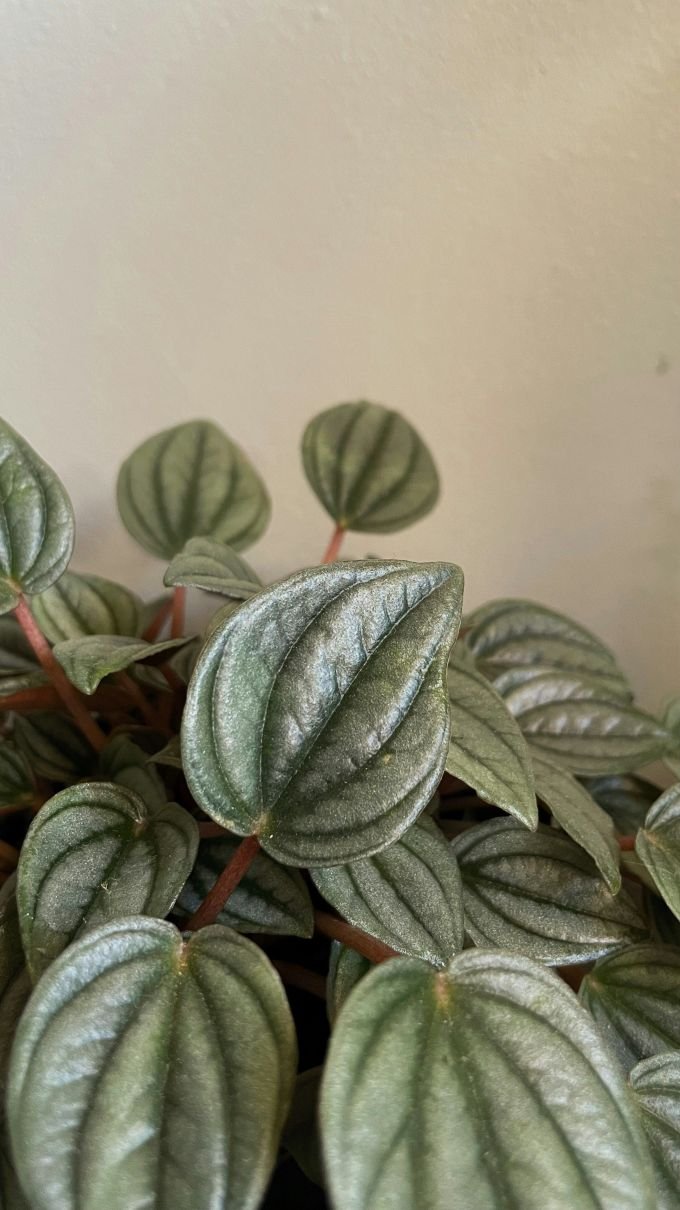
Peperomia is a big, varied group of small houseplants, and almost all of them share the same appealing traits: compact size, thick semi-succulent leaves, easygoing care, and — importantly for many households — they're non-toxic to cats and dogs. The varieties range widely, from the rippled dark leaves of the watermelon peperomia to the round, coin-like leaves of others, so there's a peperomia to suit almost any taste.
Because their leaves store some water, peperomias sit somewhere between a typical foliage plant and a succulent in their care. That makes them forgiving and well suited to small spaces, desks, and shelves — a great choice for beginners and pet owners alike.
Caring for Your Peperomia
Light. Medium to bright indirect light. Peperomias do well in the moderate light of many rooms and even tolerate some lower light, though the more colorful varieties keep their patterns best in brighter (indirect) light. Avoid harsh direct sun.
Water. Water when the top 2 inches of soil dry out, then drain. Because their leaves hold water, peperomias tolerate — and even prefer — drying out a bit between waterings, and they're far more likely to suffer from overwatering than under. When in doubt, wait.
Humidity. Average household humidity is fine, though many enjoy a little extra. They're not demanding here.
Soil and potting. A well-draining potting mix with drainage holes; a chunky mix suits their smallish root systems. They like to be a little snug and don't need frequent repotting.
Feeding. Feed lightly a couple of times during the growing season; they don't need much.
Common Problems & Fixes
Yellowing or mushy leaves, drooping despite wet soil. Overwatering — the main peperomia pitfall. Let the soil dry out more and check drainage.
Wrinkled, limp leaves. The thirst signal; a good drink usually restores them, thanks to their water-storing leaves.
Dropping leaves. Often overwatering or cold stress.
Faded patterns (in colorful varieties). Usually too little light.
Leggy growth. Reaching for light; pinch back to keep them compact.
Pests. Generally hardy; occasionally mealybugs or fungus gnats (the latter a sign of soil kept too wet).
Propagating Your Peperomia
Many peperomias are wonderfully easy to propagate from leaf or stem cuttings, similar to how you'd propagate an African violet or succulent.
For leaf propagation, take a healthy leaf (with a bit of its stem, if possible), and place the cut end in water or moist soil. A tiny new plant will eventually form at the base. You can also cut a larger leaf and root the sections.
For stem cuttings, snip a stem with a few leaves and root it in water or moist soil. Keep cuttings warm and in bright, indirect light. Rooting can take a few weeks, and it's a low-effort, satisfying way to make more of these charming little plants.