⚠Toxic to cats & dogs.
Arrowhead Plant is poisonous if chewed or eaten —
keep it out of reach of pets and children.
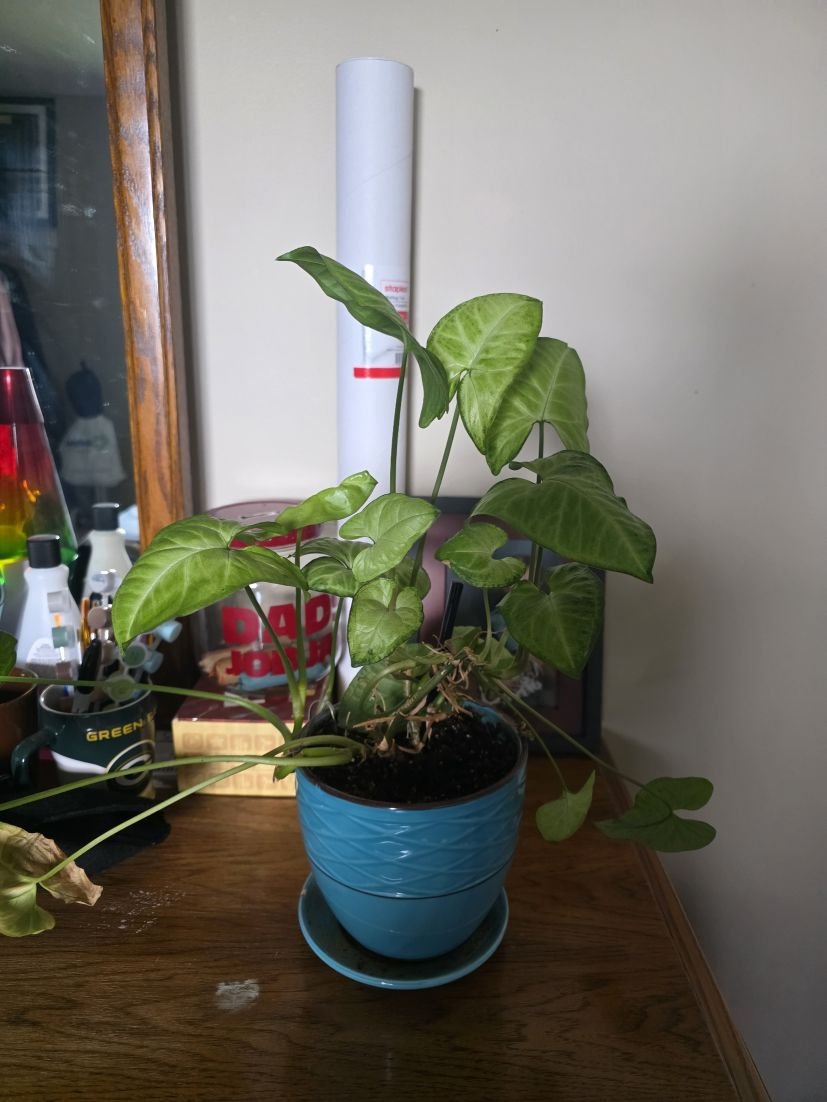
Arrowhead Plant begins as a leafy clump with pointed leaves and two basal lobes. With age, its stems lengthen and climb or trail. Mature climbing growth can develop more deeply divided leaves, so a change in leaf shape is not automatically a problem.
Green, cream and pink forms share the same basic growth pattern. This guide covers Syngonium podophyllum rather than treating each color as a separate plant. ASPCA lists the species as toxic to cats and dogs because of insoluble calcium oxalates.
Caring for Your Arrowhead Plant
Light. Give bright indirect light. Protect pale foliage from harsh sun, while avoiding a deeply shaded position that produces weak, stretched growth.
Water. Check the mix and water once the top inch has dried. Soak evenly and drain. In slower winter growth, expect a longer interval rather than continuing a summer calendar.
Temperature and humidity. Keep it warm, ideally above 15 degrees C, and away from cold drafts. Moderate to higher humidity suits the foliage.
Soil and feeding. Use a free-draining houseplant mix and a pot with drainage holes. Apply a balanced liquid fertilizer at the label rate while the plant is actively growing.
Climb or trail. Provide a support for taller growth, allow stems to hang, or prune above nodes for a bushier plant. Wear gloves when cutting and collect the irritating sap and scraps safely.
Common Problems & Fixes
Drooping leaves. Check the compost before watering: dryness and root damage in wet soil can both cause wilt.
Pale or scorched patches. Check exposure to strong direct sun, especially after moving the pot.
Long gaps between leaves. More filtered light and selective pruning may improve future growth.
Lobed new leaves. Older climbing plants naturally change leaf shape. Compare growth stage before assuming a misidentification.
Sticky leaves or fine webbing. Inspect for aphids, mealybugs and spider mites. Isolate the plant while addressing an infestation.
Propagating Your Arrowhead Plant
Take a healthy stem cutting with a node and at least one leaf. Remove foliage that would be buried, place the node in an airy, moist rooting mix, and keep the cutting warm in indirect light.
A node is the important part: a leaf blade alone is not the usual way to produce a new vine. Root several cuttings for a fuller pot, but leave enough space for airflow. Keep fresh cuttings and sap away from children and pets.