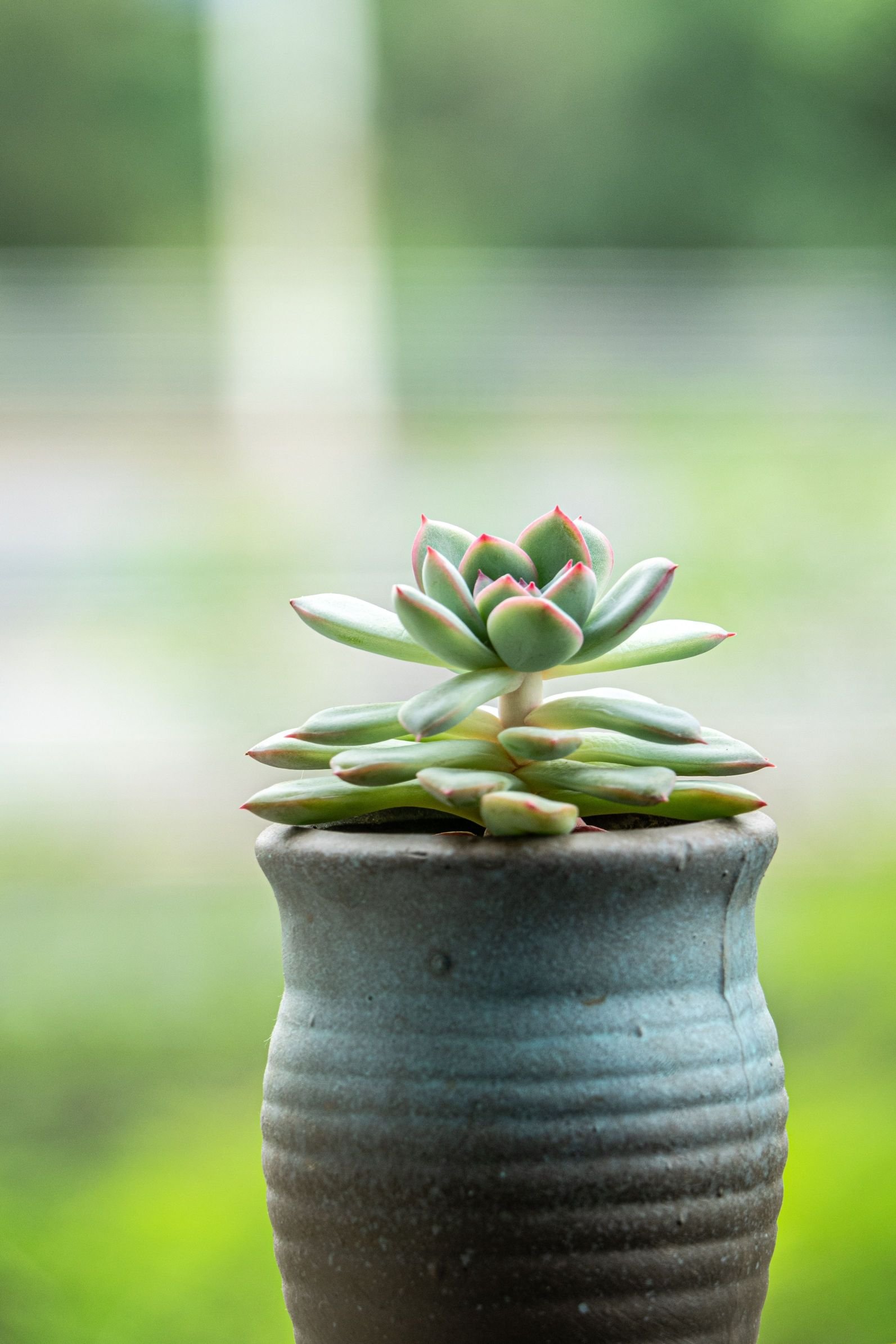
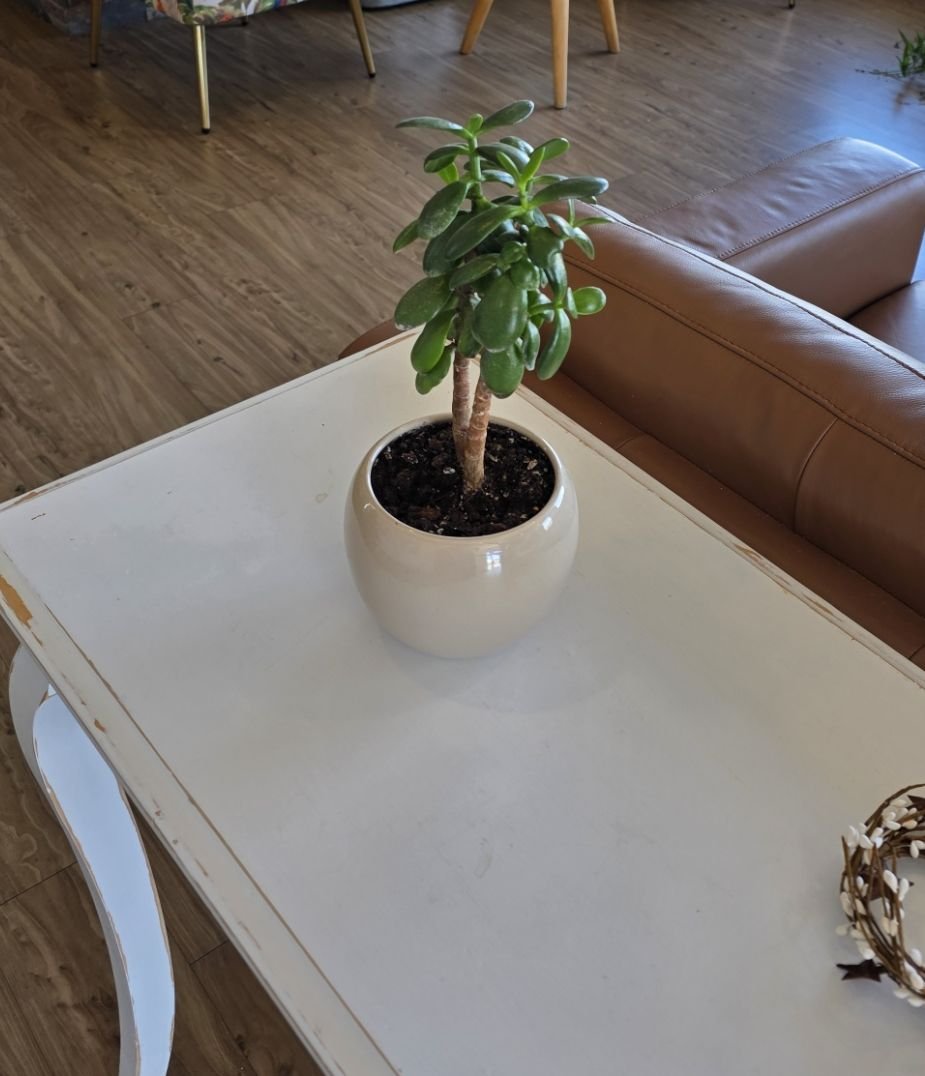
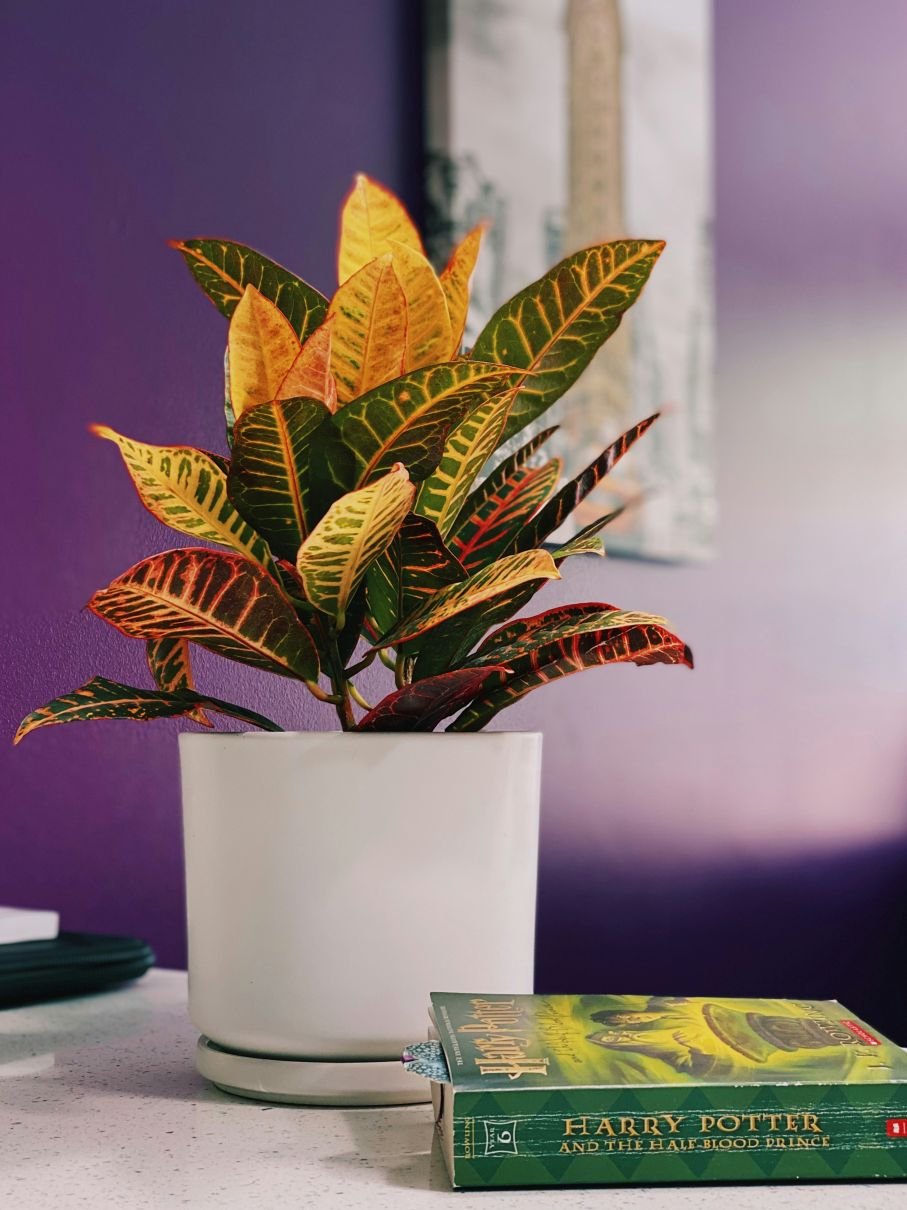
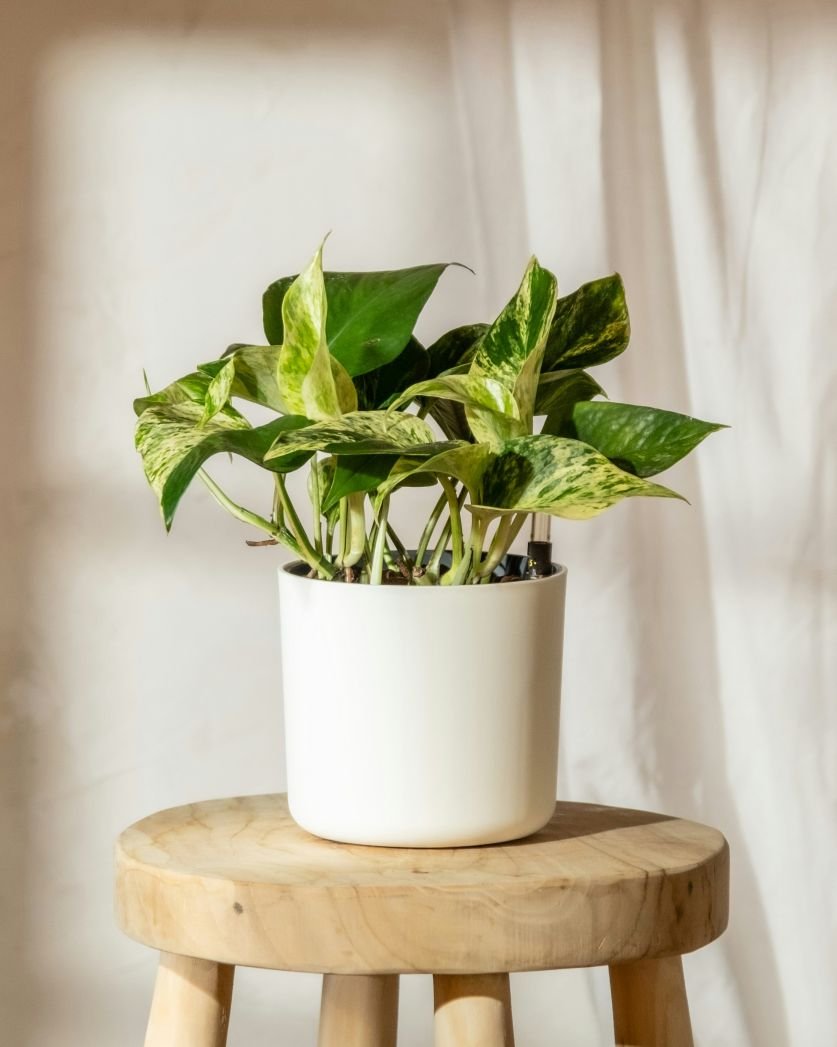
Echeverias grow in tight, geometric rosettes that can look like flowers carved from blue, green, lavender or pink wax. The genus includes many species and hybrids, so colors, leaf shapes and mature sizes vary widely. Their shared indoor challenge is light: a rosette that looked compact at purchase can stretch quickly in a dim room.
Give an Echeveria abundant light and a pot that dries promptly, and it is a relatively low-maintenance succulent. Give it ordinary low-light houseplant treatment with frequent watering, and the leaves can soften or the center can rot. The ASPCA lists Echeveria species as non-toxic to cats and dogs, though any plant material may still upset a pet that eats it.
Caring for Your Echeveria
Light. Use a very bright window with several hours of direct sun where practical, acclimating gradually. Strong light helps preserve tight rosettes and leaf color. Rotate the pot so growth stays even.
Water. Let the potting mix dry fully, then water deeply and drain. Avoid leaving water trapped in the center of the rosette; watering the soil rather than the leaves helps prevent crown damage. Reduce watering during darker, cooler periods.
Soil and potting. Use a gritty succulent mix and a pot with drainage. An oversized pot stores too much wet soil around the roots. Choose an unglazed container if you need the mix to dry faster.
Humidity and feeding. Normal dry indoor air is fine. Feed lightly in active growth; heavy fertilizer may encourage soft, stretched leaves.
Leaf coating. Many Echeverias have a powdery protective bloom on the leaves. Touch the leaves as little as possible, since fingerprints can permanently mark that coating.
Common Problems & Fixes
Stretched stem and widely spaced leaves. Etiolation from too little light. Move gradually to a brighter spot; a stretched rosette cannot compress again, but the healthy tip can be rerooted.
Yellow, translucent or mushy lower leaves. Too much water or poor drainage is likely. Check the roots and crown; remove damaged leaves and save a healthy top if rot has begun.
A few dry lower leaves. Normal as a rosette grows a stem. Remove only when fully dry.
Brown, papery sun patches. Sudden strong sun can scorch a plant grown indoors or in shade. Increase exposure over several days.
Dark, soft center. Crown rot can follow water sitting among the leaves; keep the rosette dry when watering.
Pests. Watch for mealybugs in leaf joints and around the roots.
Propagating Your Echeveria
Offsets are the most dependable way to propagate many Echeverias. Let a small side rosette grow until it has some size, then detach it cleanly, allow any cut to dry briefly and pot it in gritty mix. Water lightly only after it begins to establish roots.
Many species also grow from a whole leaf removed cleanly at its base. Lay the leaf on top of dry succulent mix and wait for roots and a tiny rosette; do not bury the leaf or keep it wet. Some hybrids are less cooperative, so take several leaves. A stretched plant can also be beheaded: let the cut rosette callus and root it as a stem cutting, while the remaining stem may form offsets.