⚠Toxic to cats & dogs.
Croton is poisonous if chewed or eaten —
keep it out of reach of pets and children.
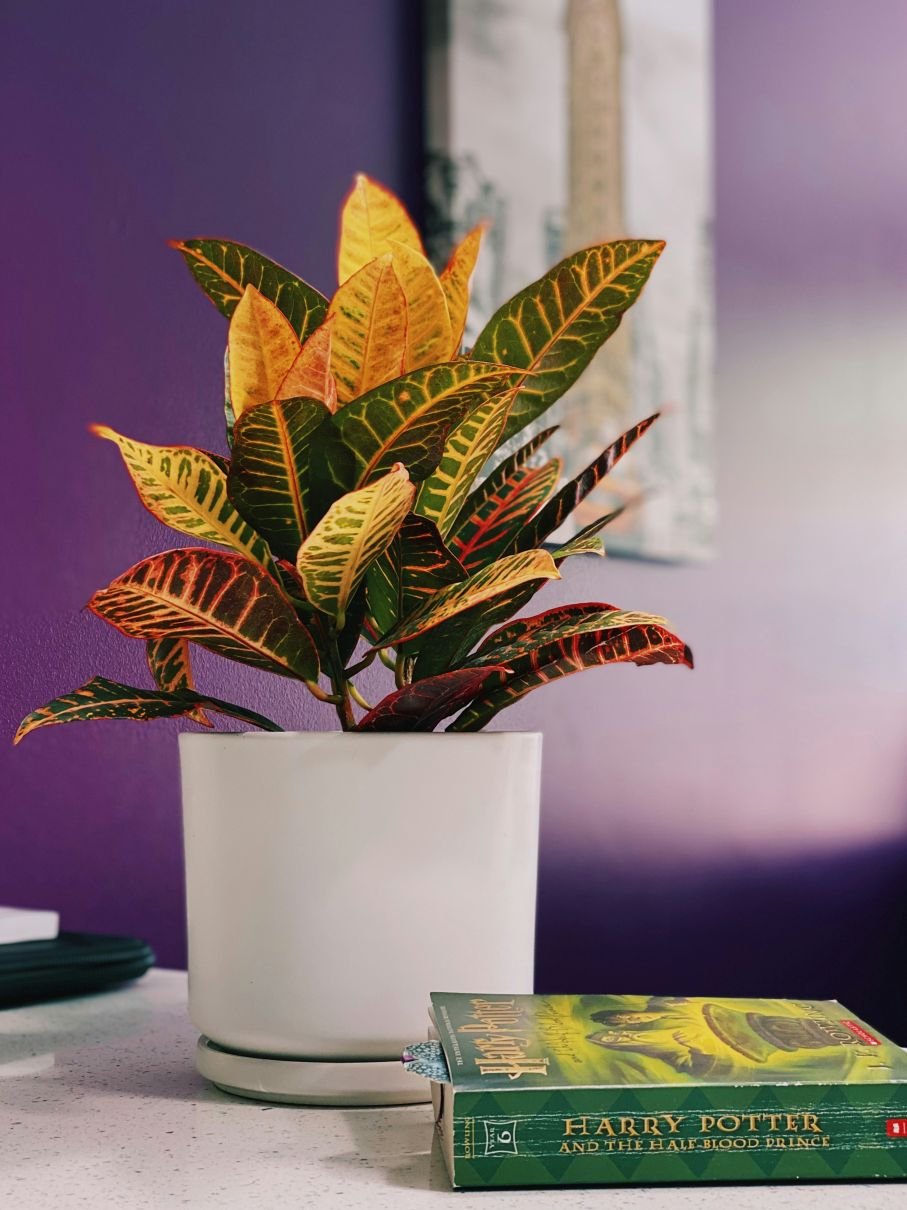
The Croton is one of the most colorful houseplants you can grow — its thick, leathery leaves come splashed and veined in fiery reds, oranges, yellows, and greens, often all on the same plant. It brings a tropical, almost stained-glass vibrancy to a room. That color is the whole appeal, and the key to keeping it bright is, above all, light.
Native to tropical Southeast Asia and the Pacific, the croton wants warmth, humidity, and plenty of bright light. It has a reputation for dropping leaves dramatically when it's unhappy — especially after being moved — but once it's settled in a good spot, it's a stunning, long-lasting plant. Crotons are toxic to pets.
Caring for Your Croton
Light. Bright light is essential for the coloring — including some direct sun, which many other houseplants would resent. In too little light, the vivid reds and oranges fade back toward plain green. A bright windowsill is ideal. This is a rare houseplant where more light directly means more color.
Water. Water when the top inch of soil dries out, keeping it lightly moist but not soggy. Crotons don't like to dry out completely, but they also dislike waterlogged roots. Underwatering is a common trigger for leaf drop.
Humidity. High humidity keeps a croton happiest; dry indoor air can cause leaf drop and crispy edges. A humidifier or pebble tray helps, particularly in winter.
Soil and potting. A well-draining potting mix with drainage holes.
A note on stability. Crotons dislike sudden change — a new location, a draft, or a big shift in conditions can trigger leaf drop. Find a good bright spot and try to leave it there.
Feeding. Feed during the growing season with a balanced fertilizer to support that vigorous, colorful growth.
Common Problems & Fixes
Dropping leaves. The croton's signature protest, usually caused by a change — being moved, a cold draft, dry air, or letting it get too dry. Stabilize its conditions, keep humidity up, and it should recover. Some drop after bringing a new plant home is common as it adjusts.
Fading colors / more green. Not enough light. Give it a brighter spot to bring the reds and oranges back on new growth.
Crispy brown leaf edges. Low humidity or underwatering.
Drooping. Check the soil — often thirst, sometimes overwatering.
Pests. Crotons are notably prone to spider mites in dry air; inspect the leaf undersides regularly and keep humidity up.
Propagating Your Croton
Crotons propagate from stem cuttings, though they take a little warmth and patience.
Take a cutting several inches long with a few leaves, and cut below a node. The cut end will release a milky sap; you can rinse or blot it. Root the cutting in water or moist, well-draining soil, and keep it somewhere warm, humid, and bright — warmth really helps croton cuttings root.
Covering the cutting loosely to raise humidity (a clear bag or propagation box) improves success. Roots usually form within a few weeks, after which you can pot it up. Keep new plants warm and out of cold drafts.