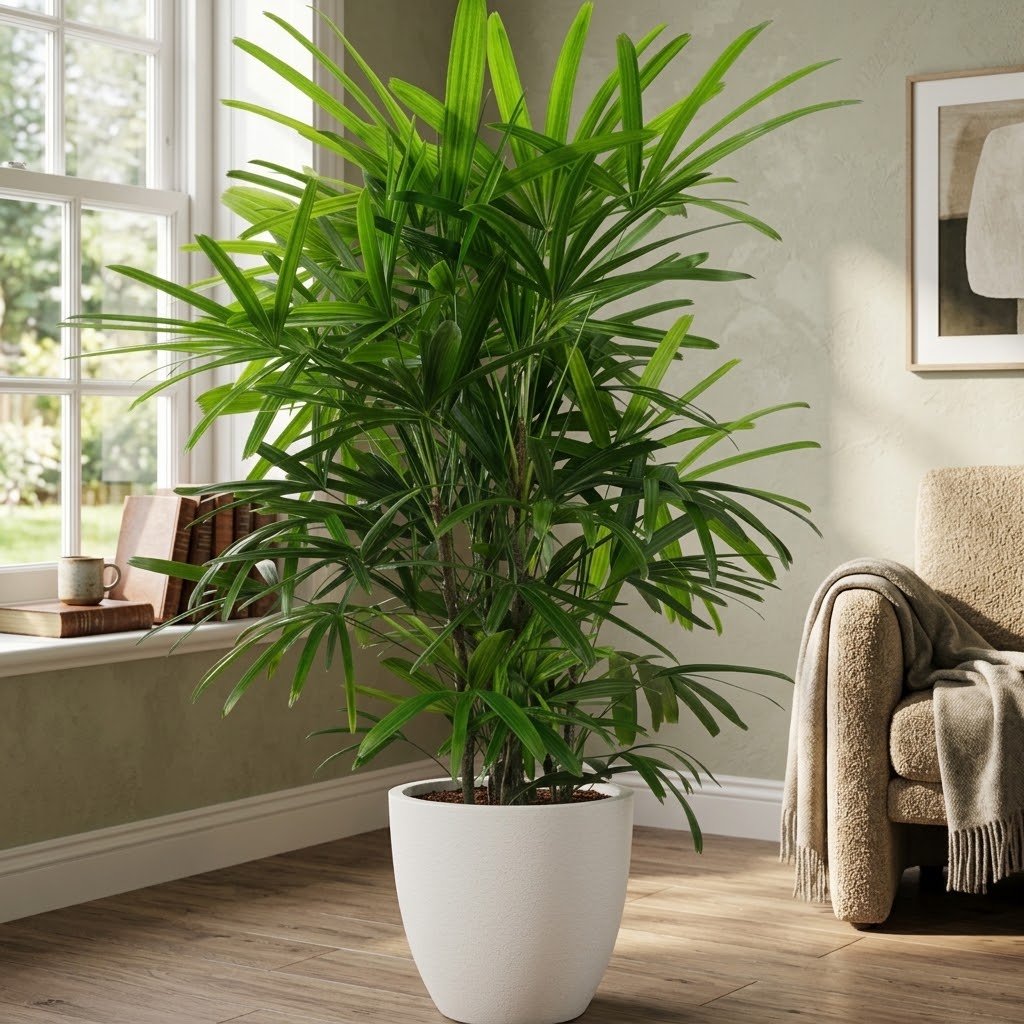
Lady Palm carries broad fans of pleated leaf segments above slender, fibrous stems. Several stems grow together from underground rhizomes, giving it a clustered shape. Its fan leaves offer an easy visual distinction from the feather-like fronds of Areca and Parlor palms.
Rhapis excelsa is slow-growing and adaptable to indoor conditions. The older name Rhapis flabelliformis refers to this species; ASPCA lists Lady Palm under a variant spelling of that older name as non-toxic to cats and dogs. Prevent chewing even on non-toxic plants.
Caring for Your Lady Palm
Light. Bright indirect light supports useful growth, although it tolerates a dimmer position. Lower light also means slower water use. Avoid abruptly exposing indoor-grown leaves to strong direct sun.
Water. Let the surface begin to dry, then water evenly and allow full drainage. Do not leave the pot sitting in a decorative container of runoff. Reduce frequency in winter or low light.
Room conditions. Ordinary indoor humidity is generally adequate. Protect the plant from freezing conditions and prolonged cold. If summering outdoors in shade, bring it inside before nights turn cold.
Potting and feeding. Use a draining houseplant mix. Repot when roots genuinely need space rather than on a fixed annual schedule. Feed during active growth at the label rate.
Grooming. Remove fully dead fronds, keeping healthy green ones. Do not cut the top off a stem to shorten it: palms do not branch from a cut trunk like ordinary woody shrubs.
Common Problems & Fixes
Brown tips. Review inconsistent moisture, accumulated fertilizer salts and dry air. Brown tips do not always mean the plant needs more fertilizer.
Naturally ragged ends. Lady Palm leaf segments have blunt, toothed tips. That repeated shape differs from spreading brown tissue.
Little visible growth. This palm is naturally slow, especially in low light. Check conditions before increasing water or feed.
Sticky leaves or speckling. Look closely for scale, mealybugs and mites, particularly along leaf folds and stems.
Propagating Your Lady Palm
Divide an established multi-stemmed clump during repotting. Choose a section with its own roots and healthy stems, separating the connecting rhizome with a clean tool if necessary.
Keep each division at its previous depth in a pot that fits its roots. Water it in, drain well, and maintain indirect light while it recovers. A loose stem without roots is not equivalent to a rooted division. Seed is possible, but division is usually more useful at home.