⚠Toxic to cats & dogs.
Dieffenbachia is poisonous if chewed or eaten —
keep it out of reach of pets and children.
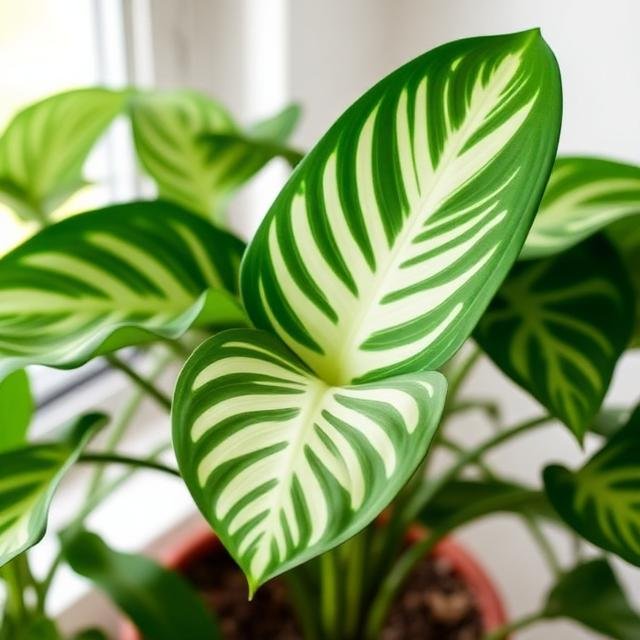
The Dieffenbachia, often called dumb cane, is a lush, leafy plant with large green leaves splashed and speckled in cream and white. It grows quickly into a full, tropical-looking specimen and tolerates ordinary indoor conditions well, which makes it a longtime favorite for filling out a room with easy greenery.
Its nickname comes from a serious quirk worth knowing up front: the sap contains crystals that can cause painful mouth and throat swelling if chewed, temporarily affecting speech — hence dumb cane. It's toxic to people and pets, so it should be kept well away from children and animals who might chew it. Handle it with that in mind and it's an easygoing, rewarding plant.
Caring for Your Dieffenbachia
Light. Medium, indirect light is ideal. Dieffenbachia tolerates lower light but grows more slowly and may lose some of its variegation there. Keep it out of harsh direct sun, which scorches the leaves. Rotating it occasionally keeps growth even, as it leans toward the light.
Water. Water when the top inch of soil dries out, then drain. It likes to stay lightly moist during active growth but dislikes soggy soil. Let it dry a bit more in winter.
Humidity. Appreciates moderate to higher humidity, though it adapts to average household air reasonably well.
Soil and potting. A standard well-draining potting mix with drainage holes. It grows fast and may need repotting every year or two.
Handling. Because of the irritating sap, it's wise to wash your hands after pruning or repotting, and to keep it out of reach of pets and small children.
Feeding. Feed with a balanced fertilizer during spring and summer to fuel its quick growth.
Common Problems & Fixes
Yellowing leaves. Usually overwatering; let the soil dry more and confirm drainage. Some loss of older lower leaves is normal.
Brown leaf edges or tips. Often low humidity, underwatering, or minerals in tap water.
Drooping. Check the soil — either too dry or waterlogged. Cold drafts can also cause drooping, as Dieffenbachia dislikes the cold.
Leggy growth with a bare lower stem. Natural to some degree over time, and worse in low light. You can cut back a leggy cane to encourage bushier growth from below.
Faded variegation. Not enough light; move it a bit brighter.
Pests. Watch for spider mites, mealybugs, and aphids.
Propagating Your Dieffenbachia
Dieffenbachia propagates from stem cuttings, and it's a good way to rejuvenate a plant that's grown a long, bare cane.
You can root the leafy top cutting in water or moist soil. You can also cut the bare cane into sections a few inches long (each containing a node) and lay them in moist soil to sprout — a technique that can turn one leggy plant into several.
Because of the irritating sap, wear gloves or wash up well afterward, and keep cuttings away from pets and kids. Keep them warm and in bright, indirect light while they root, which usually takes a few weeks.