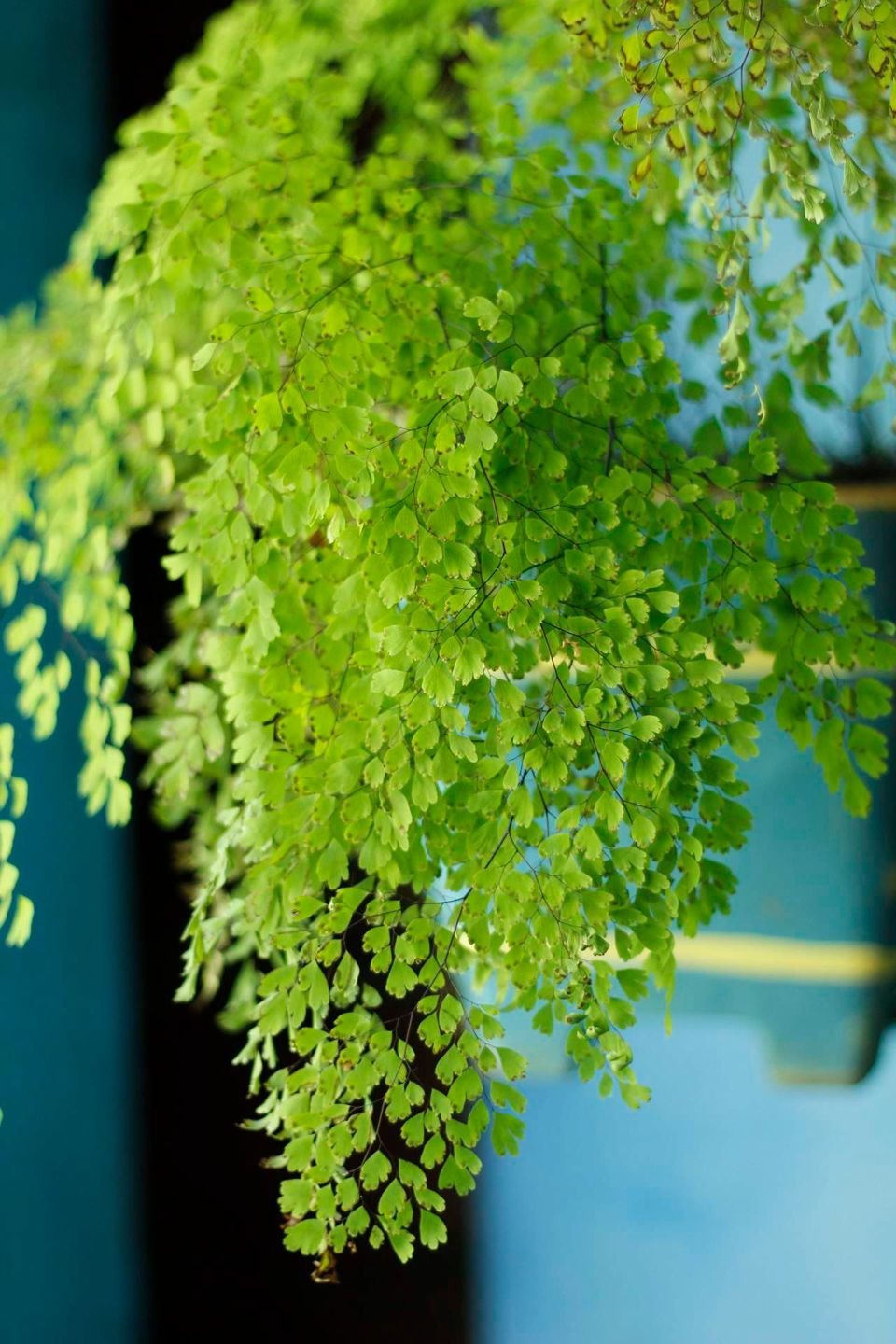
Maidenhair Ferns have an airy look unlike almost any other houseplant: small fan-shaped leaflets float on fine, dark stems. Several Adiantum species are sold under the name, so leaf shape and mature size vary, but the indoor care challenge is broadly similar. They want moisture and humidity without stagnant, waterlogged soil.
This is a plant for someone willing to check it regularly. A fern left dry for days can crisp rapidly; a constantly flooded pot can damage its roots. The reward for that attention is a soft, bright-green texture that looks beautiful in a humid bathroom or grouped with other tropical plants. Because this page covers multiple Adiantum species, its pet-safety flag remains unverified rather than claiming every maidenhair fern is non-toxic.
Caring for Your Maidenhair Fern
Light. Bright indirect light or gentle filtered light supports compact fronds. Direct midday sun can scorch the delicate leaflets, while deep shade slows new growth.
Water. Keep the mix evenly moist, watering as the surface begins to dry. Do not allow the entire root ball to become hard and dry, but drain excess water rather than leaving the pot submerged. Check more often in warm weather and when indoor heating dries the air.
Humidity. High humidity makes the biggest difference to leaf quality. A humidifier or naturally humid room is more reliable than occasional misting, especially through winter.
Soil and potting. Use a moisture-retentive, airy mix with a drainage hole. A smaller pot is easier to keep evenly moist than an oversized one. Repot gently; roots and fronds are delicate.
Temperature and feeding. Keep it away from cold drafts and hot vents. Feed weakly during active growth, since over-fertilizing can damage tender roots and foliage.
Common Problems & Fixes
Fronds crisping suddenly. The root ball may have dried out or the air is very dry. Rehydrate the mix thoroughly, improve humidity and trim dead fronds; new growth can emerge if the crown is still alive.
Brown edges on otherwise green fronds. Often low humidity, irregular moisture or mineral buildup. Review all three before changing several things at once.
Yellowing with soggy soil. Poor drainage or an oversized pot can keep roots too wet. Let the excess drain and inspect the root system if the problem spreads.
Scorched, pale patches. Move out of strong direct sun.
Little new growth. Check light, warmth and root health; a fern recovering from a dry spell may need time.
Pests. Inspect closely for spider mites, mealybugs and scale, which can hide among fine fronds.
Propagating Your Maidenhair Fern
Division is the practical home method for a full Maidenhair Fern. During spring repotting, gently part an established clump so each section has both healthy roots and fronds. Pot divisions into small containers of moist, airy mix and keep them warm, shaded from direct sun and humid while they establish.
Ferns also reproduce from spores on the undersides of mature fronds, but growing them from spores requires clean, consistently humid conditions and patience. They do not make new plants from an ordinary detached leaflet or stem cutting. Avoid dividing a weak or recently dried-out plant until it has resumed healthy growth.