⚠Toxic to cats & dogs.
Yucca Cane is poisonous if chewed or eaten —
keep it out of reach of pets and children.
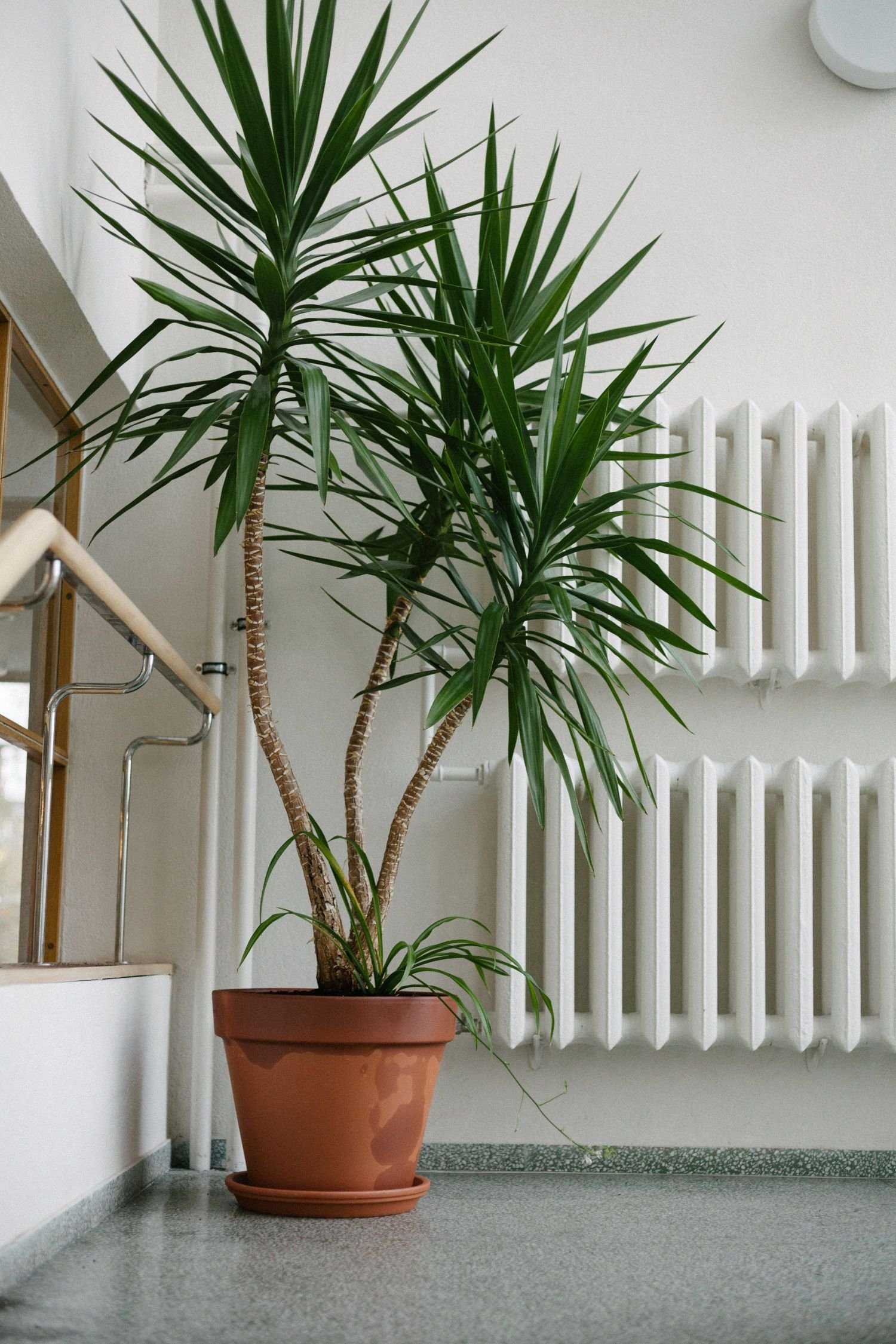
Yucca Cane gives a room an upright, sculptural shape: thick woody canes topped by rosettes of long green leaves. This is usually Yucca gigantea, also sold under its older name Yucca elephantipes. It differs from many outdoor yuccas in having softer leaf tips, but it still needs more light than most foliage houseplants.
The simplest way to keep it healthy is to think of it as a sun-loving, drought-tolerant plant rather than a tropical palm. It can live for years with little fuss in a bright position, while a dim room and wet soil quickly work against it. Yuccas are toxic to cats and dogs if eaten, so place the plant away from animals that chew foliage.
Caring for Your Yucca Cane
Light. Give the brightest indoor position available, including several hours of direct sun where possible. Acclimate a nursery-grown plant to strong sun gradually so its leaves do not scorch. In low light, new leaves become weak and the crown may thin.
Water. Let most of the potting mix dry before watering thoroughly, then empty the saucer. Yucca stores moisture and tolerates a short dry spell much better than continually wet roots. Water less often during winter or in a cool room.
Soil and potting. Use a gritty, freely draining mix and a pot with a drainage hole. A large pot full of dense soil can remain wet around the cane long after the surface appears dry.
Temperature and humidity. Average room humidity is fine. Protect the plant from cold drafts and abrupt temperature swings.
Growth and feeding. Remove only fully brown lower leaves and feed lightly during active growth. A tall, crowded cane can be cut back to stimulate new shoots, but this is a larger pruning job best done in warm, bright conditions.
Common Problems & Fixes
Yellow leaves or a soft cane base. Often a sign that the pot has stayed wet and roots or trunk tissue are rotting. Check drainage and the lower stem promptly; firm healthy cane sections may be saved as cuttings.
Thin, leaning growth. Usually insufficient light. Move gradually to a brighter window and rotate the pot for even growth.
Brown lower leaves. Some aging leaves are normal. Widespread browning calls for a check of watering, roots and temperature.
Dry brown tips. Can follow inconsistent watering, salt buildup or physical damage. Trim dead tips if desired without cutting into healthy green tissue.
Bleached leaves after moving outside. Sudden intense sun can burn foliage; harden the plant off gradually.
Pests. Inspect the leaf bases and cane for mealybugs and scale.
Propagating Your Yucca Cane
Yucca Cane can be propagated from healthy stem or cane sections, or from offsets at the base. Take a clean cutting during active growth, let the cut surface dry briefly, then set it upright in a fast-draining mix with the original growing direction preserved. Keep it warm and barely moist until roots form; wet soil before rooting invites rot.
If an established plant produces a basal shoot with roots, separate it during repotting and pot it on its own. A cane cut back on a healthy parent may produce new shoots below the cut. Wear gloves and use clean tools when handling the stiff foliage and woody stem.