⚠Toxic to cats & dogs.
Bird of Paradise is poisonous if chewed or eaten —
keep it out of reach of pets and children.
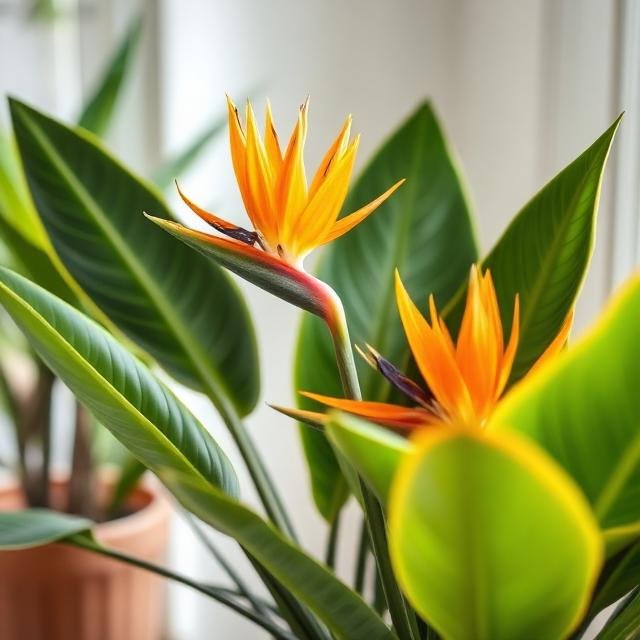
The Bird of Paradise is a genuine statement plant — large, glossy, paddle-shaped leaves on tall stems that bring an instant tropical, resort-like feel to a room. Indoors it grows into an impressive floor plant several feet tall, and while the famous crane-like orange flowers are rare on indoor specimens, the bold foliage alone earns its place.
Native to South Africa, it wants bright light and warmth, and it's more forgiving than its dramatic looks suggest. Give it the brightest spot you have and room to grow, and it rewards you with lush, architectural greenery. A quick note: the common large indoor Strelitzia is toxic to pets if ingested.
Caring for Your Bird of Paradise
Light. Bright light is what this plant lives for — it's one of the few big houseplants that genuinely wants some direct sun, which fuels its large leaves and any chance of blooming. A bright, sunny spot is ideal. In low light it grows slowly and leggily and won't reach its potential.
Water. Water when the top 2 inches of soil dry out, then drain well. It likes consistent moisture during active growth but dislikes soggy roots. Ease off in winter. It's fairly forgiving of the occasional missed watering.
Humidity. Enjoys medium to higher humidity, though it adapts reasonably to average household air.
Soil and potting. A rich, well-draining potting mix in a sturdy pot with drainage. As it grows large and top-heavy, a substantial pot helps keep it stable. It actually tends to bloom (if at all) when somewhat root-bound, so don't rush to oversize the pot.
Feeding. Feed regularly through the growing season — it's a vigorous grower that appreciates the nutrients.
Common Problems & Fixes
Splitting leaves. Here's a reassuring one: the natural splits along the edges of Bird of Paradise leaves are completely normal. In the wild it's how the plant lets wind pass through; indoors it's just character, not a problem.
Curling leaves. Often thirst or low humidity.
Brown leaf edges. Commonly dry air, underwatering, or salt/mineral buildup from tap water or fertilizer.
Yellowing leaves. Usually overwatering; some loss of old lower leaves is also normal.
Leggy, weak growth / no new leaves. Not enough light. This plant needs a lot of it.
No flowers. Very common indoors — Strelitzia often won't bloom without abundant light and maturity, and many indoor plants simply never flower. The foliage is the real reward.
Pests. Watch for spider mites and scale.
Propagating Your Bird of Paradise
Bird of Paradise is propagated by division, as it grows in clumps — starting it from seed is possible but extremely slow.
When repotting a large, mature plant, you can separate it at the rhizome. Remove it from the pot and use a clean, sharp knife to divide the clump into sections, making sure each division has a fan of leaves and a healthy portion of roots. This is a somewhat forceful job with a big plant, so don't be too timid — but do keep as many roots intact per division as you can.
Pot each division into rich, well-draining mix, water it in, and keep it warm and bright while it recovers. Divisions can sulk for a while before resuming growth, and they may take time to settle, so patience helps.