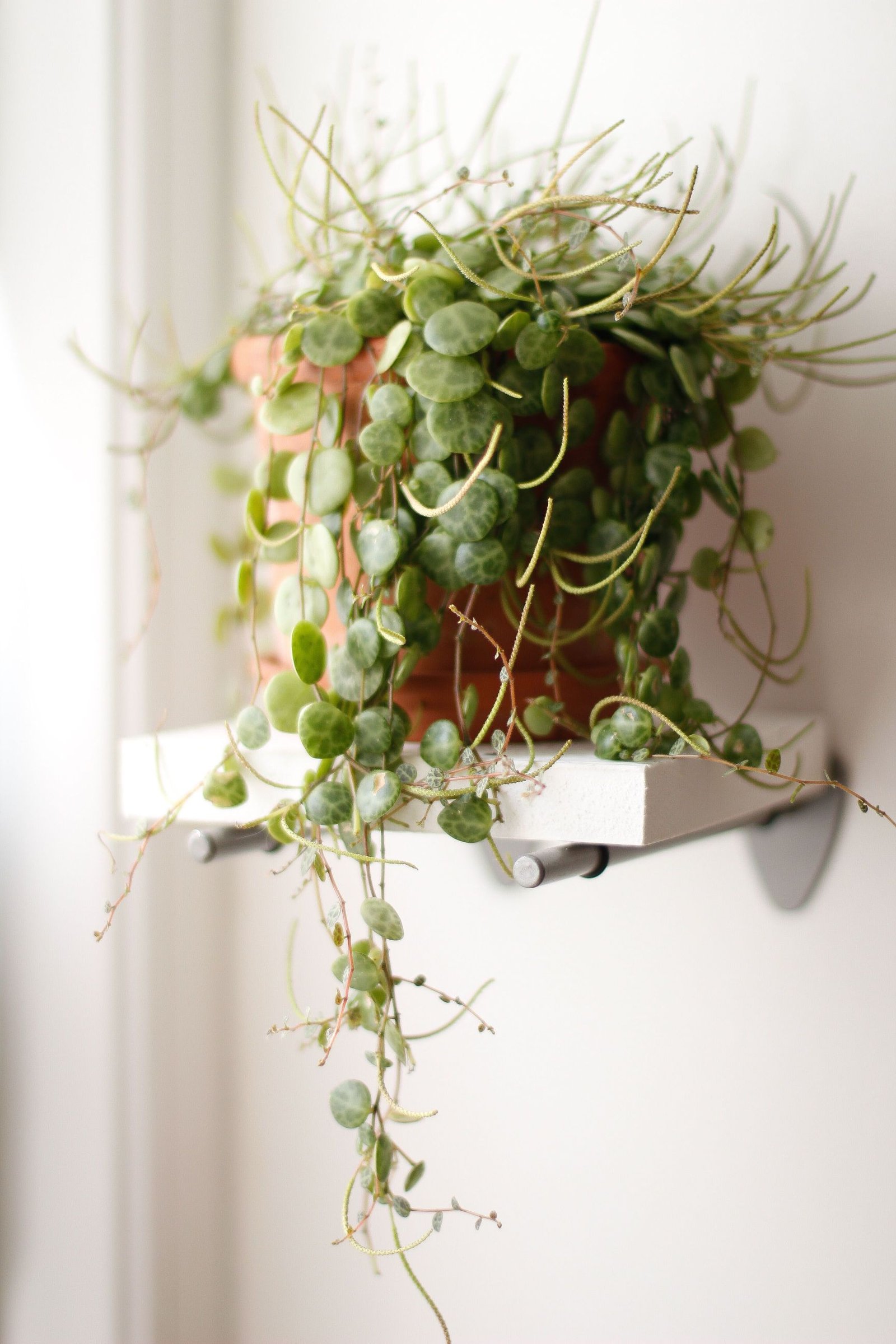
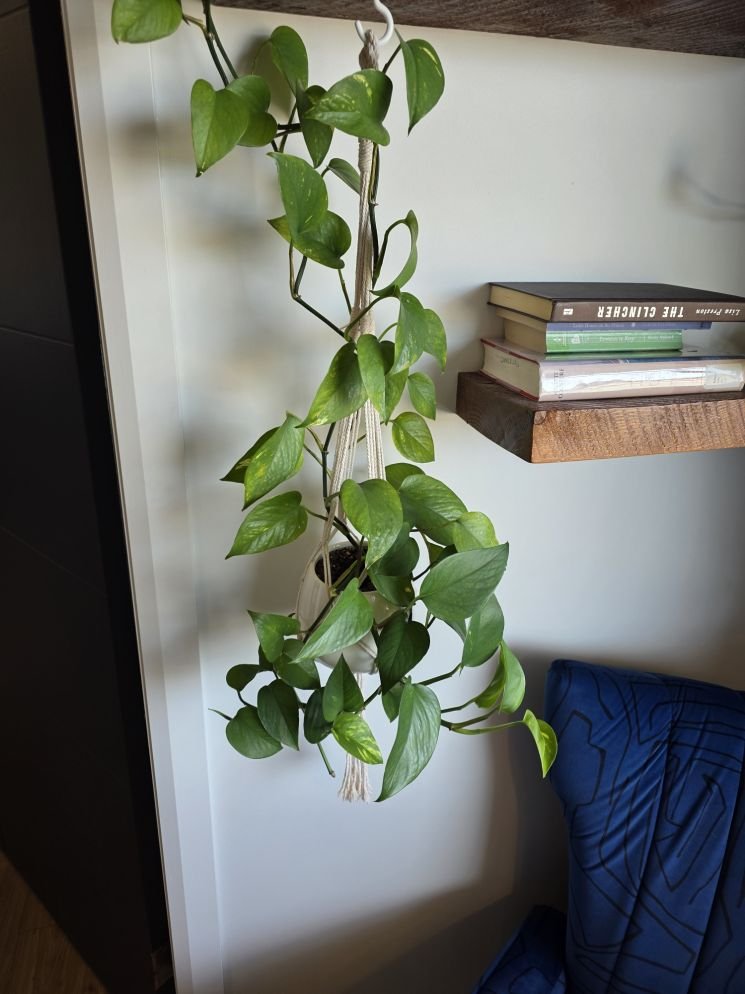
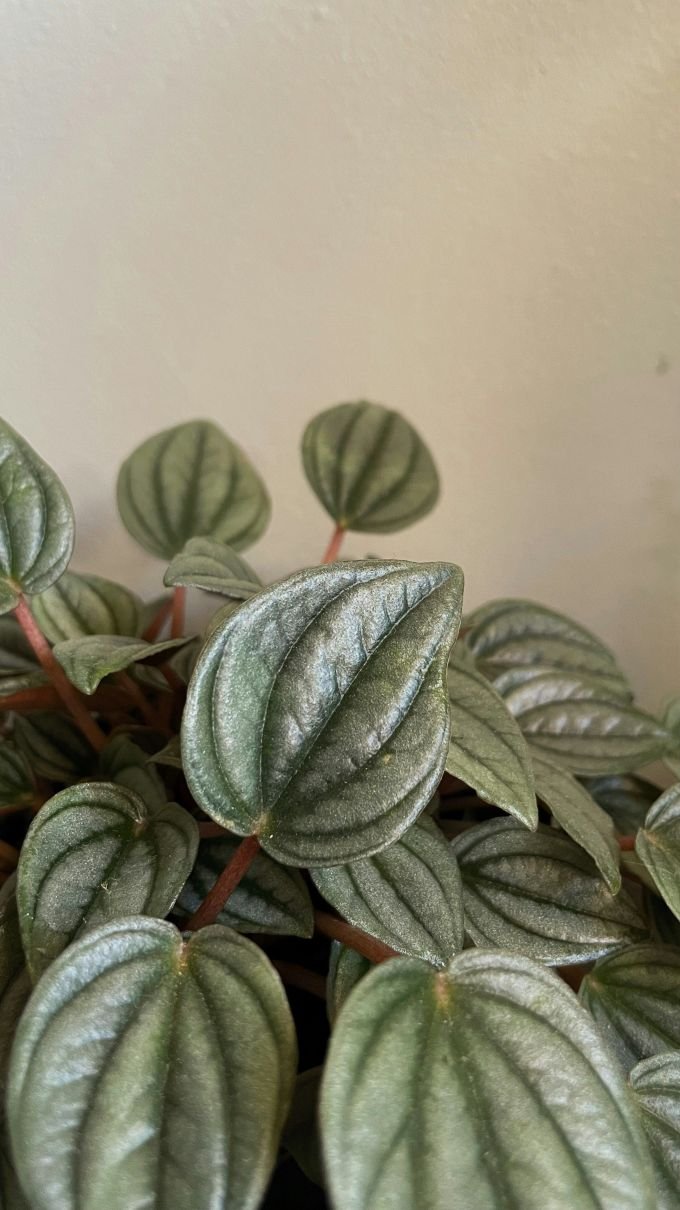
String of Hearts sends out fine, wiry vines dotted with little heart-shaped leaves, green and silver above and often purple underneath. The delicate appearance hides a drought-tolerant plant that stores water in its leaves and small tubers. On a high shelf or in a hanging pot, its trailing stems become a living curtain.
It is easy to love but easy to overwater. A dense mix that stays wet can rot the tubers and roots, while too little light leaves long gaps between the hearts. Give it an airy, sunny-but-not-scorching position and treat it more like a succulent than a thirsty tropical vine. Pet-toxicity sources for the exact species are not sufficiently clear for a "pet-safe" badge here, so keep it away from animals that chew plants pending confirmation.
Caring for Your String of Hearts
Light. Bright, indirect light suits it best. Some mild morning or late-day sun can keep the vines compact and colorful; prolonged harsh sun may scorch the small leaves. If the top of a hanging pot is shaded, the crown can thin even while the vines receive light.
Water. Let the mix dry fully or nearly fully before watering thoroughly, then drain. Check the pot by weight or feel rather than watering on a fixed day. Water even less during slower winter growth, but do not leave an actively growing plant bone dry for weeks.
Soil and potting. Use a coarse, fast-draining succulent mix and a pot with drainage. Shallow pots can suit its tuberous roots; avoid a much larger pot that holds excess wet mix around them.
Humidity and feeding. Average indoor humidity is usually fine. Feed lightly in the growing season, not in winter.
Keeping it full. Rotate the plant for even light and loop a few healthy stems back onto the soil. Nodes or aerial tubers touching the mix can root and fill the top of the pot.
Common Problems & Fixes
Yellowing, translucent hearts or mushy tubers. Usually a sign of excess moisture or poor drainage. Remove rotted parts, dry the mix, and restart healthy vine sections if needed.
Wrinkled, thin leaves. The plant may be thirsty, but damaged roots can cause the same symptom even in wet soil. Check both the mix and tubers before watering again.
Large gaps between leaves. Insufficient light leads to stretched stems. Increase bright filtered light gradually and trim sparse sections.
Bare crown with long dangling vines. Light may not reach the top of the pot. Move it where the crown is lit and pin stem nodes onto the soil to root.
Vines tangling. This is normal for the thin stems; separate them gently while dry instead of pulling hard.
Pests. Check the leaf joints and tubers for mealybugs and watch for fungus gnats if the mix stays wet.
Propagating Your String of Hearts
String of Hearts offers several easy ways to make a fuller plant. Lay a vine across the surface of a small pot of lightly moist mix and hold a node or aerial tuber against the soil. Once it has rooted, cut the connecting stem. This avoids disturbing the delicate new roots.
Alternatively, take short stem cuttings with at least one node and root them in water or an airy, slightly moist mix, keeping leaves above the water. Plant several rooted pieces together rather than expecting one stem to fill a basket quickly. Any round aerial tubers that have formed on mature vines can also be set against the soil and allowed to root. Protect all new pieces from soggy conditions.