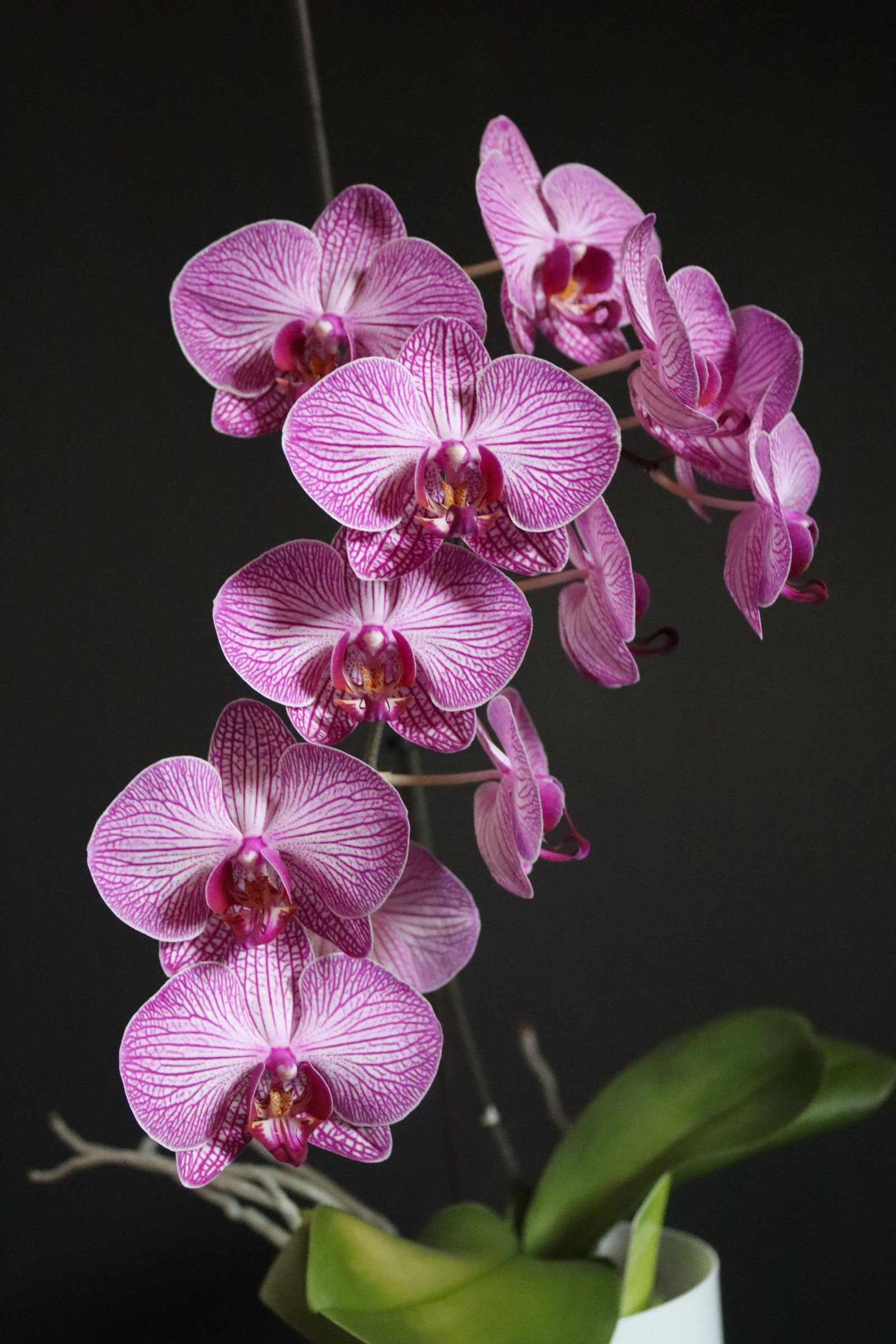
A moth orchid can look impossibly delicate in bloom, yet the familiar Phalaenopsis is a practical houseplant once you stop treating it like a plant in ordinary soil. Its broad leaves sit above thick, silvery roots that need air as well as water. A flower spike can remain showy for weeks, and a healthy plant can bloom again rather than becoming a disposable gift.
The key is the growing medium. Most moth orchids are sold in bark or moss, not potting soil. Those materials dry at different speeds, so a fixed weekly watering rule is unreliable. Learn how the roots and medium look and feel, and you can give the plant what it actually needs. Phalaenopsis is listed by the ASPCA as non-toxic to cats and dogs, although keeping pets from chewing plants is still sensible.
Caring for Your Moth Orchid
Light. Give bright, filtered light, such as an east-facing window or a spot set back from stronger afternoon sun. Dark leaves and no new growth may mean the spot is too dim; bleached or scorched patches suggest too much direct sun.
Water. Water the bark thoroughly when it is approaching dryness, then let the pot drain completely. In a clear pot, roots often turn silvery as they dry and greener after watering. Do not leave the pot standing in water or let water sit in the crown between the leaves, where rot can start. Moss holds moisture longer than bark, so check the medium rather than the calendar.
Humidity and air. Moderate to higher humidity helps, but moving air and a dry crown matter too. Keep the plant warm and away from cold drafts.
Potting. Use an orchid pot or a pot with generous drainage and a coarse orchid mix. Repot when the bark breaks down or the roots outgrow the pot, ideally after flowering; ordinary dense potting soil smothers the roots.
Feeding and reblooming. Use a diluted orchid fertilizer during active growth. After flowers fade, a healthy green spike may branch if trimmed above a node; a brown spike can be cut near the base. Good light, mature healthy roots and a modest difference between warm days and cooler nights can encourage a new spike, but flowering is not guaranteed on a schedule.
Common Problems & Fixes
Yellow, limp leaves. Check the roots before watering more. Firm green or silvery roots can indicate the plant is thirsty; brown, mushy roots in wet medium point to overwatering and rot. An occasional oldest leaf yellowing is normal.
Wrinkled leaves despite wet bark. Damaged roots may no longer take up water. Remove dead roots, replace broken-down medium and avoid keeping the pot soggy.
Flowers or buds dropping early. Moving the plant, a cold draft, heat from a vent or a sudden watering change can cause bud blast. Keep conditions steady while a spike develops.
No new flowers. Often insufficient light or a plant still recovering from its last bloom. Healthy leaves and roots come first.
Blackening at the leaf center. Water trapped in the crown can lead to rot; water early in the day and blot the crown dry.
Pests. Inspect leaf joints and spikes for mealybugs and scale.
Propagating Your Moth Orchid
Phalaenopsis is not propagated by a single leaf or ordinary stem cutting. Occasionally a mature plant grows a small plantlet, called a keiki, on a flower spike. Leave it attached until it has several leaves and a useful set of roots, then remove it with a clean blade and pot it gently in fine orchid bark.
A healthy orchid may also make a basal offset; separate that only when it has enough independent roots, since cutting too soon can injure both plants. Seed propagation requires specialized sterile conditions and is not a practical home method. For most growers, keeping the parent plant healthy and letting it rebloom is the best return on the effort.