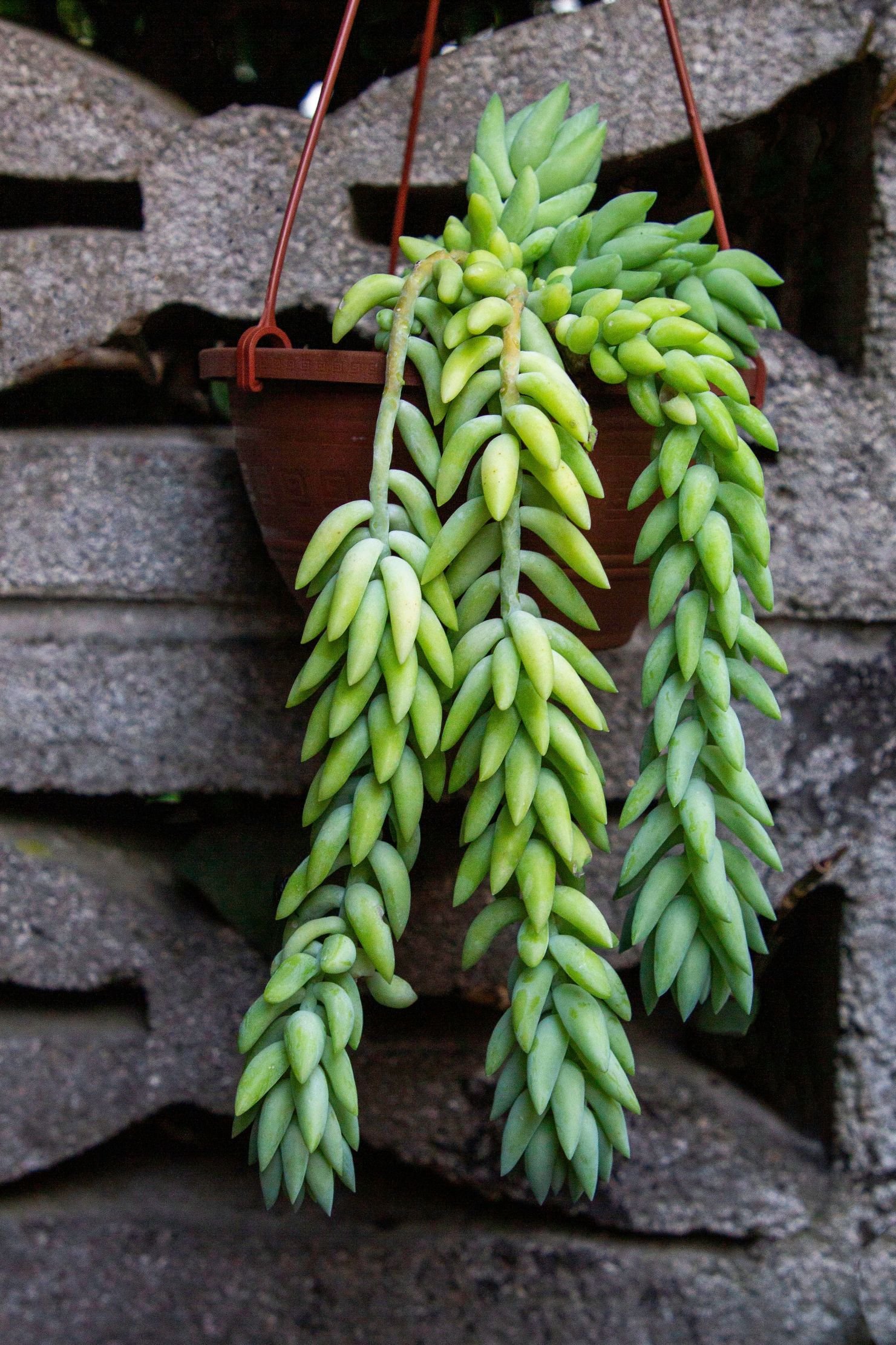
Burro's Tail forms long, hanging succulent stems packed with plump blue-green leaves. An established basket can look like a cluster of soft trailing ropes, making it instantly recognizable among houseplants. Its leaves detach at the slightest bump, though, so choose its final position before it becomes large.
Those fleshy leaves store water. The plant asks for bright light, a gritty mix and drying time between drinks, not constant attention. Fallen healthy leaves are not wasted: many can be turned into new plants. The ASPCA lists Sedum morganianum as non-toxic to cats and dogs, though a hanging location also protects its fragile stems from curious paws.
Caring for Your Burro's Tail
Light. Provide a bright window with some direct sun or very strong filtered light. Acclimate it gradually to harsher sun to prevent scorching. In dim light, stems stretch and the leaf spacing opens up.
Water. Let the mix dry fully between thorough waterings, then drain. Water less in winter. A plant in a small hanging pot can dry differently from one in a large container, so feel the mix instead of following a fixed weekly rule.
Soil and potting. Use a fast-draining succulent mix and a pot with drainage. A shallow pot can be enough for the relatively modest roots. Repot only when necessary, supporting the trailing stems to limit leaf loss.
Humidity and feeding. Average to dry household air is fine. Feed lightly once or twice during active growth rather than pushing weak, rapid growth.
Handling. Avoid brushing or repeatedly moving the plant. Dropped leaves can be set aside to propagate.
Common Problems & Fixes
Leaves dropping when touched. This is a normal fragility of Burro's Tail, not automatically a watering problem. Handle by the pot and keep it out of busy walkways.
Soft, translucent leaves or collapsing stems. Excess water and poor drainage can cause rot. Remove affected sections and restart healthy tips in dry, gritty mix.
Wrinkled leaves. Often the plant is ready for water, but inspect roots if the soil is still wet; rotted roots cannot supply moisture.
Long, sparse stems. Insufficient light causes stretching. Increase light gradually; stretched sections will not shrink, but fresh growth can be more compact.
Scorched brown areas. Sudden exposure to strong sun may burn foliage.
Pests. Mealybugs may lodge between the tightly packed leaves; inspect gently rather than scrubbing the stems.
Propagating Your Burro's Tail
Burro's Tail propagates from both stem cuttings and intact fallen leaves. Let a cut stem end dry and callus briefly, then set it in a small pot of gritty mix with the bottom nodes lightly buried. Keep it bright but out of harsh sun and water sparingly until roots establish.
For leaves, place whole healthy leaves on the surface of dry or barely moist succulent mix. Tiny roots and a new rosette may form at the detached end. Not every leaf succeeds, so start several. Pot young plants only after they have their own roots and handle them as little as possible.