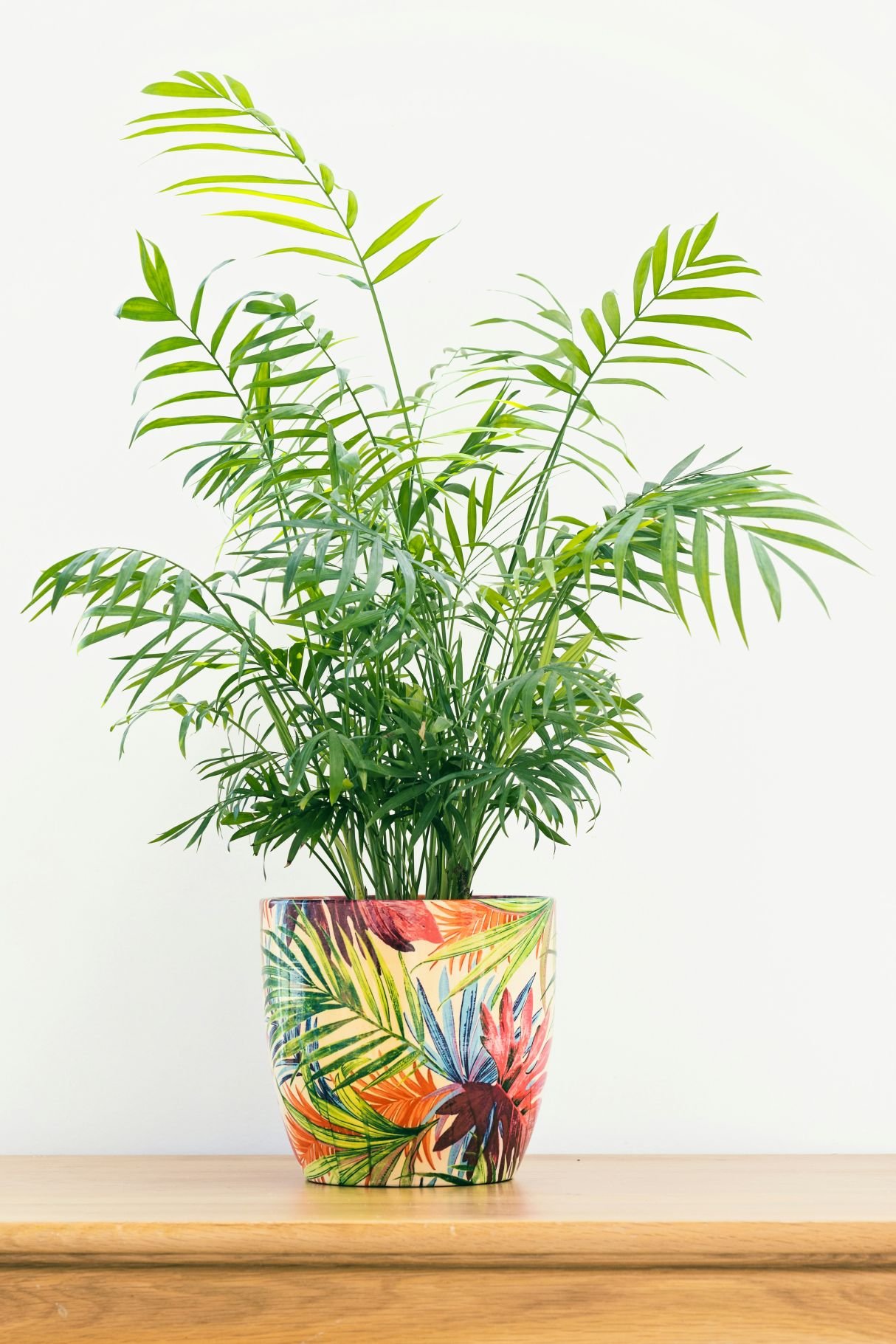
The Parlor Palm is a genuine antique of the houseplant world — it was beloved in Victorian parlors (hence the name) precisely because it tolerated the dim, less-than-ideal light of indoor rooms with grace. That same easygoing tolerance makes it a favorite today: it's compact, elegant, safe for cats and dogs, and one of the better palms for lower-light spots.
Native to the rainforests of Central America, it grows slowly into a soft, feathery clump of delicate fronds. It's undemanding, but it does have a couple of preferences — it dislikes being overwatered and appreciates a bit of humidity — that are worth getting right.
Caring for Your Parlor Palm
Light. Medium to low indirect light suits it well, which is a big part of its appeal for darker rooms. It grows best in moderate indirect light but tolerates lower light better than most plants. Keep it out of direct sun, which scorches the fronds.
Water. Water when the top inch of soil dries out, then drain. Parlor palms like to be lightly moist but are sensitive to overwatering, which is the most common way they decline. Let the surface dry between waterings and never let it sit in water.
Humidity. It appreciates moderate to higher humidity; very dry indoor air can cause browning frond tips. Grouping it with other plants or using a humidifier helps.
Soil and potting. A standard well-draining potting mix with drainage. Palms dislike having their roots disturbed, so repot only when necessary and gently.
Feeding. Feed lightly a couple of times during the growing season; palms are light feeders and sensitive to over-fertilizing.
Common Problems & Fixes
Brown frond tips. Very common with palms — usually low humidity, underwatering, or a buildup of salts and minerals from tap water or fertilizer. Trim the brown tips and address the cause.
Yellowing fronds. Often overwatering; let the soil dry more and check drainage. Some yellowing of the oldest lower fronds is natural.
Widespread browning / decline. Frequently root problems from overwatering, or very dry air.
Spider mites. A common palm pest, especially in dry air. Look for fine webbing and stippled fronds; raise humidity and rinse the plant.
Slow or no growth. Normal — parlor palms grow slowly, particularly in lower light.
Propagating Your Parlor Palm
Parlor palms are difficult to propagate at home, and this is worth being honest about. They grow from seed, which is slow and unreliable without specific conditions, and they don't propagate from cuttings the way many houseplants do.
What looks like a cluster of stems is usually multiple plants grown together from seed in the same pot, rather than something you can divide easily — attempting to separate them often damages the sensitive roots and sets the plants back badly.
For most people, the practical approach is simply to enjoy and maintain the plant you have, and buy a new one if you want another, rather than trying to propagate it. It's one of the few common houseplants where propagation isn't really a beginner project.