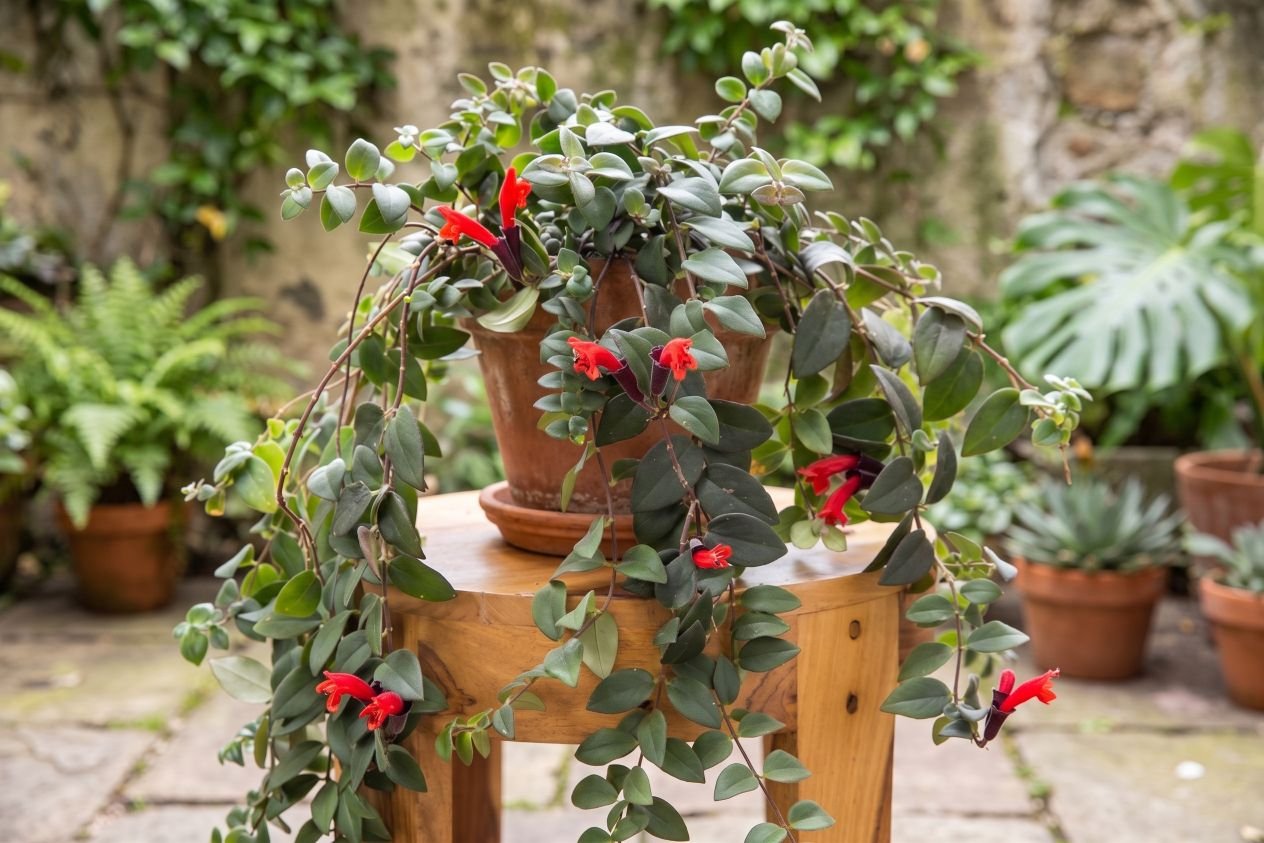
Lipstick Plant trails on leafy stems and produces red tubular flowers emerging from darker cups. Even between flowering periods, the waxy foliage makes it a useful hanging plant. Its blooms distinguish it from Hoya, whose flowers form clusters of small stars.
This guide covers Aeschynanthus radicans. Common names are not enough for a toxicity check: ASPCA names a different species, Aeschynanthus humilis, on its Lipstick Plant page. Our pet-safety flag remains Unknown until suitable evidence for this species is established.
Caring for Your Lipstick Plant
Light. Provide bright, filtered light, including enough light at the top of a hanging basket. A dim shelf may support some foliage but is a poor position for flowering.
Water. Water thoroughly as the surface begins to dry, then drain. Keep roots from remaining waterlogged. Water less during slower winter growth, without allowing repeated severe wilting.
Humidity and temperature. Keep it warm with humid air and ventilation. Avoid cold drafts and temperatures below about 10 degrees C. High humidity should not mean stagnant air or constantly wet leaves.
Potting and feeding. Use a loose, free-draining houseplant mix in a drainage pot. Feed lightly through active spring and summer growth using the product instructions.
Shaping. Trim overly long or weak shoots, preferably after a flowering display. Allow healthy trailing growth room to develop, and avoid continually clipping every tip if flowers are the aim.
Common Problems & Fixes
No blooms. Review brightness, recent pruning and overall growth. Improving light is more useful than repeatedly increasing fertilizer.
Sudden leaf drop. Check for cold exposure, a dry root ball or waterlogged roots. The same symptom can have several causes.
Spreading leaf spots or grey mould. Improve airflow, remove badly affected material and avoid soaking foliage during watering.
Sparse crown. Check whether the top of the basket is shaded. Rooted cuttings can help refill it once growing conditions improve.
Pests. Inspect tender shoots for aphids and leaf joints for mealybugs. Isolate affected plants before pests spread.
Propagating Your Lipstick Plant
Take a healthy, non-flowering stem section with several nodes during active growth. Remove lower leaves and insert the lower nodes into a small container of airy, lightly moist rooting mix.
Keep the cutting warm in filtered light and maintain humidity without sealing it into stale, dripping conditions. Pot several well-rooted cuttings together for a fuller basket. Do not pull repeatedly to check progress; new growth and roots visible at the drainage holes are less disruptive clues.