⚠Toxic to cats & dogs.
String of Pearls is poisonous if chewed or eaten —
keep it out of reach of pets and children.
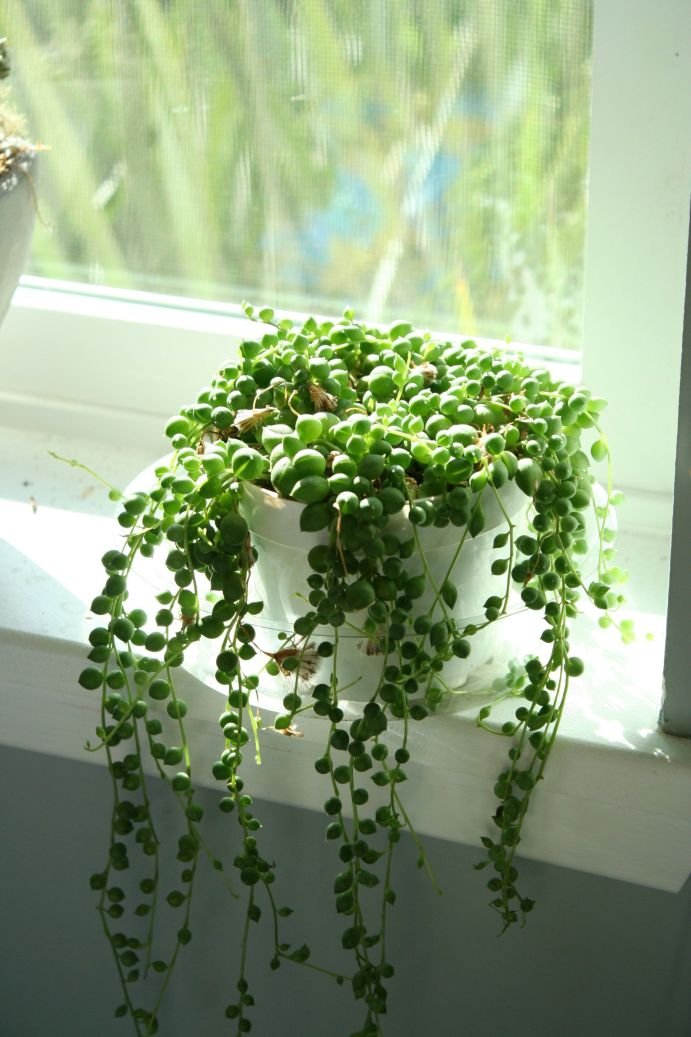
String of Pearls is one of the most distinctive trailing plants you can grow — long, delicate strands hung with round, pea-like beads that spill over the edge of a pot like a green necklace. It's a succulent, and when it's thriving it makes a striking display in a hanging pot or on a high shelf.
Native to dry parts of southern Africa, those little spherical leaves are water-storage organs, which tells you the key to success: this is a succulent, and the fastest way to lose one is overwatering. It has a reputation for being finicky, but most of that comes down to getting the watering and light right — do that, and it's not difficult. Note it's mildly toxic to pets and people if eaten.
Caring for Your String of Pearls
Light. Bright, indirect light, with a little direct sun tolerated. Good light keeps the strands full and the pearls plump; too little light leads to sparse, stretched strands with widely spaced beads. A bright windowsill (with some protection from harsh midday sun) works well.
Water. This is the make-or-break factor. Let the soil dry out almost completely, then water thoroughly and drain — roughly every 2 weeks in growth, less in winter. The pearls should look plump; shriveled pearls mean thirst, while mushy, translucent, or bursting pearls mean overwatering. When unsure, wait.
Humidity. Low humidity is fine; normal dry household air suits it.
Soil and potting. A gritty, fast-draining succulent or cactus mix is essential, in a pot with drainage. Standard potting soil holds too much water for this plant. A shallow pot suits its shallow roots.
Feeding. Feed lightly once or twice during the growing season.
Common Problems & Fixes
Mushy, translucent, or bursting pearls. Overwatering — the most common way String of Pearls dies. Let it dry out fully, cut back sharply on water, and make sure the soil drains fast.
Shriveled, deflated pearls. Thirst. A good drink should plump them back up over a day or two.
Sparse, stretched strands with gaps between pearls. Not enough light. Move it to a brighter spot.
Bald or dying strands at the top. String of Pearls can go thin at the crown over time; propagating and replanting cuttings back into the pot refreshes a sparse plant.
Pests. Watch for mealybugs and aphids.
Propagating Your String of Pearls
String of Pearls is delightfully easy to propagate, and it's the best way to keep a full-looking pot as the plant ages.
Take a few strands several inches long. You can lay them on top of a well-draining succulent mix and press the strands gently into contact with the soil — roots form at the points where the pearls touch the soil. Or coil the strands on the surface and pin them down lightly. Keep the soil barely moist until they root.
You can also snip strands and simply tuck the cut ends back into the mother plant's pot to fill it out. Rooting is quick and reliable, which is why a single plant can easily become a very full, cascading one.