⚠Toxic to cats & dogs.
Philodendron Birkin is poisonous if chewed or eaten —
keep it out of reach of pets and children.
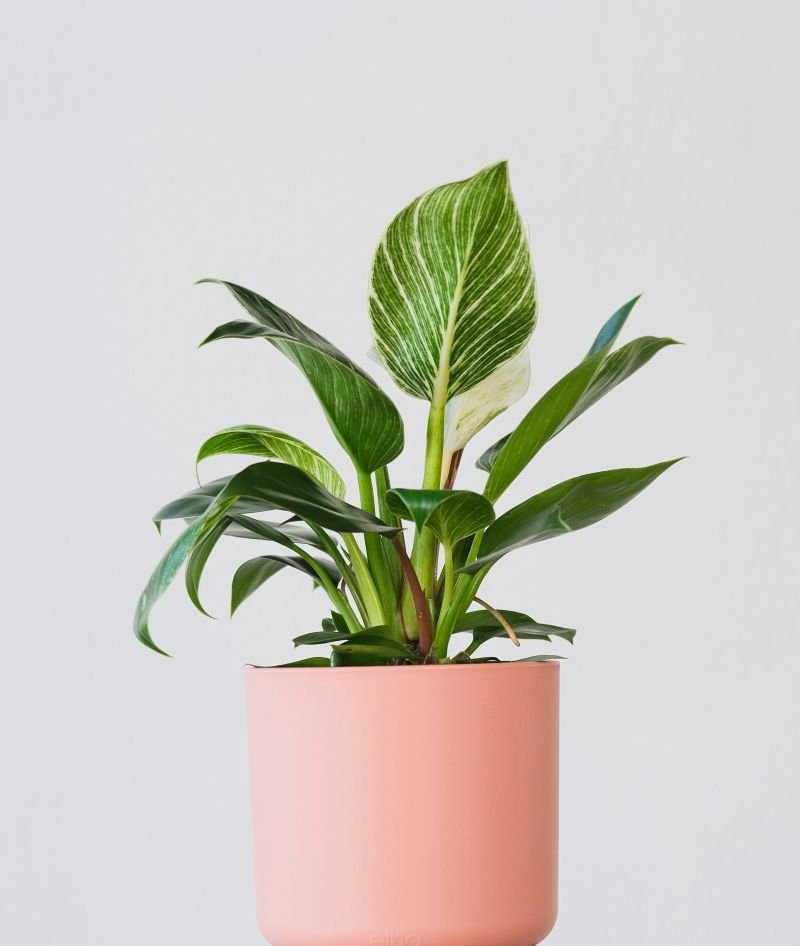
The Philodendron Birkin is a modern favorite, prized for its dramatic foliage — deep green leaves finely pinstriped in creamy white, as if drawn on with a pen. It's a compact, slow-growing philodendron that stays tidy enough for a shelf or desk, and it carries all the easygoing nature the philodendron family is known for.
The Birkin is actually a spontaneous variety that arose from another philodendron, which is why its variegation can be a little unpredictable — no two leaves are pinstriped exactly alike, and that variability is part of its charm. Like other philodendrons, it's toxic to pets if chewed.
Caring for Your Philodendron Birkin
Light. Bright, indirect light is ideal and helps maintain that crisp white pinstriping. Too little light can cause new leaves to come out greener with less variegation, while harsh direct sun can scorch them. A bright spot out of direct rays is the sweet spot.
Water. Water when the top inch of soil dries out, then drain. The Birkin likes to be lightly moist but not soggy, and it's forgiving of the occasional missed watering. Overwatering is the more common danger.
Humidity. It enjoys moderate to higher humidity but tolerates average household air. A little extra humidity keeps the foliage looking its best.
Soil and potting. A chunky, well-draining aroid mix (with bark and perlite) suits it well, in a pot with drainage. It's slow-growing and won't need frequent repotting.
Feeding. Feed with a balanced fertilizer during the growing season to support steady growth.
Common Problems & Fixes
New leaves losing their variegation (coming out plain green). Usually too little light — move it somewhere brighter (indirect) to bring the pinstripes back on new growth. Some variability is natural to the Birkin, though.
Leaves reverting or occasionally showing large patches of near-white or pink. The Birkin's variegation is genetically unstable and can shift; heavily white leaves are pretty but weaker, and pure-green reversions may need pruning to encourage the variegated growth.
Yellowing leaves. Typically overwatering; ease off and check drainage.
Brown leaf tips. Often low humidity or mineral buildup from tap water.
Drooping. Check soil moisture — usually thirst, sometimes overwatering.
Pests. Watch for aphids, mealybugs, and spider mites.
Propagating Your Philodendron Birkin
Philodendron Birkin propagates from stem cuttings, like other philodendrons, though it's slower-growing so results take a little patience.
Find a section of stem with a node (the point where a leaf and roots emerge), and cut just below it, keeping a leaf or two on the cutting. Place it in water with the node submerged, in bright indirect light, changing the water every few days. Roots usually form within a few weeks.
Once the roots are a couple of inches long, pot the cutting into a well-draining mix. Because the Birkin is a compact, slow grower, don't expect fast fills — but cuttings root reliably and let you make more of a plant you like.