⚠Toxic to cats & dogs.
English Ivy is poisonous if chewed or eaten —
keep it out of reach of pets and children.
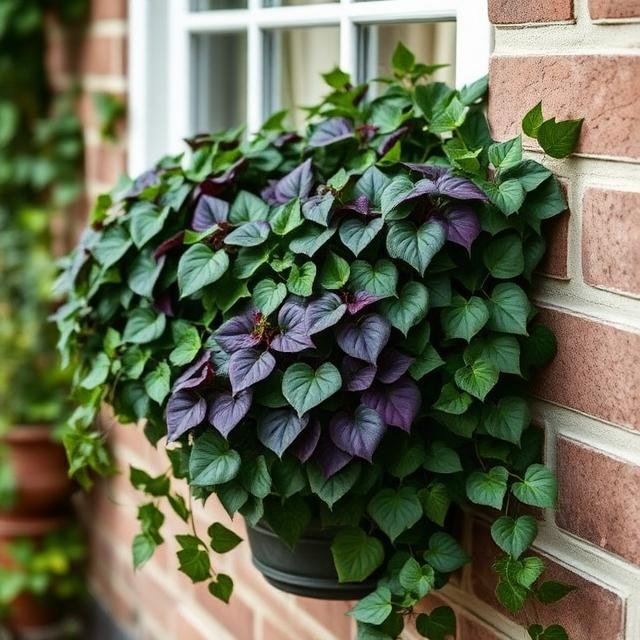
English Ivy is the trailing, climbing vine you've seen scaling the walls of old buildings and spilling elegantly from hanging baskets. Indoors, its cascade of lobed, often variegated leaves makes it a graceful choice for shelves, mantels, and hanging pots. It's an old-fashioned favorite that never really goes out of style.
Indoors it's fairly easy, with two things to keep an eye on: it likes cooler, humid conditions and it's prone to spider mites in dry indoor air. Give it decent light and don't let it bake in a hot, dry room, and it's a rewarding, fast-growing vine. Note that ivy is toxic to pets, so hang it out of reach of curious cats.
Caring for Your English Ivy
Light. Bright, indirect light keeps English Ivy healthiest and its variegation strongest. It tolerates medium light, growing more slowly and greener there. Avoid harsh direct sun. Solid-green varieties handle lower light better than variegated ones.
Water. Water when the top inch of soil dries out, then drain. Ivy likes to be lightly moist but not soggy — let the surface dry between waterings. It's fairly forgiving either way, but consistently wet soil invites root rot.
Humidity. Ivy appreciates higher humidity and cooler temperatures, reflecting its outdoor origins. Hot, dry indoor air (especially near heaters) stresses it and is the main invitation for spider mites. Misting, a humidifier, or a cooler room all help.
Soil and potting. A standard well-draining potting mix with drainage holes. Pinch back growing tips to keep it full and bushy rather than straggly.
Feeding. Feed monthly with a balanced fertilizer in spring and summer.
Common Problems & Fixes
Spider mites. The number-one English Ivy problem indoors, especially in warm, dry air. Look for fine webbing and stippled, dull leaves. Raise humidity, rinse the foliage, and treat promptly — mites spread fast. Prevention (cooler, more humid conditions) beats cure here.
Brown, crispy leaves. Usually dry air or underwatering.
Leggy vines with sparse leaves. Too little light, or a plant due for a trim. Pinch it back to encourage fullness.
Fading variegation. Not enough light; move a variegated ivy somewhere brighter.
Yellowing leaves. Often overwatering.
Propagating Your English Ivy
English Ivy is very easy to propagate from stem cuttings, which is handy since you'll often be trimming it anyway.
Snip a healthy stem a few inches long, just below a node, and remove the lower leaves. Place the cutting in water or directly into moist soil. In water, roots typically appear within a couple of weeks; keep it in bright, indirect light and refresh the water regularly.
Once rooted, pot cuttings into well-draining mix — planting several together gives a fuller pot faster. Ivy roots readily, so it's a reliable, low-effort propagation.