⚠Toxic to cats & dogs.
ZZ Plant is poisonous if chewed or eaten —
keep it out of reach of pets and children.
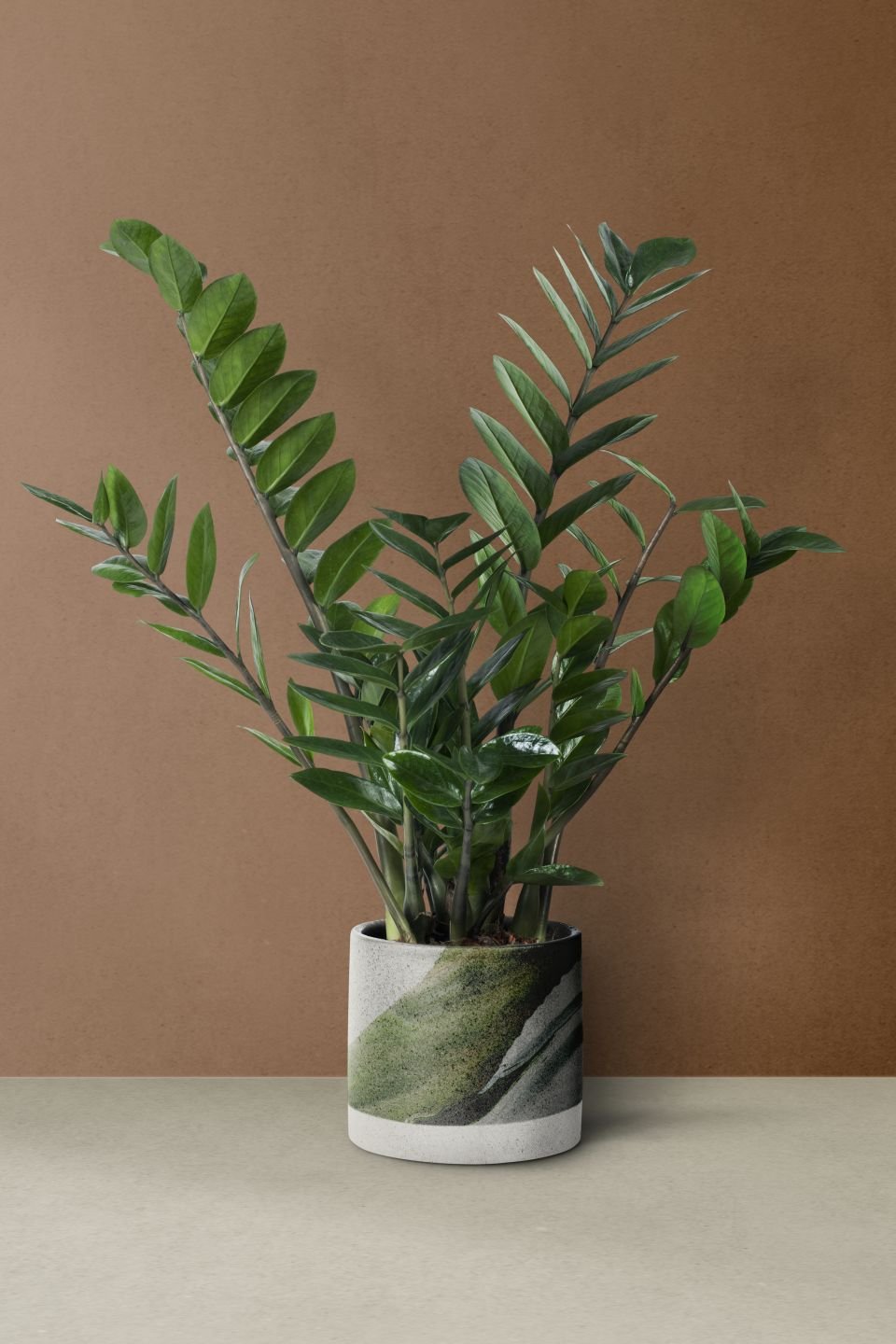
The ZZ Plant is what you get when a houseplant is engineered by nature for survival. Its waxy, deep-green leaves look almost artificial in their glossiness, and beneath the soil it stores water in potato-like rhizomes that let it shrug off weeks of neglect. It's a plant for busy people, dim offices, and anyone who travels.
Native to eastern Africa, the ZZ is built for drought and low light. That toughness, combined with its clean, upright good looks, has made it one of the most popular "set it and forget it" houseplants around.
Caring for Your ZZ Plant
Light. Tolerates low light better than almost any other houseplant, and thrives in bright indirect light. Avoid harsh direct sun, which can scorch the leaves. Its low-light tolerance is why it's a favorite for offices and interior rooms with few windows.
Water. Water only when the soil has dried out completely — thanks to those water-storing rhizomes, the ZZ is genuinely drought-tolerant and far more likely to be killed by overwatering than under. Every 2–3 weeks is typical, less in winter. When in doubt, don't water.
Humidity. Undemanding. Normal household humidity is fine.
Soil and potting. A well-draining potting mix in a pot with drainage holes. Like the snake plant, its main vulnerability is soggy soil, so drainage is key.
Feeding. Very light feeders. A diluted balanced fertilizer once or twice through the growing season is ample.
Common Problems & Fixes
Yellowing leaves. Almost always overwatering. Let the soil dry out fully and check that the rhizomes aren't sitting in moisture. ZZ plants would rather be forgotten than flooded.
Drooping or wrinkled stems. The less common thirst signal — if the soil has been bone dry for a long stretch, give it a thorough drink.
Leggy, stretching growth. Reaching for light. Move it somewhere brighter (indirect).
Brown leaf tips. Often from tap-water minerals or inconsistent watering.
Pests. Rare. Occasional aphids or mealybugs; wipe the glossy leaves down now and then to keep them clean and to spot trouble early.
Propagating Your ZZ Plant
ZZ plants can be propagated by division or by leaf cuttings, though both reward patience — this is not a fast plant.
Division is the quickest route: when repotting, separate the rhizome clumps, making sure each piece has a growth point, and pot them up individually.
Leaf cuttings are slower but satisfying. Remove a healthy leaf with a bit of the stem, let it callus briefly, then set it in moist soil or water. Over the course of a few months, a small rhizome will form at the base and eventually send up new growth. It can take a long time, so start it and forget about it — very much in keeping with the plant's character.