⚠Toxic to cats & dogs.
Rubber Plant is poisonous if chewed or eaten —
keep it out of reach of pets and children.
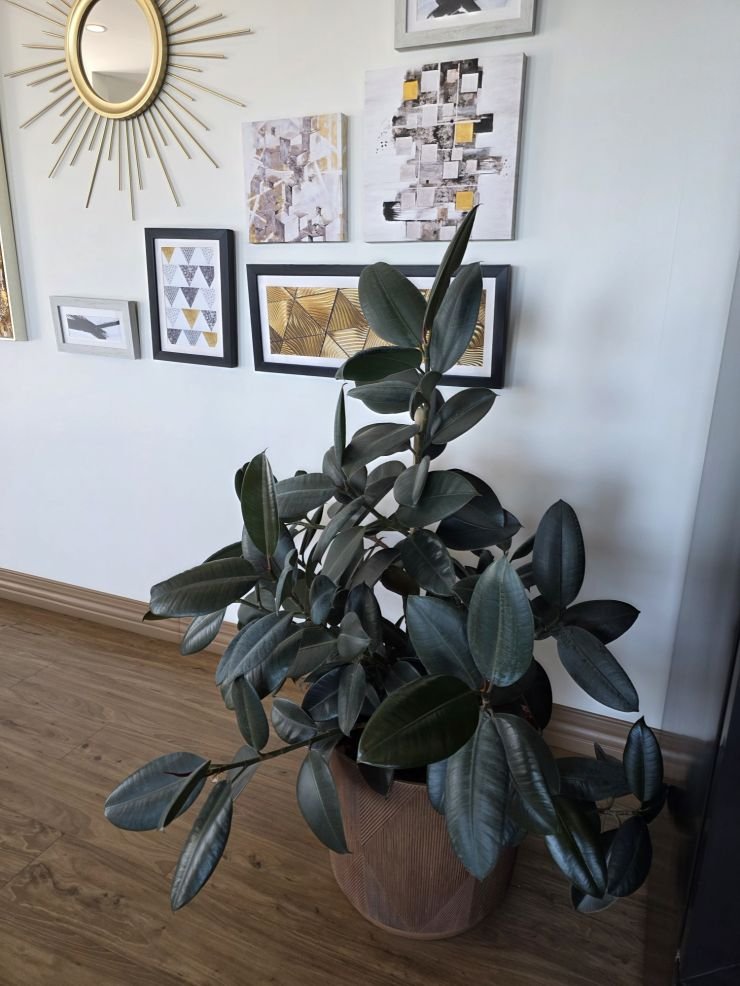
The Rubber Plant offers much of the bold, glossy-leaved drama of its famous cousin the Fiddle-Leaf Fig, but with considerably less attitude. Its thick, leathery leaves — deep green, or in some varieties flushed with burgundy and cream — make a strong statement, and it grows into an impressive indoor tree over time while asking relatively little.
Native to South and Southeast Asia, the Rubber Plant is a solid choice for someone who wants a large, striking houseplant without the fiddle-leaf's famous fussiness. It's forgiving, adaptable, and satisfying to grow.
Caring for Your Rubber Plant
Light. Bright, indirect light keeps it happiest and, in the variegated types, keeps the coloring vivid. It tolerates medium light, growing more slowly there. Avoid harsh direct sun through glass, which can scorch the leaves; the darker-leaved varieties handle lower light a bit better than the variegated ones.
Water. Water when the top 2 inches of soil dry out, then drain thoroughly. Rubber plants dislike sitting wet, so err toward slightly dry. They need less water in the cooler, darker months.
Humidity. Average household humidity is generally fine, though it enjoys a bit more.
Soil and potting. A well-draining potting mix with drainage holes. Repot every couple of years as it grows; it can eventually become quite tall.
Feeding. Feed with a balanced fertilizer during spring and summer to support steady growth.
A note on the sap. Like other figs, a cut or broken rubber plant leaf releases a milky white sap that can irritate skin and is mildly toxic if ingested — worth keeping in mind around pets and children.
Common Problems & Fixes
Dropping leaves. Often overwatering, a sudden change in conditions, or a cold draft. Rubber plants are steadier than fiddle-leafs but still prefer consistency.
Yellowing leaves. Usually overwatering; let the soil dry more and confirm good drainage.
Brown leaf edges. Can indicate dry air, underwatering, or salt buildup from tap water or fertilizer.
Leggy growth / losing lower leaves. Typically too little light. Move it brighter; you can also prune to encourage bushier growth.
Fading variegation. Variegated types losing their color need more (indirect) light.
Pests. Watch for scale, mealybugs, and spider mites; wiping the glossy leaves helps you spot and prevent them.
Propagating Your Rubber Plant
Rubber plants propagate well from stem cuttings, and it's a good way to make use of prunings.
Take a cutting with a couple of leaves, cut below a node, and rinse or blot the milky sap from the cut end. You can root the cutting in water or directly in moist soil; many growers have good luck rooting straight into a well-draining mix kept lightly moist and warm.
A technique called air layering is also popular for rubber plants, especially to propagate from a taller specimen or to shorten a leggy one — it encourages roots to form on the stem before you cut, giving a more reliable result on this species. Either way, keep new cuttings warm and bright while they establish.