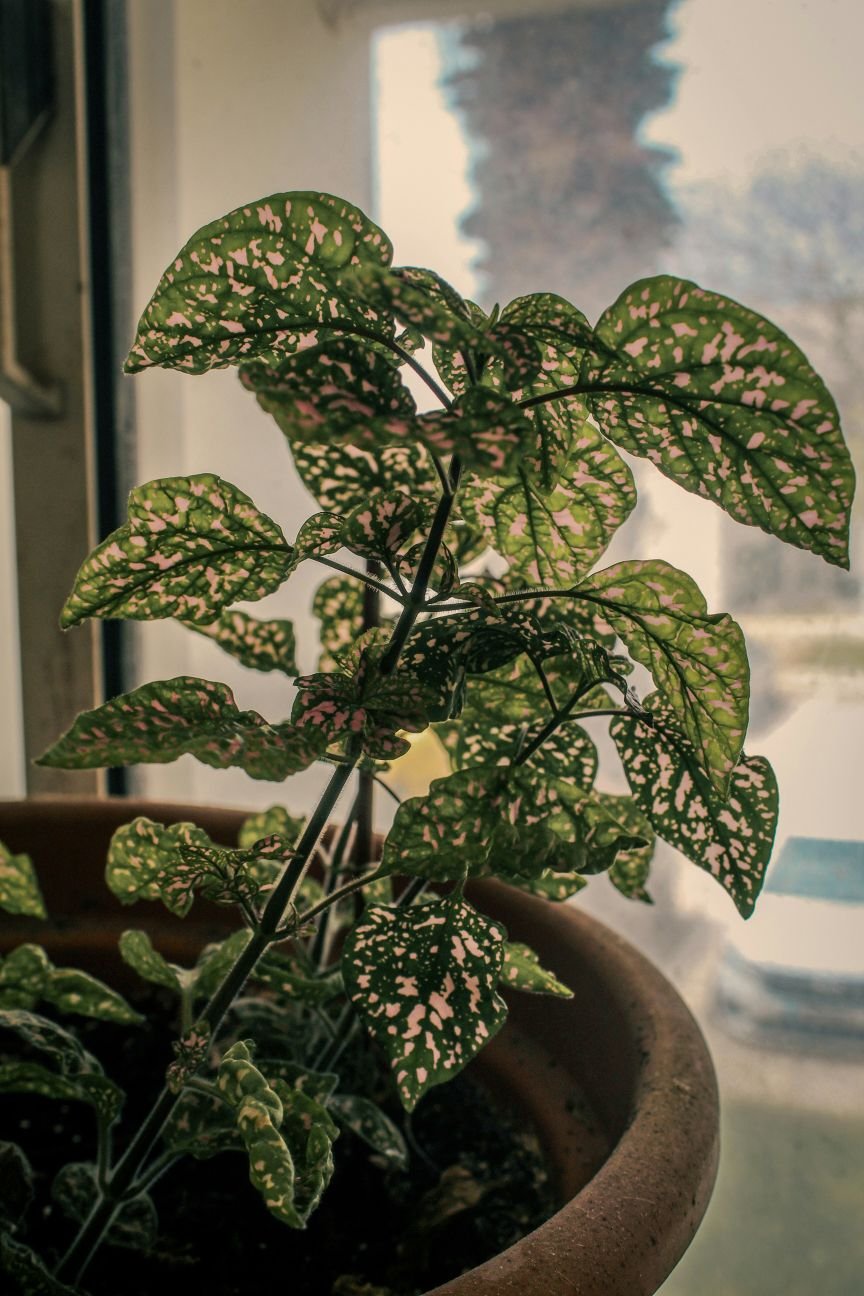
The Polka Dot Plant is exactly as cheerful as it sounds — its green leaves are freckled and splashed with pink, white, or red, as though someone flicked paint across them. It's a small, playful plant that adds a pop of color to shelves, desks, and terrariums, and it's safe around cats and dogs, which makes it a friendly choice for many homes.
Native to Madagascar, it's easy enough to grow, with two things to watch: it needs decent light to keep its bright speckling (rather than fading to plain green), and it tends to get leggy, so it benefits from regular pinching to stay full and compact. It's often grown as a colorful accent and refreshed from cuttings as it ages.
Caring for Your Polka Dot Plant
Light. Bright, indirect light keeps the polka-dot coloring vivid. In too little light, the plant stretches and its spots fade toward green; in harsh direct sun, the leaves can scorch and the colors bleach. A bright spot out of direct rays is the target.
Water. Keep the soil lightly and consistently moist — the polka dot plant doesn't like to dry out completely and may wilt if it does, though it recovers with watering. Avoid sogginess, which causes root problems. Water when the surface just begins to dry.
Humidity. It appreciates moderate to higher humidity and does well in terrariums. Dry air can cause leaf-edge browning.
Soil and potting. A well-draining but moisture-retentive potting mix in a pot with drainage.
Pinching. To keep it bushy rather than leggy, regularly pinch off the growing tips (and any flower spikes that appear, since flowering can make the plant decline). This encourages fuller growth and keeps it looking its best.
Feeding. Feed lightly during the growing season.
Common Problems & Fixes
Fading spots / more green, less color. Usually not enough light. Move it somewhere brighter (indirect) to restore the speckling on new growth.
Leggy, stretched growth. Natural to this plant, and worse in low light. Pinch it back regularly to keep it compact — this is expected maintenance, not a sign something's wrong.
Wilting. Usually thirst; the polka dot plant droops when dry and revives after watering. Persistent wilting in wet soil means overwatering instead.
Crispy leaf edges. Low humidity or underwatering.
Decline after flowering. These plants can go downhill after they flower and set seed; pinching off flower spikes helps prolong the plant's good looks.
Pests. Watch for whiteflies, aphids, and mealybugs.
Propagating Your Polka Dot Plant
Polka dot plants are very easy to propagate from stem cuttings, which is handy because they're often best refreshed from cuttings as the parent gets leggy with age.
Take a cutting a few inches long with several leaves, cut just below a node, and remove the lower leaves. Place it in water or moist soil. Roots usually form within a couple of weeks, especially in warmth and humidity.
Once rooted, pot the cuttings up — several together makes a fuller plant. Because these plants naturally decline after a year or two (particularly if allowed to flower), keeping a few cuttings going is a good way to always have a fresh, colorful plant on hand.