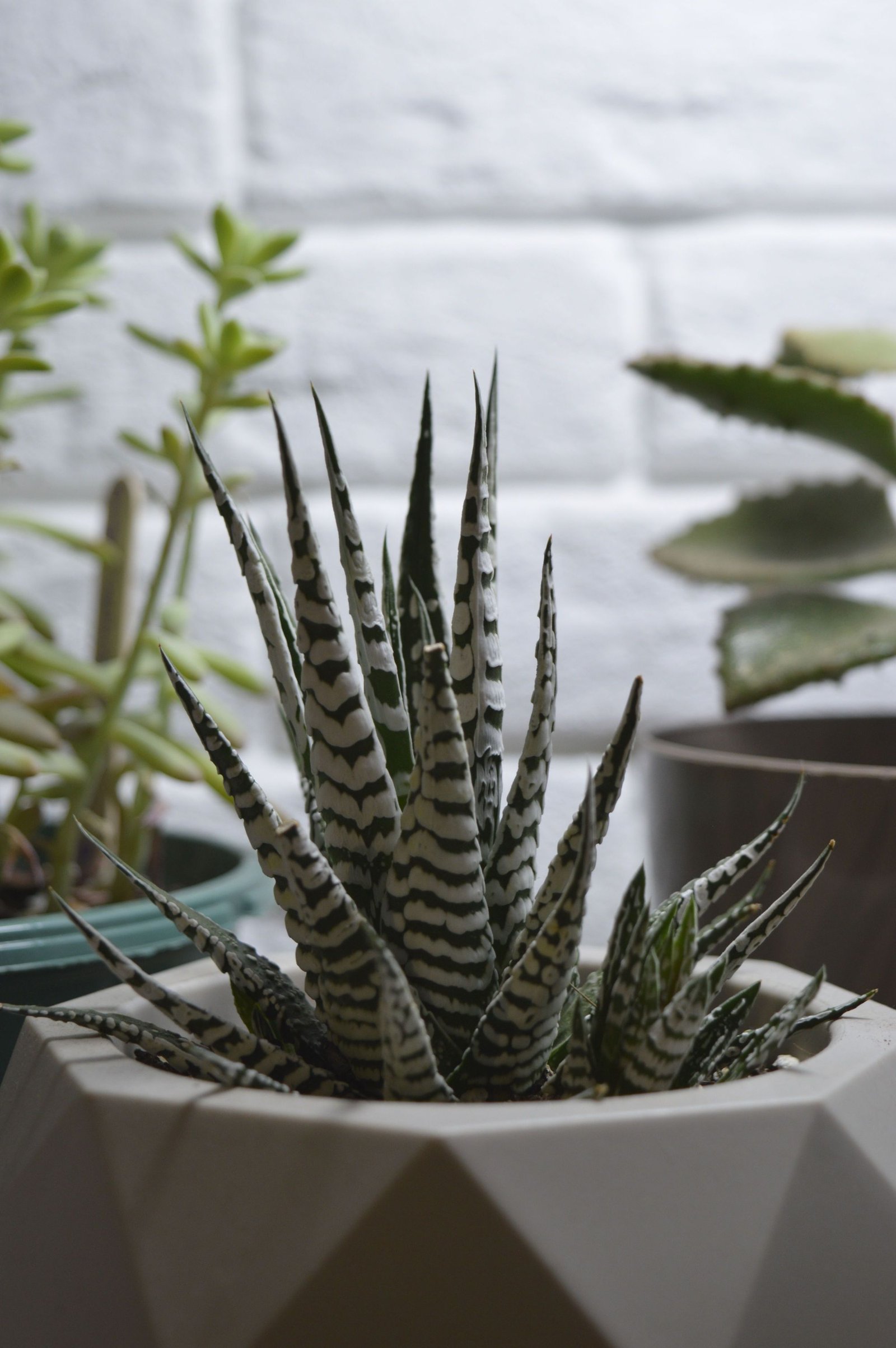
Zebra Haworthia is a small, slow-growing succulent with stiff dark leaves dotted by raised white bands. It is ideal for a bright desk or windowsill where a large plant would be awkward. The stripes make it look bold even when it stays compact.
The plant in this guide is Haworthiopsis attenuata, often sold under its older name Haworthia attenuata. It is frequently confused with H. fasciata: attenuata usually has raised markings on both inner and outer leaf surfaces, while fasciata is smoother inside. Unlike a desert cactus, it generally prefers bright filtered light over baking all-day sun. North Carolina State Extension describes H. attenuata as non-toxic to pets.
Caring for Your Zebra Haworthia
Light. Bright indirect light is a reliable choice, with a little gentle morning sun if acclimated. Prolonged hot afternoon sun may bleach or scorch leaves. Very low light can weaken growth and fade the stripes.
Water. Let the mix dry completely between deep waterings, then drain. The thick leaves store water, so a missed watering is usually safer than a continually damp pot. Water more sparingly in winter.
Soil and potting. Use a gritty cactus or succulent mix in a pot with drainage. Avoid oversized containers, which stay wet around the small root system.
Humidity and temperature. Average home humidity suits it. Protect it from frost, cold drafts and water collecting in the rosette.
Feeding and growth. Feed lightly during active growth, if at all. Expect a slow-growing plant that gradually forms a clump of offsets rather than rapid height.
Common Problems & Fixes
Soft or translucent leaves. Usually too much water, especially if the base is also soft. Inspect the roots and remove rotted tissue; repot remaining healthy growth into dry, gritty mix.
Thin, inward-curling leaves. The plant may be dry, but check root health before watering if the potting mix is damp.
Brown or bleached patches. Strong direct sun may be scorching the leaves. Shift to filtered light and acclimate slowly.
Fading white markings or stretched growth. Insufficient light can reduce the crisp look of new leaves. Move to a brighter indirect spot.
Black spots or a damp crown. Water trapped among leaves can invite fungal problems; water the soil and provide airflow.
Pests. Mealybugs and scale may hide where leaves meet the base.
Propagating Your Zebra Haworthia
Wait for a healthy offset, or pup, to form beside the parent rosette. During repotting, gently separate a pup that has its own roots, or cut it free with a clean blade and let the cut dry briefly. Set it in a small pot of fast-draining mix and water sparingly until it establishes.
Leaf cuttings are possible but slower and less predictable than dividing pups. Do not pull off a partial leaf and expect it to root. Seed growing is a specialist project; for most homes, patient offset division is the least disruptive approach.