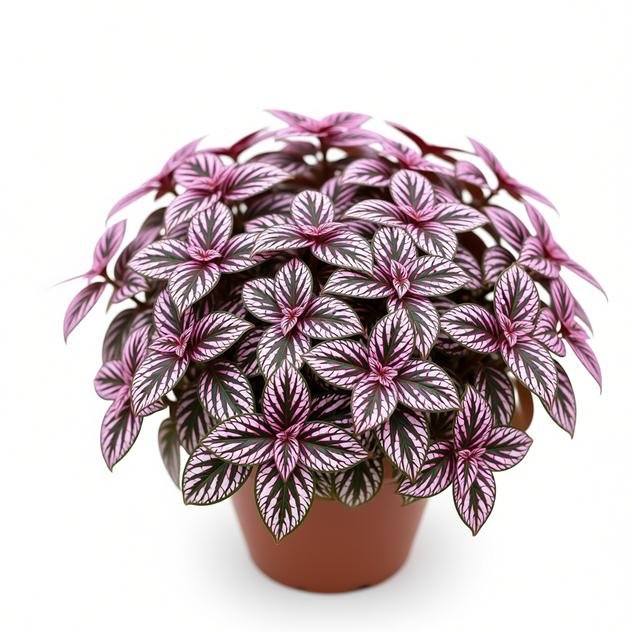
The Nerve Plant, or Fittonia, is a small charmer with a big personality. Its leaves are laced with vivid networks of pink, red, or white veins against deep green, giving it an almost hand-painted look. It stays compact, making it perfect for terrariums, small pots, and shelf corners, and it's safe around cats and dogs.
Its personality comes from a dramatic habit: when it gets thirsty, it faints — the whole plant wilts and collapses theatrically — and then springs right back to life within hours of watering. That flair, plus its love of humidity, makes it a genuinely fun plant, though the humidity requirement is the thing that trips people up. It's a classic terrarium plant precisely because terrariums keep the air moist.
Caring for Your Nerve Plant
Light. Medium, indirect light. As a forest-floor plant, the Fittonia dislikes direct sun, which scorches and fades its leaves. Bright indirect light keeps the veining vivid; too little light dulls it.
Water. Keep the soil consistently, lightly moist — the nerve plant does not like to dry out and will faint dramatically if it does. Water when the surface just begins to dry. It bounces back from the occasional faint, but repeated collapses stress it, so aim for steady moisture without sogginess.
Humidity. High humidity is the key to a happy Fittonia, and the main reason people struggle with it in ordinary rooms. It thrives in terrariums, bathrooms, or near a humidifier. Dry air leads to crispy, curling leaves.
Soil and potting. A rich, moisture-retentive but draining mix in a small pot with drainage. Its shallow roots suit a shallow pot.
Feeding. Feed lightly during the growing season.
Common Problems & Fixes
Dramatic wilting / fainting. Almost always thirst. Water it and it typically revives within hours. If it faints often, you're letting it get too dry — increase watering frequency.
Crispy, curling, or shriveled leaves. Usually low humidity (or letting it dry out too far). Raise the humidity.
Fading veins / dull color. Often too much direct light, or sometimes too little light.
Yellowing, limp leaves. Overwatering to the point of sogginess — it wants moist, not waterlogged.
Leggy growth. Pinch it back to keep it compact and bushy; this also gives you cuttings to propagate.
Pests. Watch for fungus gnats in constantly moist soil, and occasionally aphids or mealybugs.
Propagating Your Nerve Plant
Nerve plants are easy to propagate from stem cuttings, and since you'll want to pinch them back to stay bushy anyway, you'll have plenty of material.
Take a cutting a few inches long with several leaves, cutting just below a node, and remove the lowest leaves. Root it in water or directly in moist soil. Because the nerve plant loves humidity, cuttings root best in a humid environment — covering them loosely with a clear cover or rooting them in a terrarium noticeably improves success.
Keep cuttings warm and in bright, indirect light. Once rooted, pot them up (several together for fullness) and maintain the steady moisture and humidity the plant loves.