⚠Toxic to cats & dogs.
Anthurium is poisonous if chewed or eaten —
keep it out of reach of pets and children.
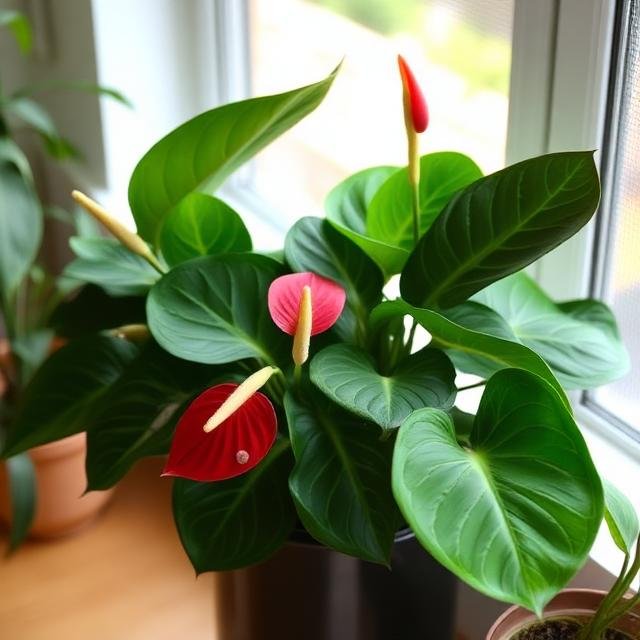
The Anthurium, sometimes called the flamingo flower, is prized for its glossy, heart-shaped blooms in vivid red, pink, or white — actually a waxy modified leaf called a spathe, with the true flowers on the little spike at its center. Those blooms last remarkably long, often weeks, and a happy anthurium can flower on and off much of the year, which makes it one of the more rewarding flowering houseplants.
Native to tropical Central and South America, it wants warmth, humidity, and bright indirect light. It's not the fussiest tropical, but getting it to keep blooming does take attention to a few conditions. Anthuriums are toxic to pets if chewed.
Caring for Your Anthurium
Light. Bright, indirect light is key — it's what fuels the blooms. Too little light gives you a healthy-looking plant that stubbornly refuses to flower. Keep it out of harsh direct sun, which scorches the leaves.
Water. Water when the top inch of soil dries out, then drain thoroughly. Anthuriums like consistent moisture but hate sitting wet, so aim for lightly moist and never soggy. Overwatering leads quickly to root problems.
Humidity. High humidity suits them best, reflecting their rainforest home. Dry air can cause browning leaf tips and fewer blooms. A humidifier or pebble tray helps considerably.
Soil and potting. A chunky, well-draining mix — an aroid mix with bark and perlite is ideal, as anthuriums like air around their roots. A pot with drainage is essential.
Feeding. Feed with a fertilizer higher in phosphorus (to support blooming) at a diluted strength every 6–8 weeks in spring and summer.
Common Problems & Fixes
No flowers. The most common disappointment, almost always from too little light. Move it somewhere brighter (indirect). Insufficient feeding or a pot that's far too large can also reduce blooming.
Brown leaf tips. Usually low humidity, and sometimes over-fertilizing or mineral buildup from tap water.
Yellowing leaves. Typically overwatering; let the soil dry more and confirm drainage.
Faded or greenish blooms. Blooms naturally age and green out over time; but poor light can also cause weak color.
Drooping. Check soil moisture — either too dry or waterlogged.
Pests. Watch for mealybugs, scale, and spider mites, especially in dry conditions.
Propagating Your Anthurium
Anthuriums are usually propagated by division, which is the easiest and most reliable method.
When repotting a mature plant, look for offshoots or natural divisions in the root ball. Separate a section that has its own roots and a few leaves, and pot it up on its own in a chunky, well-draining aroid mix.
Keep the new division warm, humid, and in bright indirect light while it establishes. It's normal for a division to pause before putting out new growth. Anthuriums can also be grown from seed or stem cuttings with aerial roots, but division is by far the simplest route for most people.