⚠Toxic to cats & dogs.
Monstera Deliciosa is poisonous if chewed or eaten —
keep it out of reach of pets and children.
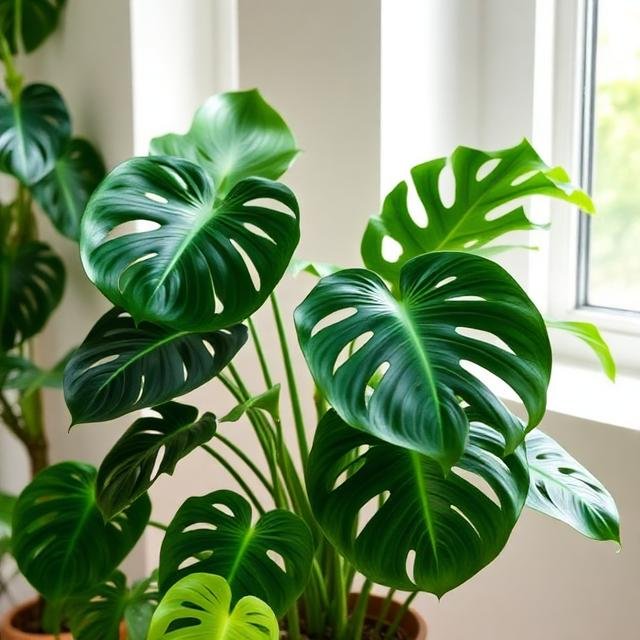
The Monstera deliciosa is the plant that launched a thousand houseplant obsessions. Those big, glossy leaves with their signature holes (called fenestrations) make it look far more demanding than it actually is. In truth, it's one of the most forgiving large houseplants you can grow, which is exactly why it shows up in so many living rooms and on so many feeds.
Native to the tropical forests of southern Mexico and Central America, in the wild it climbs tree trunks toward the light, which tells you almost everything about how to keep it happy indoors: bright, indirect light and something to climb.
Caring for Your Monstera Deliciosa
Light. Bright, indirect light is the sweet spot. A few feet back from an east or north-facing window, or filtered light from a brighter window, is ideal. Direct midday sun will scorch the leaves; deep shade will leave you with a leggy plant and small, hole-free leaves.
Water. Water thoroughly when the top 2 inches of soil have dried out, then let the excess drain completely. Monsteras dislike sitting in soggy soil more than they dislike being a little dry, so when in doubt, wait. Expect to water roughly weekly in summer and less in winter.
Humidity. As a tropical plant it appreciates medium-to-high humidity, but it tolerates average household air better than fussier tropicals like calatheas. If your home is very dry, a nearby humidifier helps the leaves stay lush.
Soil and potting. Use a chunky, well-draining mix — a standard aroid mix of potting soil, orchid bark, and perlite works well. A pot with drainage holes is non-negotiable. Provide a moss pole or trellis; a climbing Monstera produces larger, more dramatically fenestrated leaves than one left to sprawl.
Feeding. Feed with a balanced houseplant fertilizer roughly monthly during spring and summer; pause in the darker months.
Common Problems & Fixes
Yellowing leaves. The most common cause is overwatering. Check that the soil isn't staying soggy and that the pot drains freely. Occasional lower-leaf yellowing as the plant ages is normal.
Brown, crispy edges. Usually low humidity or underwatering. Brown spots in the center of a leaf can indicate the opposite — overwatering or root rot.
No holes in the leaves. Young Monsteras naturally have solid leaves; fenestration develops with maturity. If a mature plant still isn't splitting, it usually needs more light and something to climb.
Leggy growth with long gaps between leaves. A classic sign of too little light. Move it somewhere brighter.
Pests. Spider mites and mealybugs can appear, especially in dry air. Wipe the leaves periodically and inspect the undersides.
Propagating Your Monstera Deliciosa
Monsteras are famously easy to propagate from stem cuttings, which is part of why they spread through friend groups so readily.
Find a section of stem with at least one node — the small bump where a leaf and the aerial roots emerge. Cut just below the node with clean shears, making sure your cutting has a node and ideally an aerial root and a leaf. Place the cutting in a glass of water, keeping the node submerged and the leaf out, and set it somewhere with bright indirect light. Change the water every few days.
Roots typically appear within 2–4 weeks. Once they're a couple of inches long, pot the cutting into moist, well-draining soil. Keep it slightly more consistently moist than an established plant for the first few weeks while it settles in.