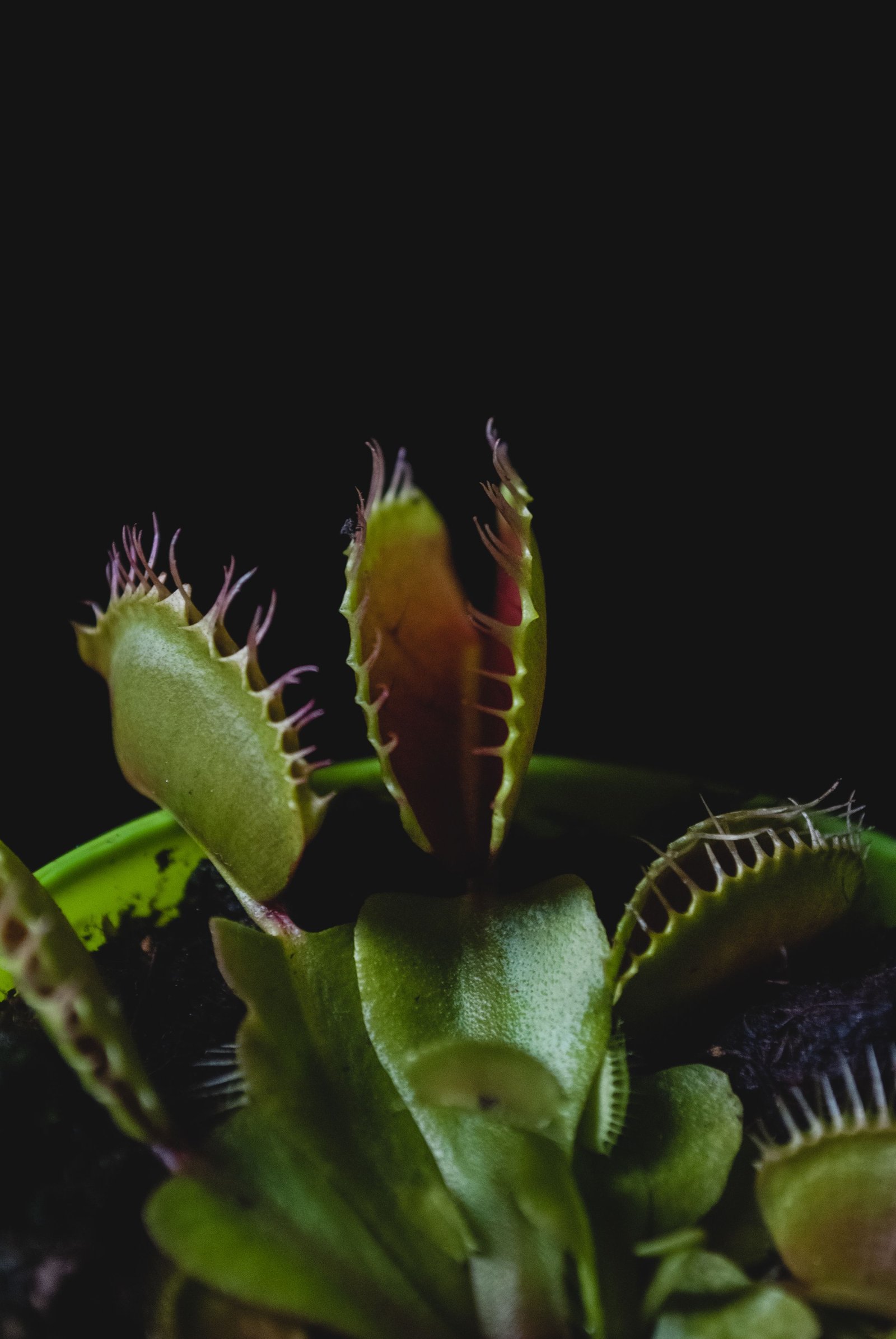
Venus Flytrap has hinged leaf traps edged with tooth-like bristles. A low rosette can hold green or reddish traps, and new traps replace older ones as the plant grows. Its unusual leaves make it easy to recognize, but keeping it healthy involves more than feeding it flies.
Although commonly sold beside houseplants, it is a temperate bog plant rather than a year-round warm-room tropical. It needs strong light and a winter rest. ASPCA lists Dionaea muscipula as non-toxic to cats and dogs, but pets should still be prevented from damaging or eating it.
Caring for Your Venus Flytrap
Light. Provide strong direct light, acclimating a newly bought plant gradually. Ordinary room lighting is inadequate; indoor growing may require a suitable grow light.
Water. Use rainwater, distilled water or suitably low-mineral reverse-osmosis water. Keep the medium moist in active growth, often using a shallow water tray. Do not assume ordinary filtered tap water has had its dissolved minerals removed.
Growing mix. Use a specialist, unfertilized carnivorous-plant mix. Ordinary enriched potting compost and added fertilizer can damage the plant.
Feeding. Do not feed meat or cheese or repeatedly trigger the traps for entertainment. The plant obtains energy from light; insects provide supplementary nutrients. It needs far fewer insects than its appearance suggests.
Winter rest. Plan a cool, bright winter resting place and reduce standing water while keeping the medium slightly moist. Protect small pots from severe or prolonged freezing. Advice to overwinter outdoors in a mild climate is not a safe rule for a Canadian winter.
Common Problems & Fixes
One black trap. An old or damaged trap can die naturally. Remove it once fully dead; do not assume the whole plant is failing.
Many traps failing. Review water quality, light, compost and recent handling. Fertilizer exposure and repeated triggering are common avoidable stresses.
Small winter growth. A smaller resting rosette can be seasonal. A soft, rotting growing center is different and needs investigation.
Weak plant flowering. A flower stalk takes resources. Removing it can help conserve energy when the plant is struggling.
Propagating Your Venus Flytrap
When repotting an established plant near the start of active growth, separate only clearly formed divisions with their own growing points and roots. Use the same low-mineral water and unfertilized medium as for the parent.
Seed propagation is slower and seedlings need careful moisture and light control. Buy nursery-propagated plants; never collect wild flytraps. A newly divided plant should establish healthy growth before being encouraged to flower.