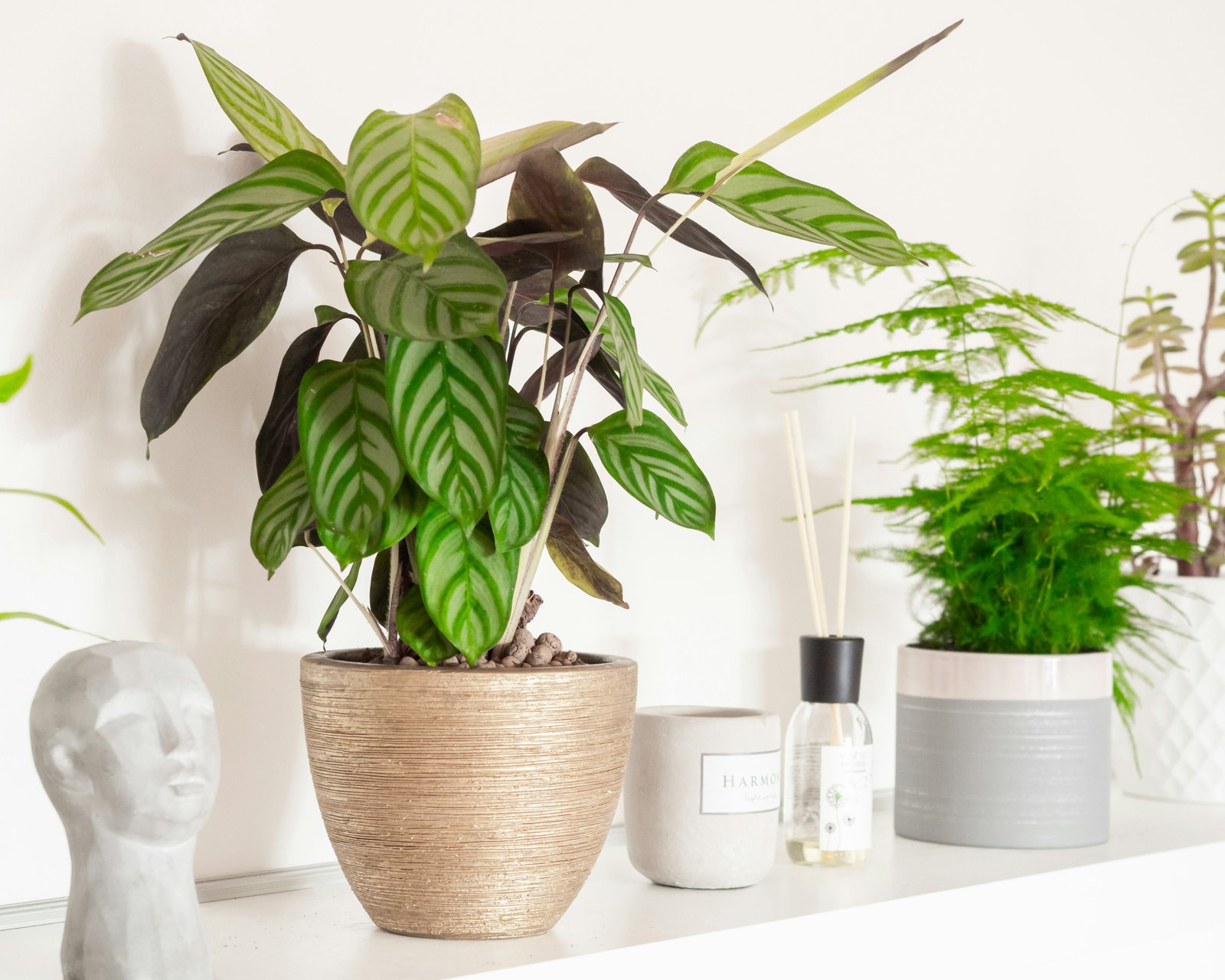
Calatheas are show-stoppers. Their leaves come in remarkable patterns — stripes, brushstrokes, and painterly markings in green, silver, pink, and deep purple undersides — and many of them move, folding upward at night and opening by day, which earned the group the nickname prayer plants. When a calathea is happy, few houseplants are more beautiful.
The honest catch: calatheas are among the fussier common houseplants, and they have a reputation for testing your patience. They come from humid tropical forest floors, and they're particular about humidity, moisture, and even the water you use. This is a plant to take on when you're ready to fuss a little — but the payoff is genuinely spectacular foliage.
Caring for Your Calathea (Prayer Plant)
Light. Medium, indirect light. Calatheas evolved under the forest canopy, so they don't want direct sun, which fades their patterns and scorches the leaves. Too little light, though, dulls the coloring — a moderately bright spot out of direct rays is the target.
Water. Keep the soil lightly and consistently moist, never soggy and never bone dry. Here's the twist that trips people up: calatheas are sensitive to the minerals and chemicals in tap water, which can cause brown, crispy leaf edges. Using filtered water, rainwater, or tap water left out overnight makes a noticeable difference.
Humidity. High humidity is essential — this is non-negotiable for a happy calathea. Dry indoor air leads straight to brown edges and curling. A humidifier is the most reliable fix; pebble trays and grouping plants help but often aren't enough on their own.
Soil and potting. A rich, moisture-retentive but draining mix, in a pot with drainage.
Feeding. Feed lightly during the growing season; they don't need much and are sensitive to over-fertilizing.
Common Problems & Fixes
Brown, crispy leaf edges. The signature calathea struggle. Usually low humidity, and often the minerals in tap water. Raise humidity and switch to filtered or distilled water.
Curling leaves. Typically thirst or low humidity — the plant curling to conserve moisture. Check that the soil is evenly moist and the air isn't too dry.
Fading patterns / dull color. Often too much direct light bleaching the leaves, or sometimes too little light. Aim for moderate indirect light.
Yellowing leaves. Frequently overwatering to the point of sogginess.
Leaves not moving / staying flat. The day-night movement can slow when the plant is stressed or the light cycle is off; usually not a serious concern on its own.
Pests. Spider mites love the dry conditions that also stress calatheas, so keeping humidity up helps on both fronts.
Propagating Your Calathea (Prayer Plant)
Calatheas are propagated by division — separating an established clump into smaller plants — rather than by leaf or stem cuttings.
The right moment is when you're repotting. Remove the plant and gently tease the root ball apart into sections, each with several leaves and a healthy portion of roots. Try to disturb the roots as little as possible, since calatheas dislike being messed with.
Pot each division into moist, rich mix and — importantly — keep the humidity high and the light gentle while it recovers. Calatheas can sulk after division, so expect a settling-in period, and don't panic at a bit of drooping at first. Steady warmth, moisture, and humidity carry them through.