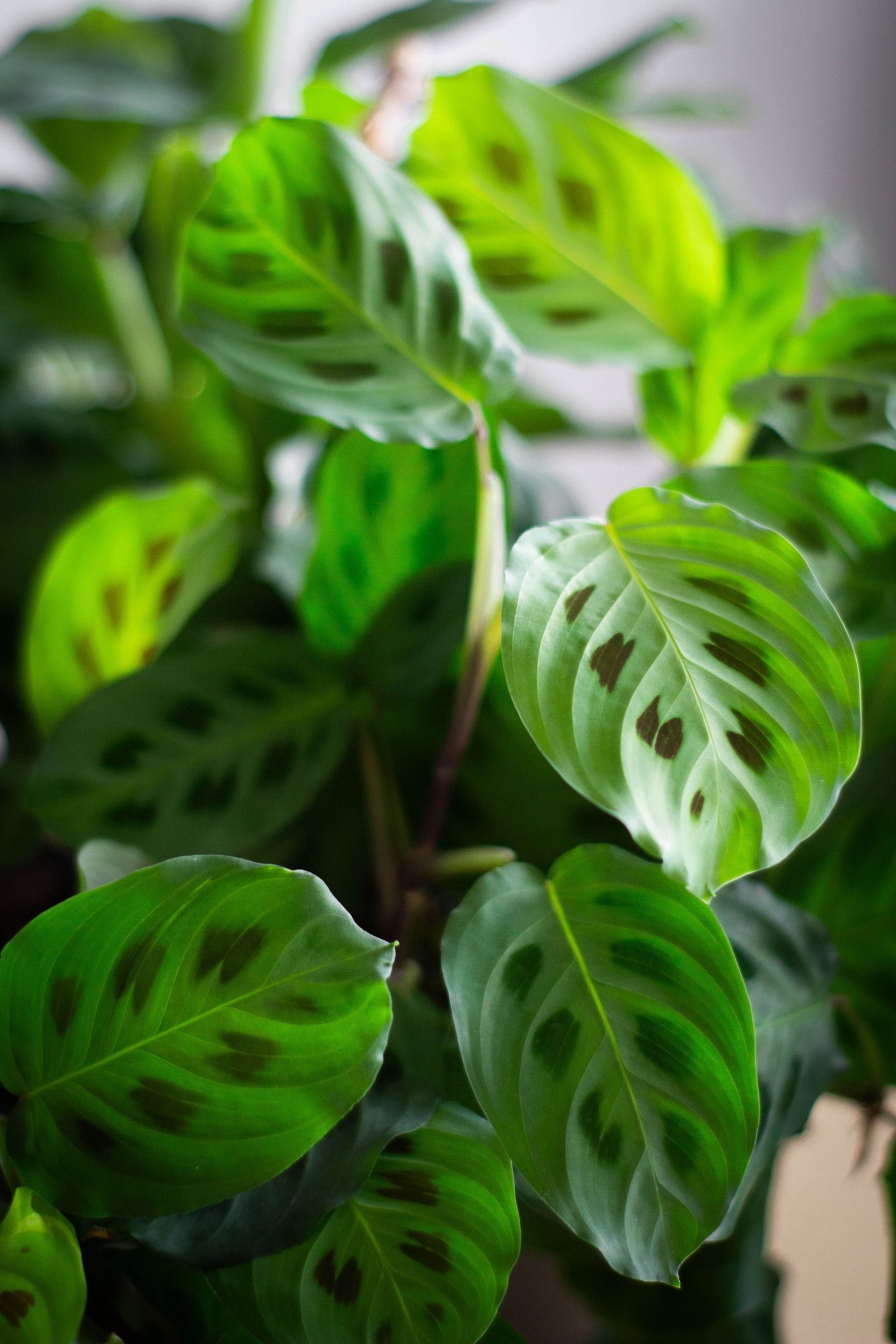
The Prayer Plant earns its name from a daily movement: its patterned leaves lift and fold upward after dark, then open again in daylight. Maranta leuconeura stays comparatively low and spreading, with bold veining and markings that make it especially appealing on a shelf or in a hanging pot.
"Prayer plant" is also used loosely for other members of the same family, including the Calathea group. This guide is specifically for Maranta leuconeura; see our Calathea guide for that separate group. Maranta likes a warm, humid setting and evenly moist, airy soil. It is not a plant to soak and forget, but its leaf movements make it rewarding to observe.
Caring for Your Prayer Plant
Light. Bright, indirect or gently filtered light preserves the pattern. Strong direct sun can fade or scorch the leaves; deep shade slows growth and dulls the markings.
Water. During active growth, keep the mix lightly and evenly moist, watering when the surface begins to dry. Let excess water drain and never leave the pot standing in it. In cooler, darker months, let the top layer dry a little more before watering. Maranta can react to salts and fluoride in some tap water; if tips keep browning despite sound care, try rainwater or filtered water.
Humidity and temperature. High humidity and steady warmth help prevent crispy edges. A humidifier or grouping plants is more dependable than occasional misting. Avoid cold windows and heater or air-conditioner drafts.
Soil and feeding. Use a moisture-retentive but free-draining potting mix and a pot with drainage. Feed lightly during spring and summer; too much fertilizer can burn the leaf edges.
Growth habit. Allow the stems to spread or trail. Prune an overly long stem just above a node to keep the plant compact.
Common Problems & Fixes
Crispy brown edges. Low humidity, dry spells, mineral-heavy water or excess fertilizer are common contributors. Check the soil pattern first, then humidity and water quality.
Leaves curling or drooping. Often a thirsty plant, but cold or wet, damaged roots can look similar. Feel the mix before changing your watering routine.
Yellow leaves and soft stems. Soggy soil can cause root or crown rot. Improve drainage and avoid pouring water into the crown.
Faded markings or pale patches. Strong sun can bleach leaves; very low light can also reduce vivid new growth. Move gradually to a brighter filtered spot.
No nighttime folding. The amount of movement varies with light, temperature and the individual plant; lack of dramatic folding alone is not a diagnosis.
Pests. Inspect leaf undersides for spider mites and mealybugs, especially in dry rooms.
Propagating Your Prayer Plant
The most dependable way to multiply an established prayer plant is division. During repotting, lift the root mass and gently separate a clump with both stems and roots attached. Pot each division into a small container of moist, free-draining mix, keep it warm and humid, and avoid harsh light while it settles.
Healthy stem cuttings can also root if they include a node. Cut just below the node and place that node in water or moist mix, keeping the leaves above the waterline. When a useful root system forms, pot the cutting without leaving the mix saturated. A detached leaf without a node will not grow into a new Maranta.