⚠Toxic to cats & dogs.
Black Velvet Alocasia is poisonous if chewed or eaten —
keep it out of reach of pets and children.
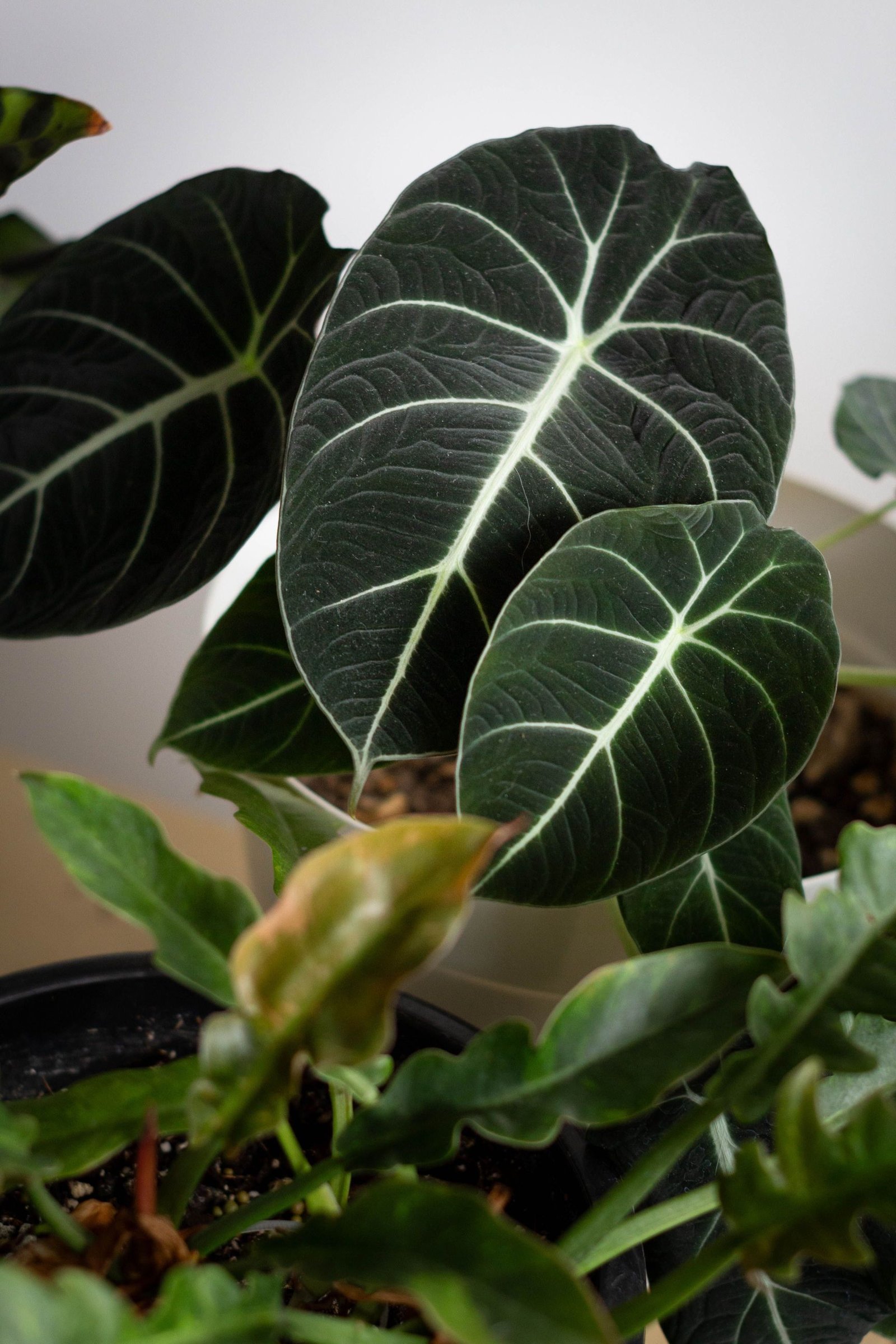
Black Velvet Alocasia is a compact Alocasia with thick, very dark leaves and pale contrasting veins. The velvety surface is a key feature, making it visually different from the glossy leaves of many other aroids. This guide covers Alocasia reginula, not every plant sold as an elephant ear.
Its small size does not mean it tolerates neglect. Stable warmth, humid air and oxygen around the roots are important. NC State flags Alocasia as a problem for cats and dogs, and the irritating sap makes gloves sensible when handling damaged leaves or dividing plants.
Caring for Your Black Velvet Alocasia
Light. Use bright, indirect light. Strong direct sun can damage the leaves, while a dark corner slows new growth.
Water. Allow the upper part of the mix to dry before watering thoroughly and draining. Avoid keeping the root ball saturated, but do not repeatedly dry an actively growing plant to a crisp.
Mix and pot. Choose a loose houseplant mix improved with coarse material for drainage. Use a modest pot with drainage holes; extra wet compost is not helpful to a small root system.
Warmth and humidity. Keep it above about 16 degrees C during growth and away from drafts. Raise humidity with a humidifier if needed, while maintaining airflow.
Feeding and seasonal slowdown. Feed at the label rate during active growth. If growth slows or foliage dies back in winter, reduce water and stop feeding. A resting plant uses less water; continuing summer watering can rot the underground stem.
Common Problems & Fixes
Yellowing leaves. An oldest leaf may be shed, but several yellowing together warrant a check of roots, watering and temperature.
Crisp edges. Review humidity, dry spells and direct sunlight. Damaged margins will not become green again.
Fine webbing or stippled leaves. Check undersides for spider mites and isolate an affected plant.
No leaves. Seasonal decline does not prove the plant is dead. A firm underground stem may regrow; a soft, foul-smelling base suggests rot instead.
Propagating Your Black Velvet Alocasia
The simplest method is separating a rooted offset when repotting an established plant. Keep a growing point and as many roots as possible with each division, and use a small pot of airy mix.
Warmth and careful moisture management help the division establish. Do not divide a weak plant merely to increase numbers. A detached leaf without a viable growing point is not a dependable route to a new Alocasia. Wear gloves and clean tools after handling the sap.