⚠Toxic to cats & dogs.
Pothos (Marble Queen) is poisonous if chewed or eaten —
keep it out of reach of pets and children.
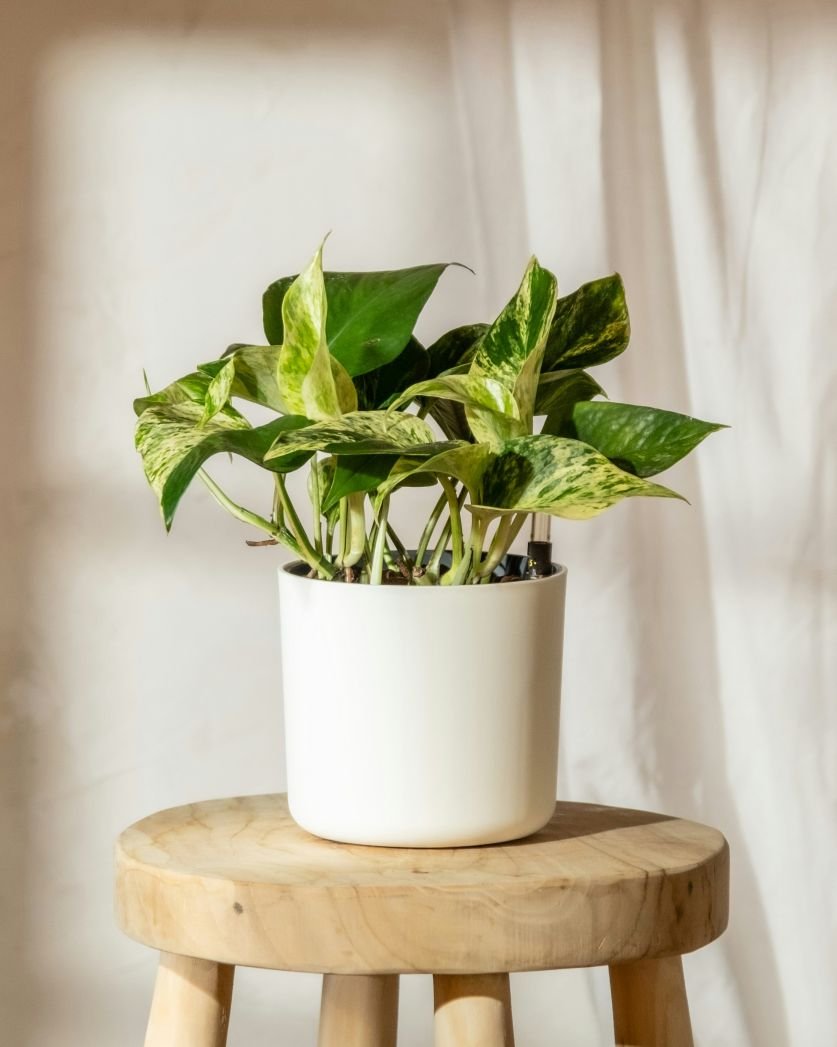
The Marble Queen is one of the most beautiful pothos varieties — its heart-shaped leaves are heavily marbled and streaked with creamy white, so much so that some leaves are nearly half white. It has all the easygoing, near-unkillable nature that makes pothos the go-to beginner plant, just dressed up in especially striking variegation.
The one meaningful difference from the plain golden pothos comes from all that white: the pale parts of the leaves can't photosynthesize, so the Marble Queen grows more slowly and needs a bit more light to stay healthy and keep its variegation. Otherwise, if you can grow a golden pothos, you can grow this one. Like other pothos, it's toxic to pets if chewed.
Caring for Your Pothos (Marble Queen)
Light. Bright, indirect light is important here — more than the plain green pothos needs. The heavy white variegation means less green surface to gather light, so a bright (indirect) spot keeps the plant healthy and preserves that marbling. In low light, new growth tends to come in greener with less white, and the plant grows sluggishly.
Water. Water when the top 2 inches of soil dry out, then drain. Like all pothos, it strongly prefers slightly dry to constantly wet, and droopy leaves perk back up quickly after watering. Easy and forgiving.
Humidity. Average household humidity is fine.
Soil and potting. Any standard well-draining potting mix in a pot with drainage. Trim leggy vines to keep it full.
Feeding. A monthly balanced fertilizer in spring and summer keeps it vigorous.
Common Problems & Fixes
New leaves coming in greener / losing variegation. Not enough light. Move it somewhere brighter (indirect) to bring the white marbling back on new growth.
Yellow leaves. Usually overwatering; let the soil dry more and confirm drainage.
Brown, crispy leaf tips or edges. Often underwatering, very dry air, or mineral buildup from tap water. The all-white sections are also more prone to browning, since they're more fragile.
Slow growth. Partly natural for a heavily variegated plant, but very slow growth in a dim spot points to needing more light.
Leggy vines. Too little light, or a plant due for a trim. Pinch back to encourage fullness.
The Marble Queen propagates as easily as any other pothos, which is to say very easily — a great way to make more of this pretty variety.
Snip a vine just below a node (the little bump where roots form), keeping a few leaves per cutting, and place the cuttings in water with the nodes submerged. Set the glass in bright indirect light and refresh the water every few days. Roots usually appear within a week or two.
Once the roots are an inch or two long, pot the cuttings into moist soil, planting several together for a fuller result. One tip: try to include some cuttings with more green in the leaves, as heavily white cuttings root and grow more weakly on their own.