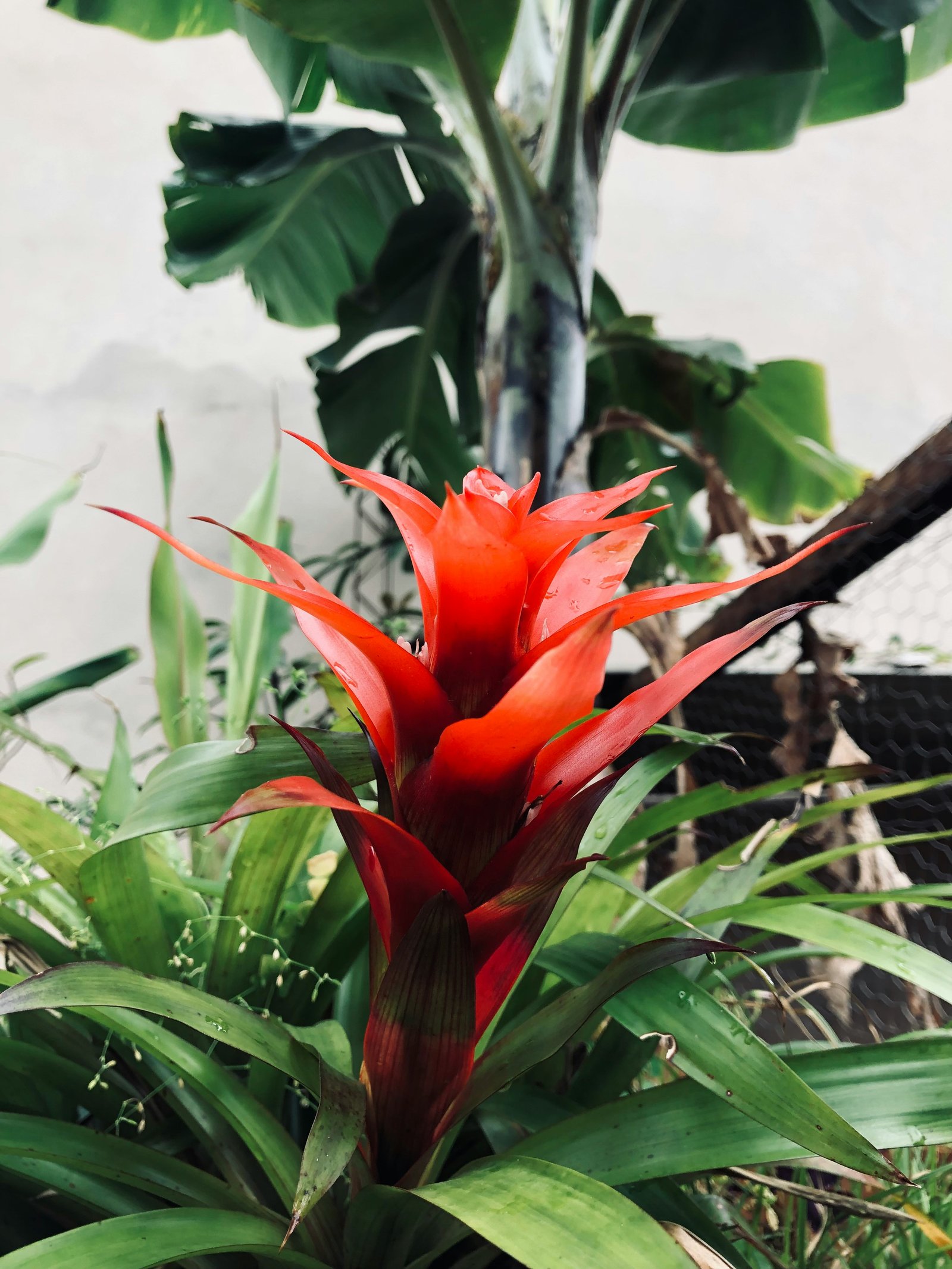
Bromeliads bring a burst of the tropics indoors, with a dramatic, long-lasting central bloom in fiery reds, oranges, pinks, or yellows rising from a rosette of strappy green leaves. That colorful "flower" is actually a bract (modified leaves) and it can stay vivid for months, which makes a bromeliad a fantastic value for lasting color. Many common types are safe around cats and dogs, too.
Bromeliads have a fascinating quirk that shapes how you care for them: many are epiphytes that grow on trees in the wild, gathering water in the central cup formed by their leaves. That single fact makes them water differently from almost any other houseplant — you water the cup, not just the soil.
Caring for Your Bromeliad
Light. Bright, indirect light is ideal and helps keep the color vivid. Most bromeliads dislike harsh direct sun, which can scorch, but they do want good brightness.
Water. Here's the distinctive part: for the common tank-type bromeliads, keep a little water in the central cup formed by the rosette of leaves, and refresh it every week or two to keep it from going stagnant (flush it out and refill). Water the soil only lightly, letting it dry between waterings — the roots are more for anchoring than heavy drinking, and soggy soil causes rot. Using filtered water or rainwater in the cup is gentler than hard tap water.
Humidity. They enjoy higher humidity, reflecting their tropical origins, but tolerate average household air.
Soil and potting. A very well-draining, airy mix (often an orchid or bromeliad mix) in a pot with drainage. They have small root systems and like to be snug.
Feeding. Feed sparingly; bromeliads need very little fertilizer, and too much can harm them.
Common Problems & Fixes
The bloom fading and dying. This is natural and not a failure: a bromeliad blooms once, and after the bract fades (which can take months), the mother plant slowly declines. The good news is it produces pups (offsets) to carry on — see propagation.
Rotting center or base. Usually from stagnant water left too long in the cup, or soggy soil. Flush the cup regularly and keep the soil on the drier side.
Brown leaf tips. Often low humidity, or minerals in tap water; try filtered water.
Faded color. Can be too little light.
Scorched, bleached leaves. Too much direct sun.
Pests. Generally hardy; occasionally scale or mealybugs.
Propagating Your Bromeliad
Bromeliads propagate through pups — the baby offset plants that appear at the base of the mother after it has bloomed. This is the plant's natural life cycle: it flowers once, then channels its energy into producing the next generation.
Let the pups grow until they're roughly a third the size of the mother and have started forming their own roots. Then cut or gently pull a pup away from the parent, keeping any roots intact, and pot it in a well-draining bromeliad or orchid mix.
Care for the pup as you would the parent. It will take a while — often a year or more — before a pup matures and produces its own bloom, so bromeliad propagation rewards patience. But it means one plant keeps giving you new ones over time.