⚠Toxic to cats & dogs.
Tradescantia Zebrina is poisonous if chewed or eaten —
keep it out of reach of pets and children.
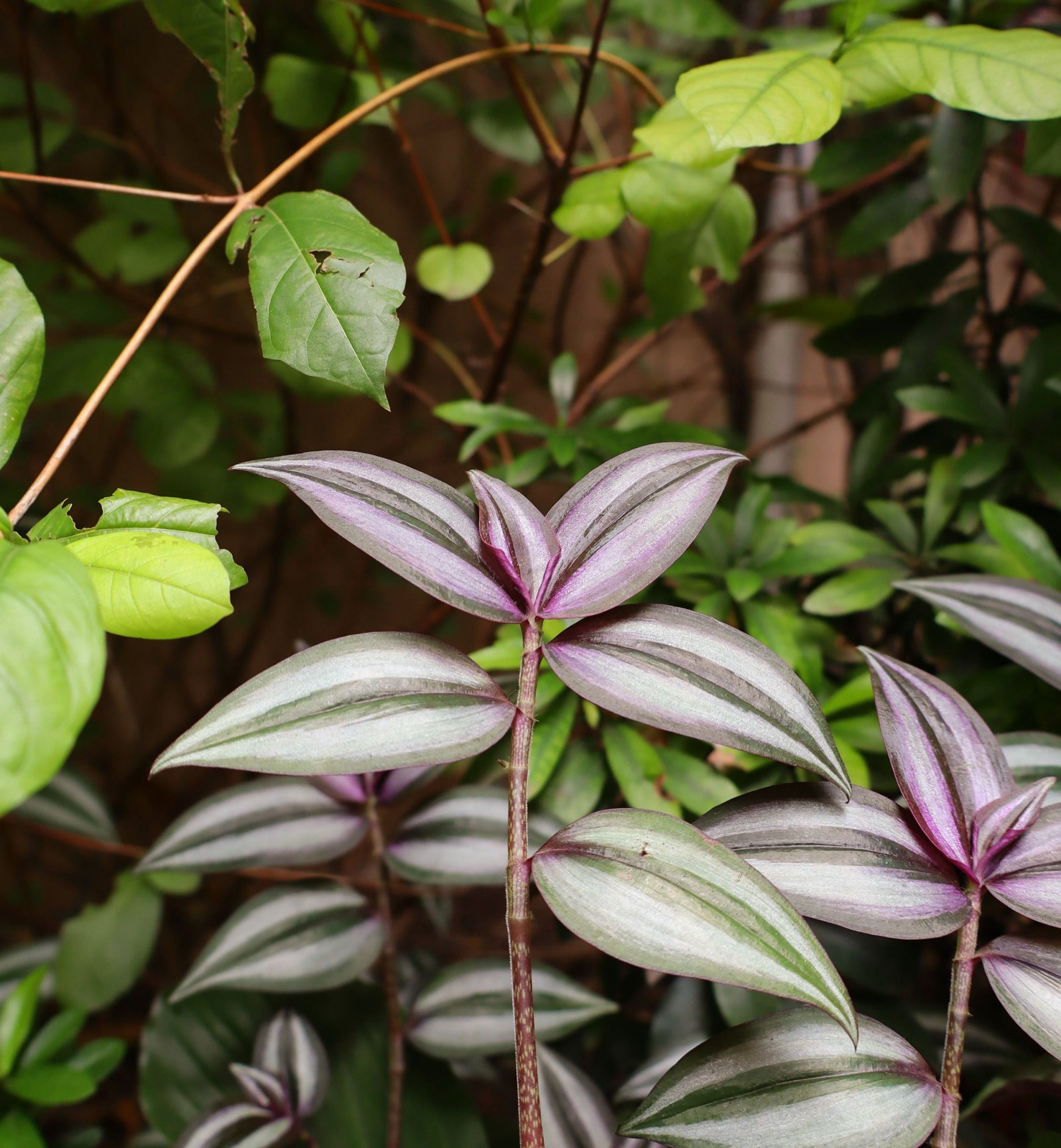
Tradescantia zebrina is a fast-growing trailing plant with silvery stripes above and rich purple beneath each leaf. In a bright room it can make a hanging basket look full quickly, and a few cuttings can refresh an older plant just as quickly. It is often called inch plant, but that common name is shared by other Tradescantia species.
Its easy growth comes with a trade-off: older stems can go bare, especially in low light. Regular trimming and replanting the cuttings are part of keeping it lush, not signs of failure. Its sap can irritate skin, and North Carolina State Extension flags this species as a problem for cats and dogs, so keep it out of reach of pets that nibble plants.
Caring for Your Tradescantia Zebrina
Light. Give bright, filtered light to maintain the strongest silver and purple coloring. Gentle morning sun can work, but intense afternoon sun may bleach or scorch the leaves. Low light produces stretched, duller stems.
Water. Water when the top inch or so of the mix has dried, then drain thoroughly. Reduce watering in winter. The succulent-leaning stems tolerate a brief dry spell better than a pot that stays wet for days.
Humidity and temperature. Normal household humidity is usually adequate. Keep it warm and away from freezing windows or cold drafts.
Soil and potting. Use a standard well-draining mix in a pot with drainage. A wide hanging pot gives cuttings room to root and fill the top.
Pruning and feeding. Pinch or cut back growing tips to encourage branching. Replant healthy cuttings into the same pot when it gets bare at the crown. Feed lightly during active spring and summer growth.
Handling. The watery sap can irritate sensitive skin; wash hands after pruning and keep cut stems away from pets.
Common Problems & Fixes
Long bare stems. Common with age, but worse in insufficient light. Move to a brighter filtered spot, prune, and tuck rooted cuttings into the pot to rebuild fullness.
Fading stripes or purple color. Usually too little light; adjust gradually rather than moving the plant abruptly into harsh sun.
Crispy patches. Direct hot sun or repeated drying can scorch foliage. Check where the light falls at midday.
Mushy stems or roots. Wet, poorly drained soil can cause rot. Remove damaged growth and restart healthy tips as cuttings.
Brown leaf marks. Crowded, wet foliage may encourage leaf spotting; water the mix rather than leaving leaves damp.
Pests. Look for aphids, mealybugs, scale, whiteflies or spider mites and isolate a newly infested plant.
Propagating Your Tradescantia Zebrina
Stem cuttings are the easiest way to propagate Tradescantia zebrina. Snip a healthy section with two or more nodes, remove the leaves from the lowest node, and place that node in water or moist potting mix. Keep the cutting in bright, indirect light; nodes usually root readily in warm conditions.
Once there is a small root system, pot several cuttings together for a fuller start. You can also lay a stem across the soil and pin a node against the surface to let it root before separating it from the parent. Refresh an aging basket this way rather than trying to make bare lower stems grow leaves again.