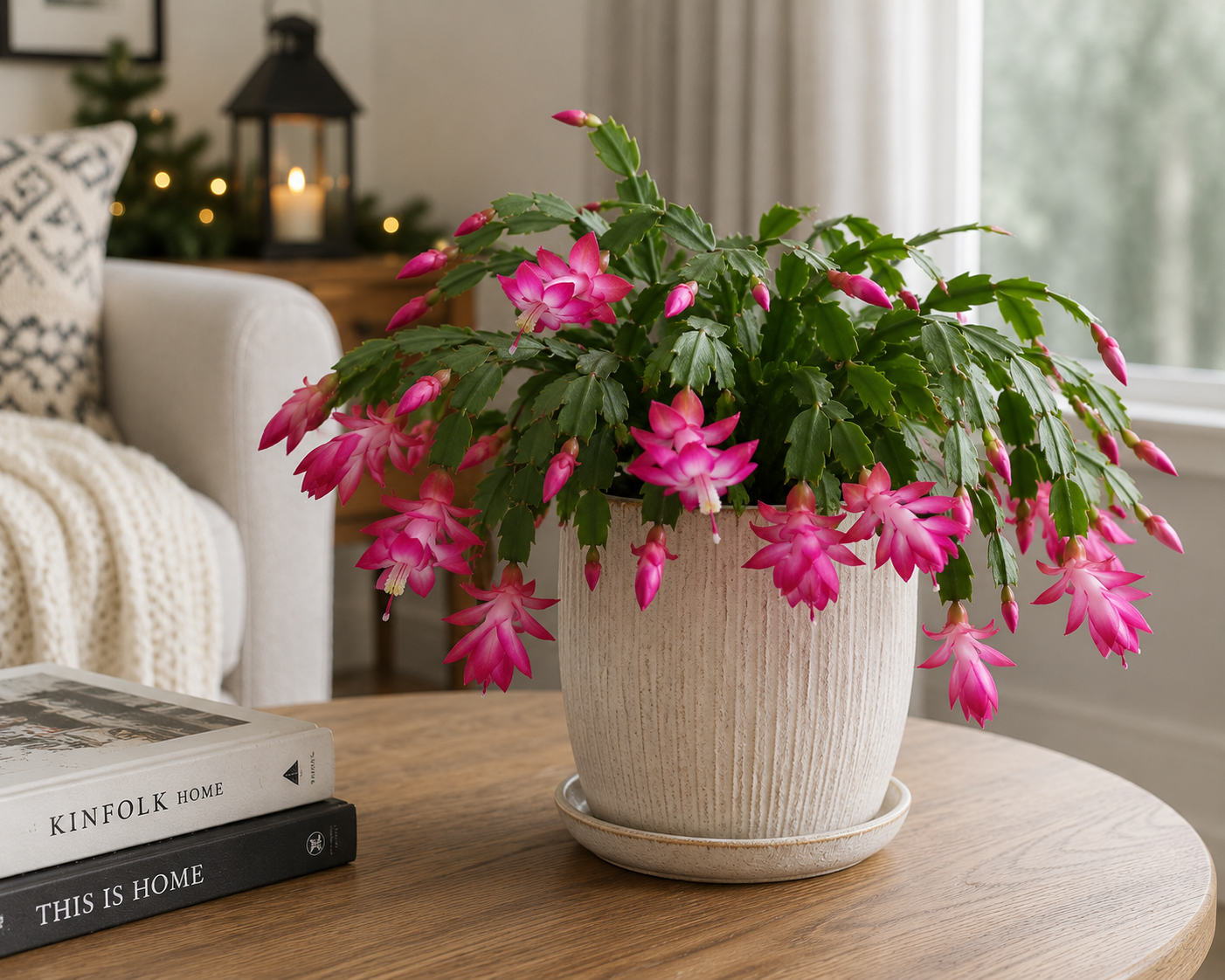
Original photo by RadixPlants — photographed locally with the owner’s permission.
The Christmas Cactus is a holiday favorite, bursting into arching, tubular blooms of pink, red, purple, or white right around the winter holidays. It's long-lived — plants are often passed down through generations — safe for cats and dogs, and easier than its reputation suggests. The key to understanding it is a surprise: despite being a cactus, it's not a desert plant at all.
Christmas cacti are jungle cacti, native to the rainforests of Brazil, where they grow on trees in humid, shaded conditions. That completely changes the care from what you'd expect of a cactus: it wants more water and more humidity than a desert cactus, and it dislikes hot, dry, sunny conditions. Get that mental shift right and it's a wonderfully rewarding, long-blooming plant.
Caring for Your Christmas Cactus
Light. Bright, indirect light suits it best, matching its shaded-forest origins. It doesn't want the harsh, full sun a desert cactus would take — too much direct sun can scorch or redden the segments.
Water. Unlike a desert cactus, the Christmas cactus likes to stay lightly moist during active growth. Water when the top inch of soil dries out, then drain — don't let it dry out completely for long stretches the way you would a true desert cactus, but don't keep it soggy either. Ease back somewhat after blooming.
Humidity. It appreciates higher humidity than most cacti, reflecting its rainforest home. A pebble tray or nearby humidifier helps, especially with indoor winter heating.
Soil and potting. A well-draining mix (a blend of potting soil and something gritty) in a pot with drainage. It likes to be a bit snug.
Getting it to bloom. Christmas cacti set buds in response to cooler temperatures and longer nights in fall. Giving them cool nights and about 12–14 hours of uninterrupted darkness for several weeks in autumn reliably triggers blooming. Once buds form, avoid moving the plant, as sudden changes can make it drop the buds.
Feeding. Feed during active growth in spring and summer; ease off as blooming approaches.
Common Problems & Fixes
Dropping buds before they open. A common frustration, usually caused by a sudden change — being moved, a draft, a shift in light or temperature, or inconsistent watering. Once buds set, keep conditions steady and leave the plant put.
Not blooming. Usually because it didn't get the cool temperatures and long, dark nights it needs in fall to trigger buds (see care).
Limp, wrinkled, or reddish segments. Can be underwatering, or the opposite — root rot from overwatering. Check the soil. Reddening can also come from too much direct sun.
Mushy segments or base. Overwatering and rot; let it dry more and check drainage.
Pests. Watch for mealybugs and, in soggy soil, fungus gnats.
Propagating Your Christmas Cactus
Christmas cacti are among the easiest plants to propagate, which is a big reason they get shared across families and generations.
Twist or snip off a healthy segment or two (a section made of several of the flat, jointed pads). Let the cut end sit and callus over for a day or two — this step helps prevent rot. Then insert the bottom end into moist, well-draining soil, just deep enough to stand up.
Keep it lightly moist and in bright, indirect light. Roots form over a few weeks, and the cutting grows into a new plant. Starting several segments in one pot gives a fuller plant faster. It's a lovely plant to propagate as gifts, especially from a cherished older specimen.