⚠Toxic to cats & dogs.
Umbrella Plant is poisonous if chewed or eaten —
keep it out of reach of pets and children.
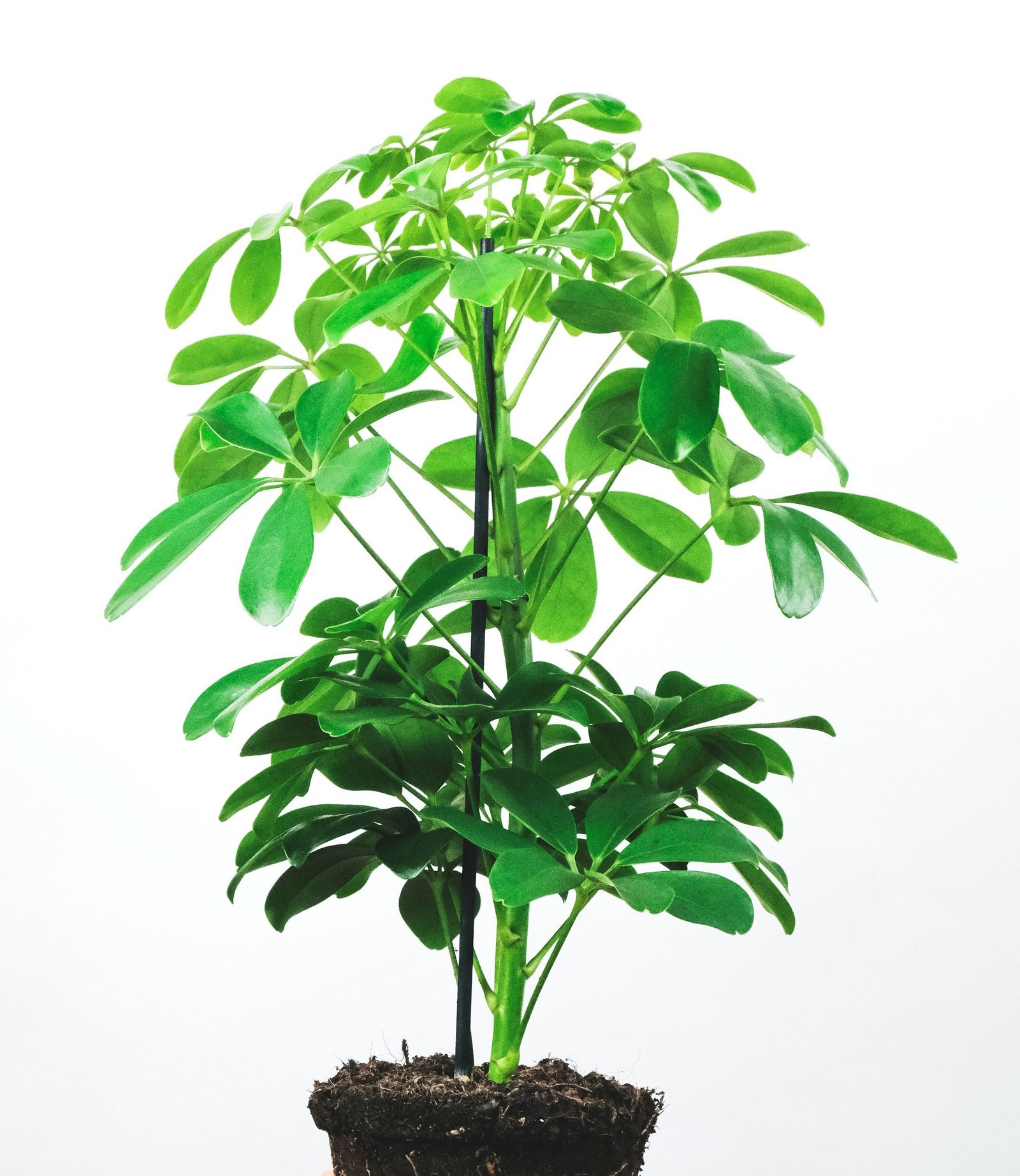
The Umbrella Plant, or Schefflera, is a fast-growing, glossy-leaved houseplant named for the way its leaflets radiate out from a central point like the spokes of an umbrella. It comes in a larger form (Schefflera actinophylla) and a smaller, more common houseplant form (Schefflera arboricola, sometimes called dwarf umbrella tree), and both make lush, upright, tree-like plants that fill a space quickly and cheerfully.
It's an easygoing, adaptable plant that tolerates a range of conditions, which makes it popular for both homes and offices. Its main tendencies to manage are getting leggy in low light and a dislike of overwatering. Note that Schefflera is toxic to pets if chewed.
Caring for Your Umbrella Plant
Light. Bright, indirect light keeps it full, healthy, and (in variegated types) colorful. It tolerates medium light but grows leggy and sparse in dim conditions. Avoid harsh direct sun, which can scorch. Good light is the main thing that keeps it looking lush rather than stretched.
Water. Water when the top inch or two of soil dries out, then drain thoroughly. Scheffleras dislike being waterlogged — overwatering causes leaf drop and root problems — but also don't want to stay bone dry for long. Aim for a moderate, let-it-dry-a-bit rhythm, and water less in winter.
Humidity. Average household humidity is generally fine, though it appreciates a bit more.
Soil and potting. A standard well-draining potting mix with drainage holes. It grows fast and may need repotting every year or two.
Pruning. Because it can get tall and leggy, don't be afraid to prune — cutting it back encourages bushier, fuller growth and keeps it shapely.
Feeding. Feed during the growing season to support its quick growth.
Common Problems & Fixes
Dropping leaves. A common Schefflera complaint, usually from overwatering, but also from sudden changes, cold drafts, or too little light. Check watering first, then stability and light.
Leggy, sparse, stretched growth. Too little light. Move it brighter and prune to encourage fullness.
Yellowing leaves. Typically overwatering; let the soil dry more and confirm drainage.
Brown leaf tips. Often dry air, underwatering, or minerals in tap water.
Fading variegation. Not enough light for variegated types.
Pests. Scheffleras are fairly prone to spider mites, scale, and mealybugs — inspect regularly, especially in dry indoor air.
Propagating Your Umbrella Plant
Umbrella plants can be propagated from stem cuttings, and pruning a leggy plant gives you material to work with.
Take a cutting several inches long with a few leaves, cutting just below a node. You can root it in water or directly in moist, well-draining soil. Rooting is more reliable with warmth, and covering the cutting loosely to raise humidity can help. Roots typically form over several weeks.
Air layering is another method sometimes used on taller, woody specimens to propagate from a thicker stem. For most people, though, a simple stem cutting kept warm and humid is the straightforward route. Once rooted, pot the cutting up and treat it as a young Schefflera.