⚠Toxic to cats & dogs.
Chinese Evergreen is poisonous if chewed or eaten —
keep it out of reach of pets and children.
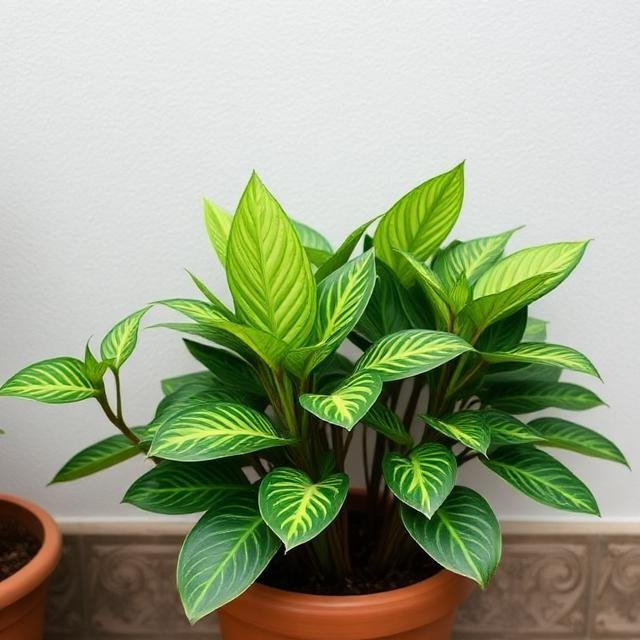
The Chinese Evergreen, or Aglaonema, is a bit of a hidden gem: it has the colorful, patterned foliage of a fussy tropical plant but the easygoing temperament of a beginner's plant. The leaves come in beautiful combinations of green, silver, cream, and — in newer varieties — striking pinks and reds, and yet the plant tolerates low light and irregular care far better than its glamorous looks suggest.
Native to tropical Asia, it's become a staple of offices and homes precisely because it looks great and asks little. If you want color and pattern without the demands of a calathea, this is an excellent choice.
Caring for Your Chinese Evergreen
Light. Very adaptable. The darker green varieties tolerate low to medium indirect light well, making them good for dimmer rooms. The more colorful pink and red varieties want brighter (still indirect) light to keep their coloring vivid. Avoid direct sun, which can scorch the leaves.
Water. Water when the top 2 inches of soil have dried out, then drain well. Chinese Evergreens like to dry out somewhat between waterings and are forgiving of the occasional lapse. They're more tolerant of underwatering than overwatering, so err on the drier side.
Humidity. Average household humidity is fine, though they appreciate a bit more. They're far less humidity-demanding than calatheas or ferns.
Soil and potting. A standard well-draining potting mix with drainage holes. They're slow-growing and don't need frequent repotting.
Feeding. Feed lightly a couple of times during spring and summer.
A safety note. Aglaonema is toxic to cats and dogs if chewed or eaten, so keep it out of pets' reach.
Common Problems & Fixes
Yellowing leaves. Usually overwatering; let the soil dry out more between waterings and check drainage. Some yellowing of old lower leaves is natural.
Brown leaf tips or edges. Often dry air, inconsistent watering, or sensitivity to minerals in tap water.
Fading or dull color (in colorful varieties). Usually not enough light. Move a pink or red variety somewhere brighter (indirect) to restore the coloring.
Drooping. Check the soil — either too dry or too wet. Chinese Evergreens tell you fairly clearly.
Curled or distorted new growth. Can indicate cold stress; they dislike cold drafts and temperatures below the mid-50s Fahrenheit.
Pests. Generally hardy; occasionally mealybugs, spider mites, or scale.
Propagating Your Chinese Evergreen
Chinese Evergreens are propagated by division, and sometimes by stem cuttings on older, leggier plants.
Division is the usual method: when repotting, separate the clumps of stems, making sure each section has both roots and leaves, and pot them up individually. This is the most reliable route.
Stem cuttings can work on plants that have developed a longer, barer stem over time. Cut a section of stem with a few leaves, and root it in water or moist soil.
Keep new divisions or cuttings warm and in gentle light while they establish. Aglaonema is slow-growing, so propagation rewards a bit of patience, but it's undemanding along the way.