⚠Toxic to cats & dogs.
Dracaena Marginata is poisonous if chewed or eaten —
keep it out of reach of pets and children.
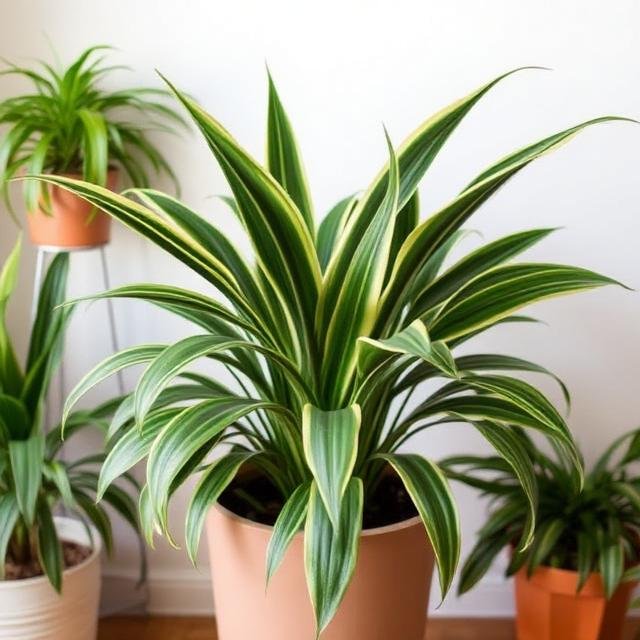
The Dracaena Marginata, or dragon tree, is a striking architectural plant — slender canes topped with fountains of thin, arching leaves edged in red. It grows slowly into a tall, sculptural specimen that suits modern spaces, and it's forgiving enough to handle a fair bit of neglect, which makes it a popular choice for both homes and offices.
Native to Madagascar, it's adapted to get by on relatively little water, and it tolerates a range of light. Its one quirk worth knowing up front: like some other dracaenas, it can be sensitive to fluoride and other chemicals in tap water, which show up as brown leaf tips.
Caring for Your Dracaena Marginata
Light. Medium to bright indirect light is ideal. It tolerates lower light but grows slowly and may lose some of the red leaf color there. Keep it out of harsh direct sun, which can scorch the thin leaves.
Water. Let the top 2 inches of soil dry out before watering, then drain well. The dragon tree is drought-tolerant and much happier slightly dry than overwatered. It needs noticeably less water in winter.
Humidity. Average to slightly-below-average household humidity is fine; it's not demanding here.
Soil and potting. A well-draining potting mix with drainage holes. It's slow-growing and doesn't need frequent repotting.
Water quality. If you see brown leaf tips, your tap water may be the culprit — dracaenas can react to fluoride and salts. Try filtered water, rainwater, or tap water left out overnight.
Feeding. Light feeding a couple of times over spring and summer is plenty.
Common Problems & Fixes
Brown leaf tips. Very common, and often a reaction to fluoride, chlorine, or salts in tap water — or to dry air and inconsistent watering. Switching water sources frequently helps.
Yellowing leaves. Some loss of older lower leaves is normal as the plant grows a bare cane; widespread yellowing usually means overwatering.
Drooping or soft canes. Overwatering and possible root rot — let it dry and check the roots.
Fading red leaf edges. Often too little light; move it brighter.
Bare, leggy canes. Natural to some degree, but more pronounced in low light. You can cut back a cane to encourage new growth from below.
Pests. Watch for spider mites and mealybugs.
Propagating Your Dracaena Marginata
Dracaena Marginata propagates readily from stem cuttings, and it's a good way to deal with a plant that's gotten too tall or leggy.
Cut a section of cane several inches long. You can root the top cutting (the leafy end) in water or moist soil, and you can also root sections of the bare cane — just keep track of which end was up, since they only root from the bottom end and sprout from the top.
Place cuttings in water or a well-draining mix in a warm, bright spot. Rooting takes a few weeks. As a bonus, the original cut cane will usually sprout new growth from just below where you cut it, so one pruning can give you both a new plant and a bushier original.