⚠Toxic to cats & dogs.
Swiss Cheese Vine is poisonous if chewed or eaten —
keep it out of reach of pets and children.
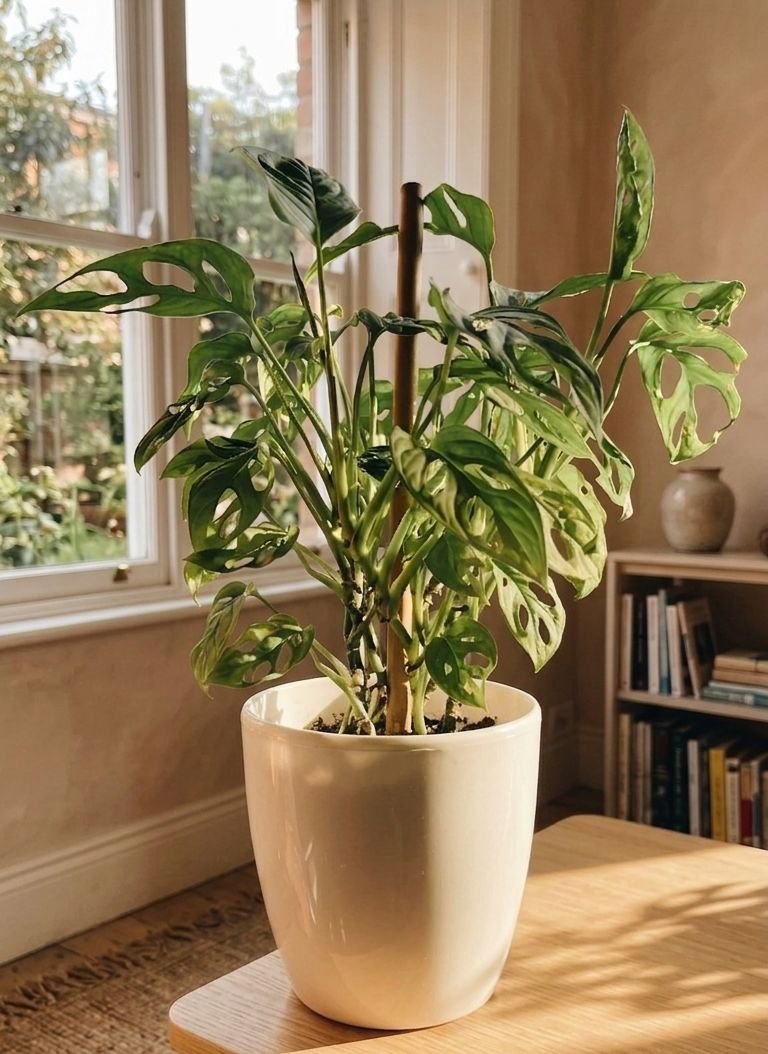
The Monstera Adansonii, widely known as the Swiss cheese vine, is the smaller, trailing cousin of the famous Monstera deliciosa. Its leaves are covered in dramatic oval holes (fenestrations) that give it a delicate, lacy look, and unlike the big deliciosa, it trails and climbs beautifully from hanging pots and shelves. It's become hugely popular for exactly that reason — all the striking monstera character in a more manageable, cascading form.
Native to Central and South America, it's a climbing forest plant that's fairly easygoing indoors, wanting bright indirect light and a bit of humidity. Like other monsteras, it's toxic to pets if chewed.
Caring for Your Swiss Cheese Vine
Light. Bright, indirect light brings out the best growth and the most dramatic fenestration. It tolerates medium light but grows more slowly with smaller, less-holey leaves. Avoid harsh direct sun, which can scorch the delicate foliage.
Water. Water when the top 2 inches of soil dry out, then drain well. The adansonii likes to be lightly moist but dislikes staying soggy. As a trailing plant in a smaller pot, keep an eye on it, as it can dry out a bit faster than a large plant in a big pot.
Humidity. It appreciates medium to higher humidity, reflecting its tropical origins. Dry air can cause crispy leaf edges; a humidifier or grouping with other plants helps.
Soil and potting. A chunky, well-draining aroid mix (soil, bark, perlite) in a pot with drainage. It can trail freely or be trained up a small trellis or pole.
Feeding. Feed with a balanced fertilizer during spring and summer.
Common Problems & Fixes
Leaves without holes / small leaves. Often not enough light, or a young plant that hasn't matured. More bright indirect light and something to climb encourages larger, more fenestrated leaves.
Yellowing leaves. Usually overwatering; let the soil dry more and check drainage.
Crispy brown leaf edges. Typically low humidity or underwatering.
Leggy vines with big gaps between leaves. Reaching for more light.
Drooping. Check the soil — thirst if dry, overwatering if soggy.
Pests. Watch for spider mites (especially in dry air), mealybugs, and thrips.
Propagating Your Swiss Cheese Vine
The Swiss cheese vine is very easy to propagate from stem cuttings, much like other monsteras and pothos.
Cut a section of vine just below a node (the bump where a leaf and aerial roots emerge), making sure your cutting has a node and ideally a leaf or two. Place it in water with the node submerged, keep it in bright indirect light, and refresh the water every few days. Roots usually appear within a couple of weeks.
Once the roots are an inch or two long, pot the cutting in a well-draining mix — planting several cuttings together makes for a fuller, more cascading plant faster. You can also root cuttings directly in moist soil.