⚠Toxic to cats & dogs.
Peace Lily is poisonous if chewed or eaten —
keep it out of reach of pets and children.
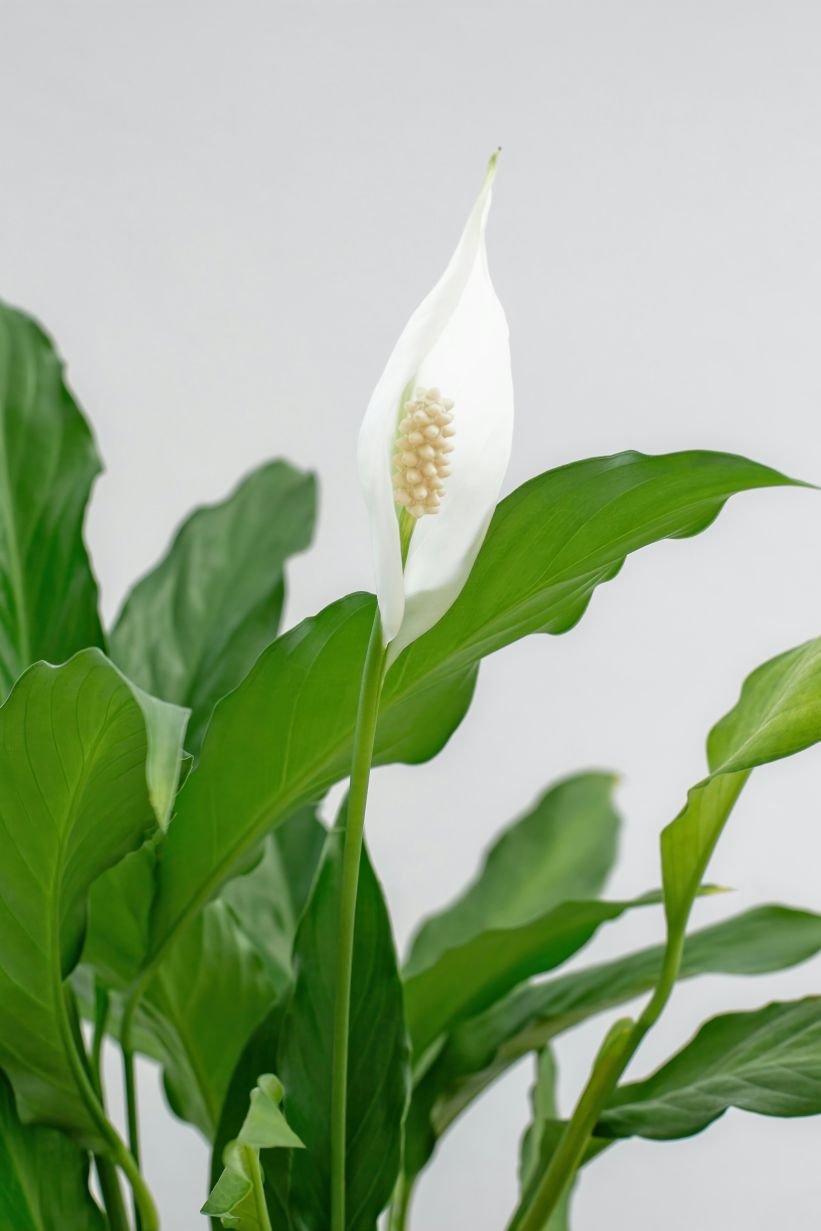
The Peace Lily is one of the few houseplants that combines lush green foliage with genuine, recurring flowers — those elegant white blooms (technically a modified leaf called a spathe) that give the plant its name. It's also unusually communicative: when it needs water, it droops dramatically, and when you water it, it revives within hours. That feedback makes it a surprisingly good plant for people still learning to read their plants.
Native to tropical rainforest floors, the Peace Lily is adapted to shade and moisture, which shapes how you care for it: it's happy in lower light than most flowering plants, and it likes to stay lightly moist.
Caring for Your Peace Lily
Light. Low to medium indirect light suits it well, making it one of the better flowering plants for dimmer rooms. It won't want harsh direct sun. That said, very deep shade may mean lots of leaves but few or no flowers — a bit more (indirect) light encourages blooming.
Water. Keep the soil lightly and consistently moist, but not waterlogged. The Peace Lily makes this easy by wilting visibly when it's thirsty; water it when the leaves begin to droop and it will bounce back. Try not to let it reach the wilting point too often, though, as repeated severe droop stresses the plant.
Humidity. Being a rainforest plant, it loves higher humidity. Dry air can brown the leaf tips; a humidifier or grouping it with other plants helps.
Soil and potting. A standard well-draining potting mix in a pot with drainage. It likes moisture but not to sit in standing water.
Feeding. Feed lightly with a balanced fertilizer every 6–8 weeks in spring and summer to support blooming; too much fertilizer can actually reduce flowering.
Common Problems & Fixes
Dramatic drooping. Usually thirst, and usually reversible within hours of watering — this is the plant's normal way of asking for a drink. Persistent drooping even after watering can signal overwatering and root rot instead, so check the soil isn't waterlogged.
Brown leaf tips. Commonly low humidity, over-fertilizing, or sensitivity to chemicals in tap water. Try filtered or left-out water and ease off feeding.
No flowers. Most often too little light. Move it to a brighter (still indirect) spot to encourage blooming.
Yellow leaves. Overwatering, natural aging of older leaves, or too much direct light.
Green flowers or fading blooms. Flowers naturally start white and age to green then brown; trim spent blooms at the base.
Propagating Your Peace Lily
Peace Lilies are propagated by division rather than cuttings — they grow in clumps of crowns, and you separate those crowns.
The best time is when you're repotting. Gently remove the plant from its pot and tease apart the root ball into sections, making sure each division has several leaves and a healthy portion of roots. A clean cut with a knife is sometimes needed for stubborn clumps.
Pot each division into moist, well-draining soil, water it in, and keep it out of harsh light while it recovers. Divisions establish fairly readily, and you'll have separate plants that will bloom in their own time.