⚠Toxic to cats & dogs.
Purple Shamrock is poisonous if chewed or eaten —
keep it out of reach of pets and children.
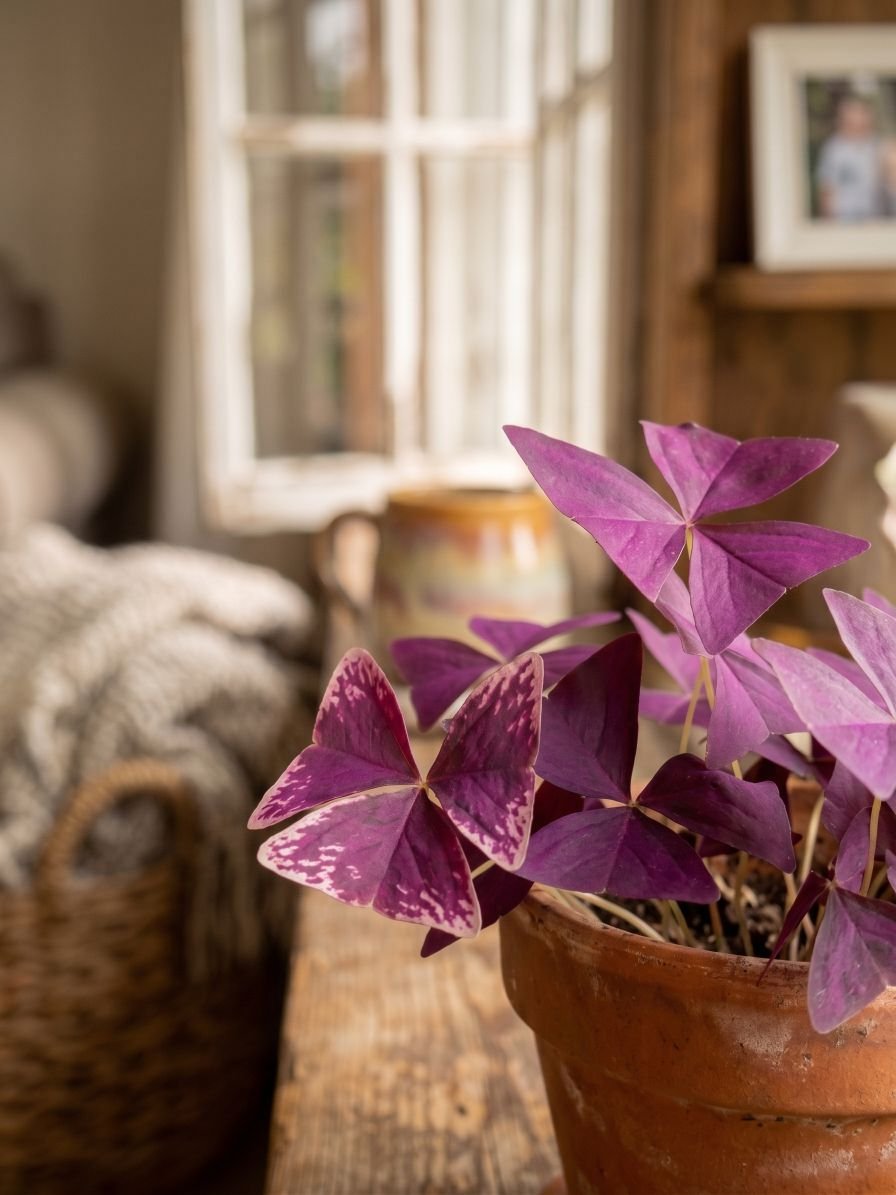
Purple Shamrock lifts three triangular leaflets on slender stalks, creating a pattern that can resemble small butterflies. Purple forms are especially striking, although the species also includes green foliage. Leaves fold at night, and delicate pale flowers rise above them.
Oxalis triangularis is a wood sorrel, not a true clover. It grows from scaly underground rhizomes and can rest without having died. ASPCA lists Oxalis species as toxic to cats and dogs because they contain soluble oxalates, so keep foliage and underground parts away from pets.
Caring for Your Purple Shamrock
Light. Choose bright light, with gentle direct sun if the plant is accustomed to it. Introduce stronger light gradually and protect the delicate leaves from excessive window heat.
Water in growth. Water when the surface begins to dry and let excess drain away. Match watering to actual growth rather than keeping the same schedule through every season.
Pot and mix. Use free-draining potting compost and a container with drainage. Avoid an oversized pot that leaves the rhizomes surrounded by wet soil.
Dormancy. If the whole plant declines into a rest, reduce watering and remove dead foliage. Keep the rhizomes only slightly moist rather than soaking a leafless pot. Increase watering gradually when new shoots appear.
Routine care. Average room humidity is generally sufficient. Feed lightly while actively growing, and stop during rest. Turn the pot occasionally if the stems lean strongly toward the window.
Common Problems & Fixes
Leaves close each evening. This regular movement is normal. Persistent daytime collapse calls for a moisture and temperature check.
Sudden collapse in heat. Excess heat or a dry spell can trigger decline or dormancy. Check the growing conditions before deciding that the plant is dead.
Soft or decaying rhizomes. Wet, poorly aerated compost may cause rot. Healthy resting rhizomes should remain firm.
Long leaning stems. Increase useful light gradually rather than trying to correct the shape with heavy feeding.
Propagating Your Purple Shamrock
Divide the underground rhizomes when repotting, preferably near the start of new growth. Separate firm, healthy sections and discard any soft, decaying material. Replant shallowly in fresh, free-draining compost.
Start with gentle watering and increase it as leaves and roots develop. Several rhizomes in a pot give a fuller display than one small piece. Division is the straightforward home method; do not mistake a flower stalk for a suitable stem cutting.