⚠Toxic to cats & dogs.
Fiddle-Leaf Fig is poisonous if chewed or eaten —
keep it out of reach of pets and children.
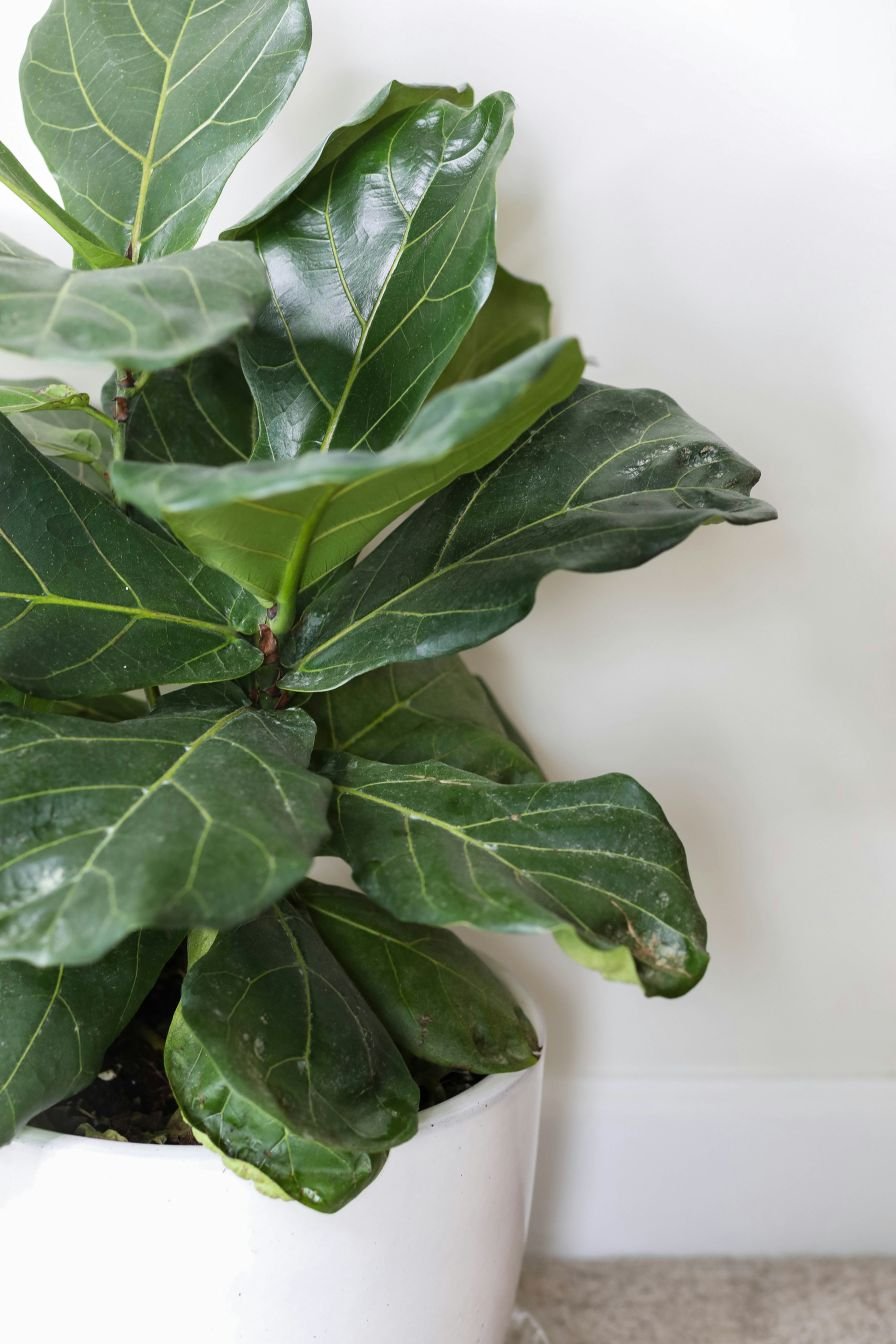
The Fiddle-Leaf Fig is the supermodel of houseplants — those enormous, violin-shaped leaves make it the centerpiece of countless beautifully designed rooms. It's also earned a reputation as temperamental, and that reputation is partly deserved. The Fiddle-Leaf isn't hard, exactly, but it is particular, and it strongly dislikes change.
Native to the rainforests of West Africa, it wants consistency above all: steady bright light, steady watering, and to be left in one spot rather than moved around. Get its routine right and it's a stunning, long-lived plant. Get it wrong and it will tell you, dramatically, by dropping leaves.
Caring for Your Fiddle-Leaf Fig
Light. Bright, indirect light is essential — more than most houseplants need. A spot near a bright window (an east or filtered south exposure is ideal) keeps it thriving. Too little light is the most common reason fiddle-leafs decline. It can take a little gentle direct morning sun, but harsh afternoon sun through glass can scorch the leaves.
Water. Water thoroughly when the top 2 inches of soil dry out, then let it drain fully. Consistency matters more than frequency here — both drought and soggy roots stress the plant. Roughly weekly is common, but go by the soil, not the calendar.
Humidity. Prefers medium humidity, reflecting its rainforest origins. Very dry air can contribute to leaf problems.
Soil and potting. A well-draining potting mix in a pot with drainage holes. Fiddle-leafs don't like to be repotted often; do it only when clearly root-bound, and expect a sulk afterward.
Consistency. More than any other common houseplant, the Fiddle-Leaf hates being moved. Pick a good spot and leave it. Rotating it occasionally for even growth is fine, but relocating it around the house invites leaf drop.
Feeding. Feed with a balanced fertilizer through spring and summer to support those big leaves.
Common Problems & Fixes
Dropping leaves. The classic fiddle-leaf distress signal, usually triggered by change — a new location, a draft, a shift in watering, or a big swing in light. Stabilize its conditions and stop moving it.
Brown spots. Dark brown spots often indicate root rot from overwatering; tan or crispy brown patches can mean underwatering or sun scorch. Check the soil moisture to tell which.
Leaves reaching or leaning. Stretching toward the light — it needs a brighter spot, and rotating it helps even out growth.
Dropping lower leaves while the top thrives. Sometimes normal, but often a light or watering inconsistency.
Dust on leaves. Those big leaves collect dust, which reduces the light they absorb. Wipe them gently every couple of weeks.
Pests. Watch for spider mites and mealybugs, especially in dry indoor air.
Propagating Your Fiddle-Leaf Fig
Fiddle-Leaf Figs can be propagated from stem cuttings, though they're slower and a bit less reliable than easygoing plants like pothos.
Take a cutting with at least one leaf and a section of stem, cut cleanly below a node, and place it in water in a bright, warm spot. Change the water regularly. Roots can take several weeks to a couple of months to develop, and patience is required — some cuttings root readily and others stall.
Once roots are a couple of inches long, pot the cutting into well-draining soil and keep conditions stable and bright while it establishes. A single-leaf cutting will eventually grow into a new plant, though reaching an impressive size takes time.