⚠Toxic to cats & dogs.
Snake Plant is poisonous if chewed or eaten —
keep it out of reach of pets and children.
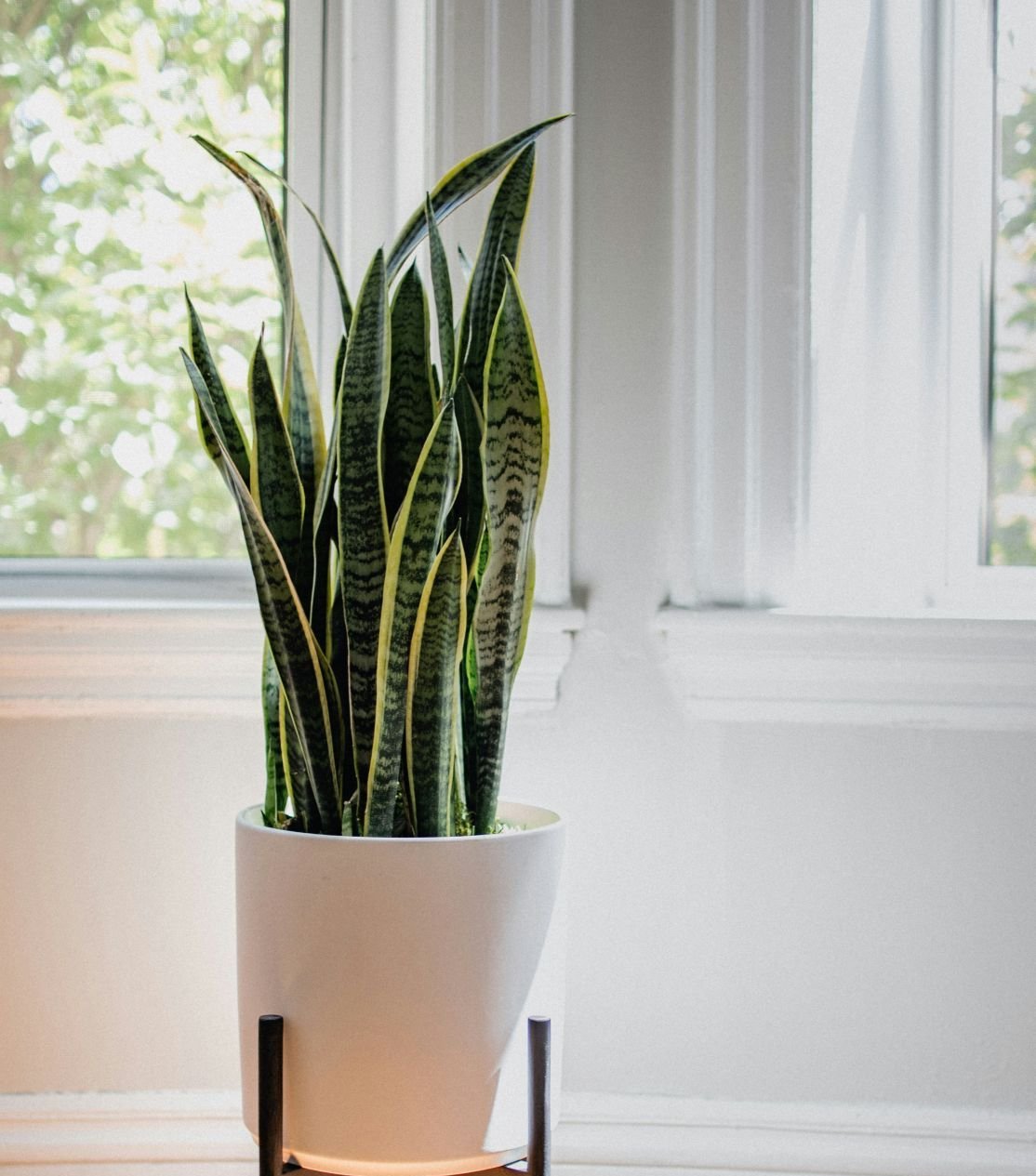
The Snake Plant — still widely sold as Sansevieria, though botanists have reclassified it as Dracaena trifasciata — is the plant you give someone who insists they have a black thumb. Its stiff, upright, sword-like leaves are architectural and striking, and it asks almost nothing of you. It's a plant that thrives on being left alone.
Originally from West Africa, it's adapted to dry, bright conditions, which is why the single most important thing to know about it is the opposite of most houseplants: the danger isn't forgetting to water it, it's watering it too much.
Caring for Your Snake Plant
Light. Extremely adaptable — it tolerates low light and thrives in bright indirect light. It will even take some direct sun. In darker spots it simply grows more slowly. This flexibility is why it works almost anywhere in a home.
Water. This is the whole game with snake plants: let the soil dry out completely between waterings, then water thoroughly and drain. In practice that's often every 2–3 weeks, and less in winter. When unsure, wait longer. Their thick leaves store water, so they handle drought far better than excess.
Humidity. Low humidity is fine. Average or dry household air suits it perfectly.
Soil and potting. Use a fast-draining mix — a cactus or succulent soil is ideal, or standard mix cut with extra perlite. A pot with drainage holes matters more here than almost anywhere, because standing water is the one thing that kills these plants.
Feeding. Minimal. A light feeding once or twice over spring and summer is plenty.
Common Problems & Fixes
Mushy, soft, or yellowing leaves. Overwatering and root rot — by far the most common way snake plants die. Let the soil dry fully, check the roots, and cut back on watering. Healthy roots are firm and pale; rotted ones are brown and soft.
Leaves falling over / flopping. Often too much water, or too little light causing weak growth. Sometimes a top-heavy plant simply needs repotting.
Wrinkled or curling leaves. The rarer opposite problem — the plant is thirsty. A good drink usually resolves it.
Brown tips. Frequently from inconsistent watering or mineral buildup from tap water.
Pests. Uncommon, but mealybugs and spider mites can appear in dry conditions.
Propagating Your Snake Plant
Snake plants propagate a couple of ways. The easiest and most reliable is division: when repotting, separate the plant at the root, making sure each section has both roots and leaves, and pot the divisions individually.
You can also propagate from leaf cuttings. Cut a healthy leaf into several sections a few inches long, let the cut ends callus over for a day, then stand them upright in water or moist soil (keeping track of which end was down — they only root from the bottom end). Rooting is slow, often taking a couple of months, and takes patience.
One quirk worth knowing: variegated snake plants propagated by leaf cutting often lose their variegation and revert to plain green. To keep the variegation, propagate by division instead.