⚠Toxic to cats & dogs.
Kalanchoe is poisonous if chewed or eaten —
keep it out of reach of pets and children.
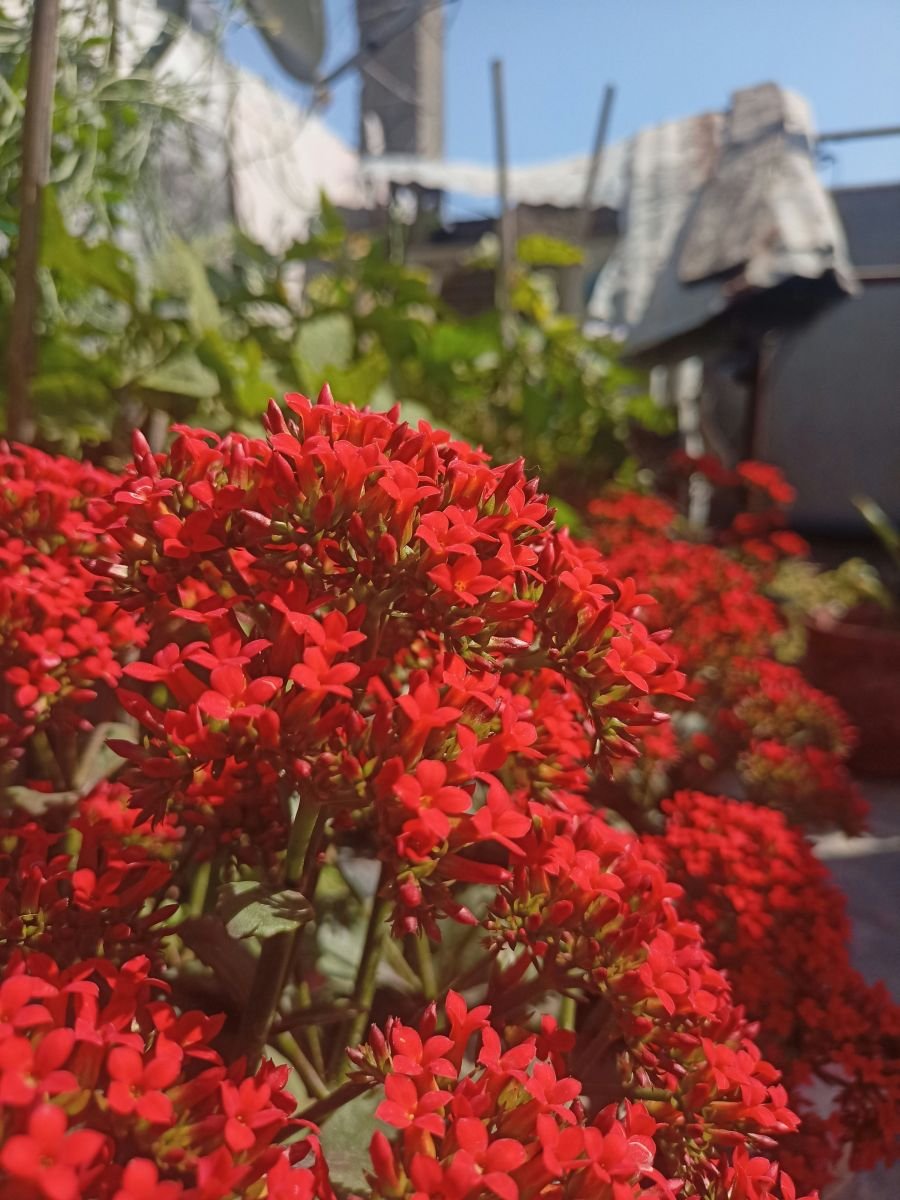
The flowering Kalanchoe is a cheerful succulent covered in dense clusters of tiny, long-lasting blooms in red, pink, orange, yellow, or white. It's often sold in bloom as a bright, gift-friendly plant, and the flowers can last for weeks. Underneath the flowers it's a true succulent, with thick, scalloped leaves that store water — so it combines showy color with easygoing, drought-tolerant care.
Native to Madagascar, the kalanchoe is simple to keep alive as a foliage succulent. The one thing that stumps people is getting it to bloom again after that first flush fades — which comes down to an interesting quirk about day length, covered below. Note that kalanchoe is toxic to pets if eaten.
Caring for Your Kalanchoe
Light. Bright light, including some direct sun, keeps a kalanchoe compact, healthy, and blooming. Too little light gives leggy growth and few flowers. A sunny windowsill is ideal.
Water. Treat it like the succulent it is: let the soil dry out between waterings, then water thoroughly and drain. Overwatering is the main danger — the thick leaves store water, so it tolerates dryness far better than sogginess. Water less in winter.
Humidity. Low humidity is fine; ordinary dry household air suits it.
Soil and potting. A cactus or succulent mix, or well-draining potting soil, in a pot with drainage holes.
Reblooming. Here's the trick: kalanchoe blooms in response to short days and long nights. To get it to flower again, it needs about six weeks of long, uninterrupted darkness each night (14+ hours of total dark), which mimics the shortening days that trigger blooming. Many people simply enjoy the first bloom and treat it as a foliage plant afterward, which is perfectly fine.
Feeding. Feed lightly during the growing season; a bloom-supporting fertilizer helps if you're coaxing flowers.
Common Problems & Fixes
Soft, mushy, yellowing leaves. Overwatering — the classic succulent problem. Let it dry out and water much less.
Leggy, stretched growth. Not enough light. Move it to a sunnier spot and pinch back to encourage bushiness.
No reblooming. Usually because it hasn't had the long nights it needs to trigger flowering (see care). This is normal, not a defect.
Wilting, wrinkled leaves. Thirst — but check that the soil is actually dry first, since overwatering can look similar.
Faded, spent flowers. Trim off dead blooms to tidy the plant and direct its energy to healthy growth.
Pests. Watch for mealybugs and aphids, especially on new growth and buds.
Propagating Your Kalanchoe
Kalanchoe is easy to propagate from stem or leaf cuttings, in the reliable succulent way.
For stem cuttings, snip a healthy non-flowering stem a few inches long, remove the lower leaves, and let the cut end callus (dry over) for a day or two. Then plant it in a well-draining succulent mix and water sparingly until it roots.
Leaf cuttings can also work: let a healthy leaf callus, then lay it on top of succulent soil, and small plantlets may form at the base. Keep cuttings warm and in bright light. Letting the cut end callus before planting is the key step that prevents rot — the same principle as with other succulents.