⚠Toxic to cats & dogs.
Jade Plant is poisonous if chewed or eaten —
keep it out of reach of pets and children.
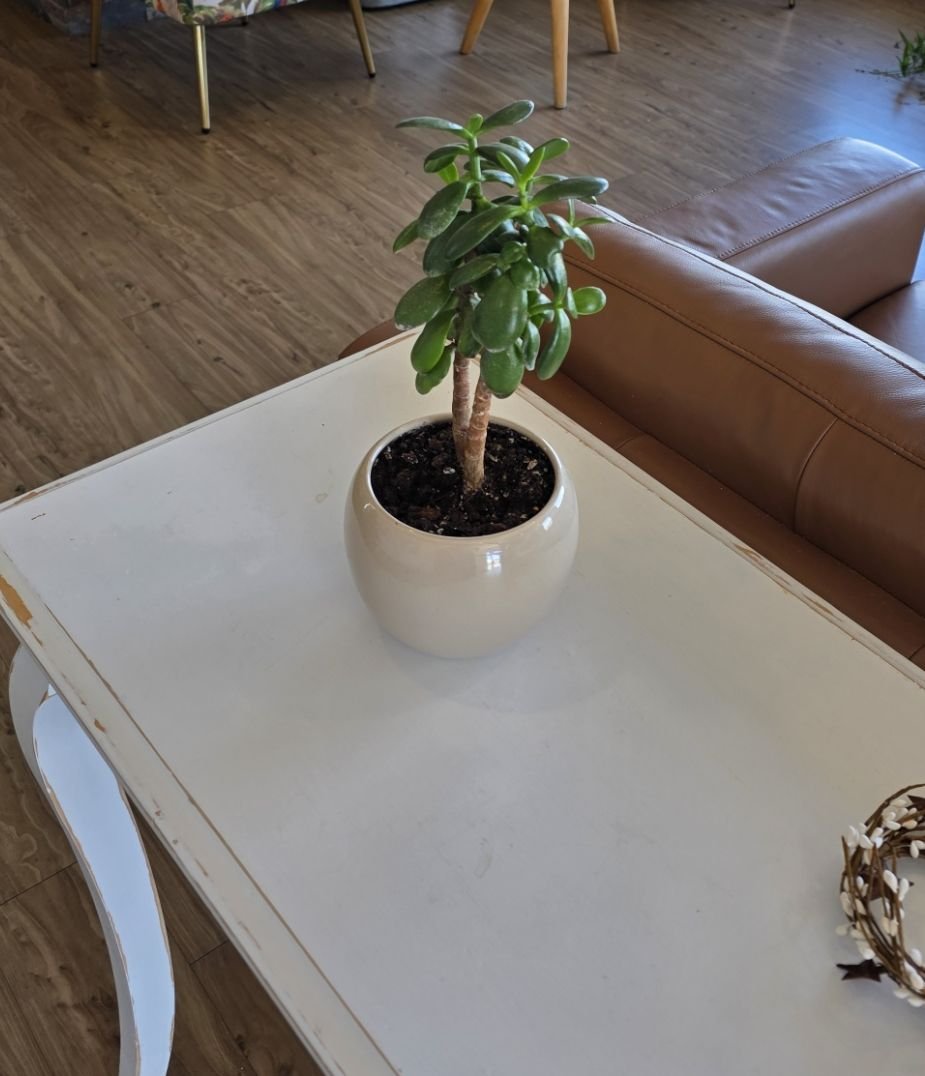
The Jade Plant is a succulent that grows like a miniature tree, with a thick woody trunk and plump, oval leaves that look almost polished. Given time — and jades can live for decades, often passed down through families — it develops into a characterful little bonsai-like specimen. In many cultures it's considered a symbol of good luck and prosperity, which is part of why it's such a popular gift.
Like other succulents, the jade stores water in its fleshy leaves and comes from a dry climate (southern Africa). It's forgiving and slow-growing, rewarding patience more than fussing.
Caring for Your Jade Plant
Light. Jades want lots of light and are happy with several hours of direct sun, such as a bright windowsill. Good light keeps them compact and sturdy; too little light makes them stretchy and weak, with widely spaced leaves.
Water. Let the soil dry out completely between waterings, then water thoroughly and drain. Overwatering is the main danger. In winter, when the plant is barely growing, water sparingly. Wrinkled leaves mean thirst; soft mushy leaves mean too much water.
Humidity. Low humidity is ideal. Ordinary dry household air is fine.
Soil and potting. A cactus or succulent mix, or regular soil amended heavily for drainage, in a pot with drainage holes. Jades are top-heavy as they mature, so a somewhat heavy or wide pot helps prevent tipping.
Feeding. Light feeding a couple of times over spring and summer is plenty.
Common Problems & Fixes
Soft, mushy, or yellowing leaves. Overwatering — the classic jade killer. Let it dry out fully and cut back sharply on watering.
Shriveled, wrinkled leaves. Thirst. If the soil's been dry a long while, water thoroughly and the leaves should plump back up.
Leggy, stretched growth. Not enough light. Move it to a sunnier spot; you can also prune leggy stems to encourage a bushier shape.
Leaves dropping. Can be overwatering, underwatering, or a sudden environmental change — check the soil to figure out which direction it's leaning.
Red-tinged leaf edges. Often normal in strong light and can look attractive; not usually a problem.
Pests. Watch for mealybugs, which like to hide where the leaves meet the stem.
Propagating Your Jade Plant
Jade plants are wonderfully easy to propagate, from either a whole leaf or a stem cutting — a big part of why they get passed around so freely.
From a leaf: gently twist off a healthy, plump leaf so it comes away clean. Let it sit out for a day or two to callus, then lay it on top of, or barely nestled into, a well-draining succulent mix. Mist occasionally. In a few weeks a tiny new plant and roots will form at the base.
From a cutting: snip a stem section a few inches long, let the cut end callus for a couple of days, then plant it in succulent mix. Wait several days before watering.
Patience is the main ingredient — jades root slowly but reliably.