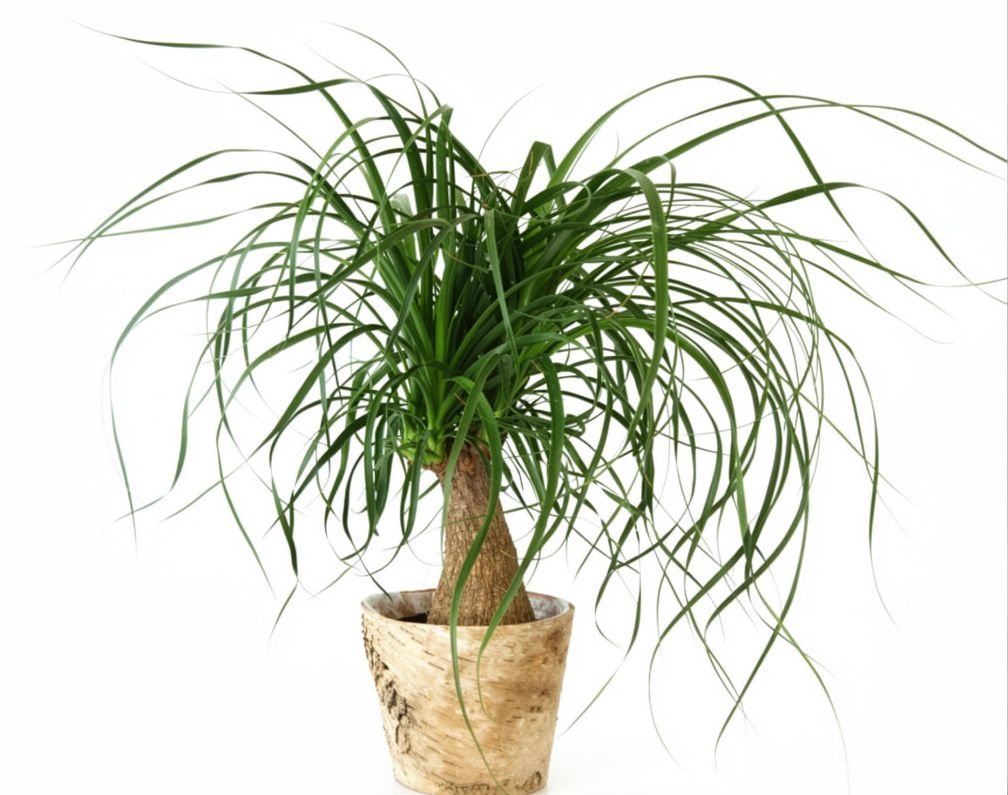
The Ponytail Palm is one of the most charming oddballs in the houseplant world — a swollen, bulb-like base (which stores water) topped with a fountain of long, curly, strap-like leaves that spray out like a ponytail. Despite the name, it isn't actually a palm at all; it's a succulent related to agaves. It's slow-growing, long-lived, quirky-looking, and safe around pets.
Native to the dry regions of eastern Mexico, that bulbous base is a built-in water reservoir, which makes the ponytail palm exceptionally drought-tolerant and forgiving of neglect. If you tend to forget to water, this is a plant that will forgive you — in fact, it prefers it.
Caring for Your Ponytail Palm
Light. Bright light, including direct sun, is ideal. The ponytail palm loves a sunny spot and tolerates lower light only grudgingly, growing very slowly there. Give it the brightest place you have.
Water. Thanks to its water-storing base, this plant wants to dry out completely between waterings, then be watered thoroughly and drained. That often means every 2–3 weeks or even less, and quite sparingly in winter. Overwatering is by far the most common cause of trouble; when in doubt, don't water.
Humidity. Low humidity is perfect. It's adapted to dry air.
Soil and potting. A fast-draining cactus or succulent mix in a pot with drainage is essential — this plant rots in soggy soil. It likes to be snug in its pot and grows slowly, so it needs infrequent repotting.
Feeding. Minimal — a light feeding once or twice over the growing season is plenty.
Common Problems & Fixes
Soft or shriveling base / yellowing, drooping leaves. Usually overwatering and rot, especially rot at the bulbous base, which is serious. Let it dry out fully, cut back drastically on watering, and ensure fast drainage. A firm base is healthy; a squishy one is a warning.
Brown leaf tips. Common and mostly cosmetic — often from dry air, occasional over- or under-watering, or minerals in tap water. You can trim the brown tips.
Very slow or no growth. Normal; ponytail palms are naturally slow, and slower still in lower light.
Wrinkled base. The rarer sign of prolonged thirst — give it a thorough drink.
Pests. Generally trouble-free; occasionally spider mites or scale.
Propagating Your Ponytail Palm
Ponytail palms are propagated from pups — the offset plants that sometimes sprout around the base of a mature plant — rather than from cuttings.
If your plant produces pups, you can wait until a pup is a few inches tall, then carefully separate it from the parent with a clean cut, keeping any roots it has formed. Let the cut area callus over for a day or two, then pot the pup in a well-draining succulent mix and water sparingly until established.
Do be aware that not every ponytail palm produces pups, and growing new ones from seed is very slow. So propagation is opportunistic — if you get pups, great, otherwise simply enjoy the striking plant you have.