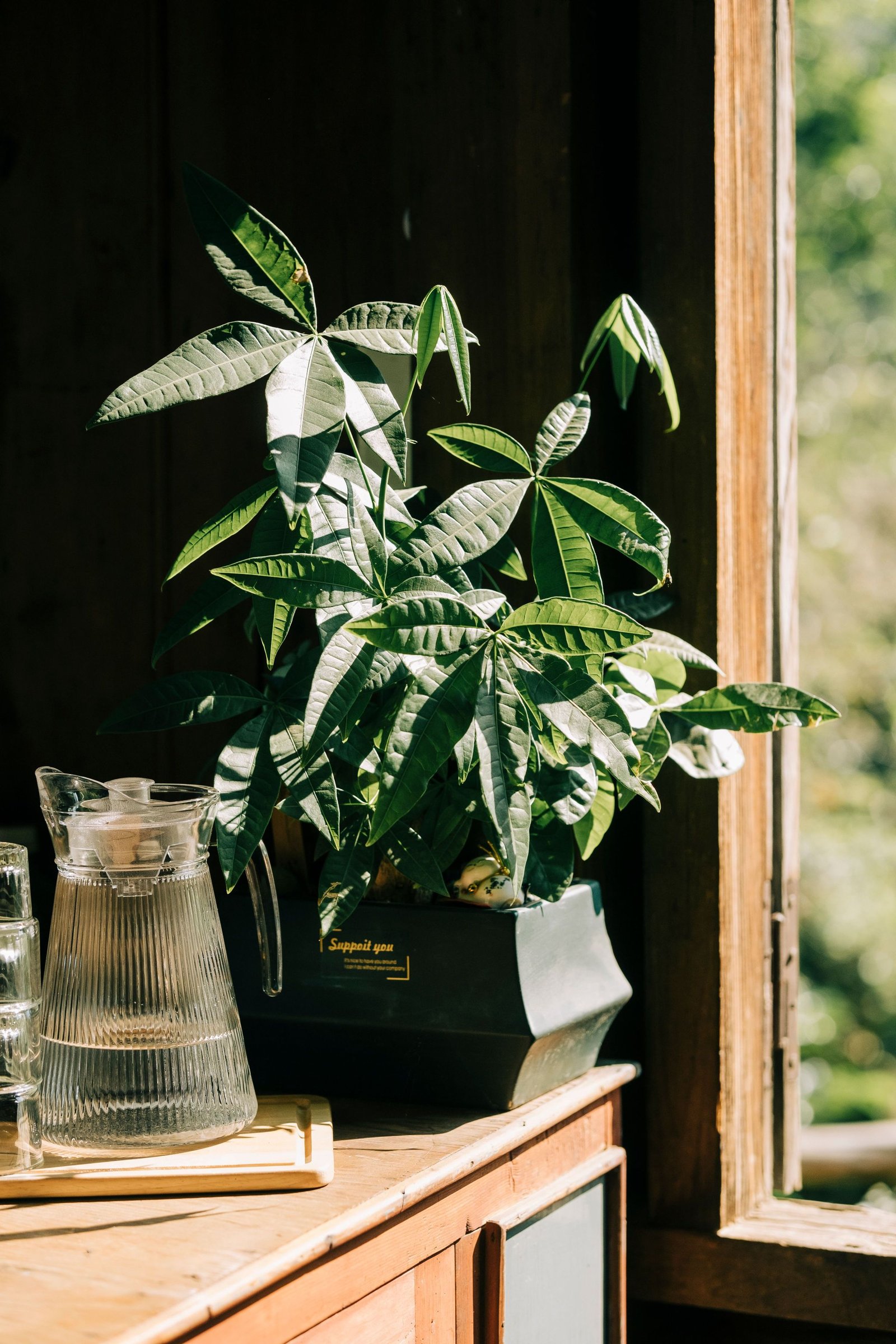
The Money Tree is a small indoor tree with glossy, hand-shaped clusters of leaflets and, often, several slender trunks braided together. It brings a tree-like silhouette to a room without demanding direct sun all day. The braid is a nursery treatment of young flexible stems, not a natural feature, so the plant does not need continued braiding to stay healthy.
Pachira aquatica grows near water in its native tropical habitat, but that does not mean its pot should sit in water. Indoors, airy soil, thorough drainage and steady bright light matter more than a rigid watering timetable. The ASPCA lists money tree as non-toxic to cats and dogs, although eating any plant can still upset a pet.
Caring for Your Money Tree
Light. Bright, indirect light is a good indoor target. Gentle direct morning sun may be fine, but strong afternoon sun through glass can scorch leaves. Rotate the pot occasionally to keep growth balanced.
Water. Water thoroughly when the top couple of inches of mix dry, then empty the saucer. A small pot in bright light dries faster than a large one in winter, so test the soil rather than following a calendar. Standing water can rot roots even though the species grows near water outdoors.
Humidity and temperature. Moderate humidity and warm, stable temperatures support healthy leaves. Avoid cold drafts and the dry blast from heating vents.
Soil and potting. Choose a well-draining mix and a pot with drainage. Repot when roots fill the pot, only one size up. Check braided trunks for tight decorative ties and remove anything cutting into growing stems.
Pruning and feeding. Trim a long shoot above a leaf node to shape the canopy. Feed modestly during active growth; skip fertilizer when growth slows in winter.
Common Problems & Fixes
Dropping green leaves. A sudden change of position, temperature or watering may be responsible. Keep conditions steady and inspect the soil before reacting.
Yellow leaves and soft trunk base. Too much water or poor drainage may have damaged roots. Remove standing water, inspect the roots and repot into fresh, airy mix if rot is present.
Dry, curling leaves. Check for very dry soil, hot direct sun and dry indoor air. Each can produce similar symptoms.
Brown or bleached patches. Strong direct sun can scorch foliage; move gradually to bright filtered light.
Leaning canopy. The tree may be reaching toward one-sided light. Rotate the pot and prune selectively rather than continuing to braid mature trunks.
Pests. Watch for aphids, mealybugs, scale and fungus gnats, particularly around stressed plants or wet potting mix.
Propagating Your Money Tree
Money trees can be propagated from soft, healthy stem cuttings during warm active growth. Cut just below a node, remove lower leaves, and place the cutting in a light, moist but well-draining propagation mix. Keep it warm, in bright indirect light, with modest humidity; never seal it into constantly wet conditions.
Rooting may take several weeks, and not every cutting succeeds. Once roots and new growth are established, pot it in a small draining container. A new cutting begins as a single stem; the familiar braided appearance comes from growing several young plants together and carefully training their still-flexible stems.