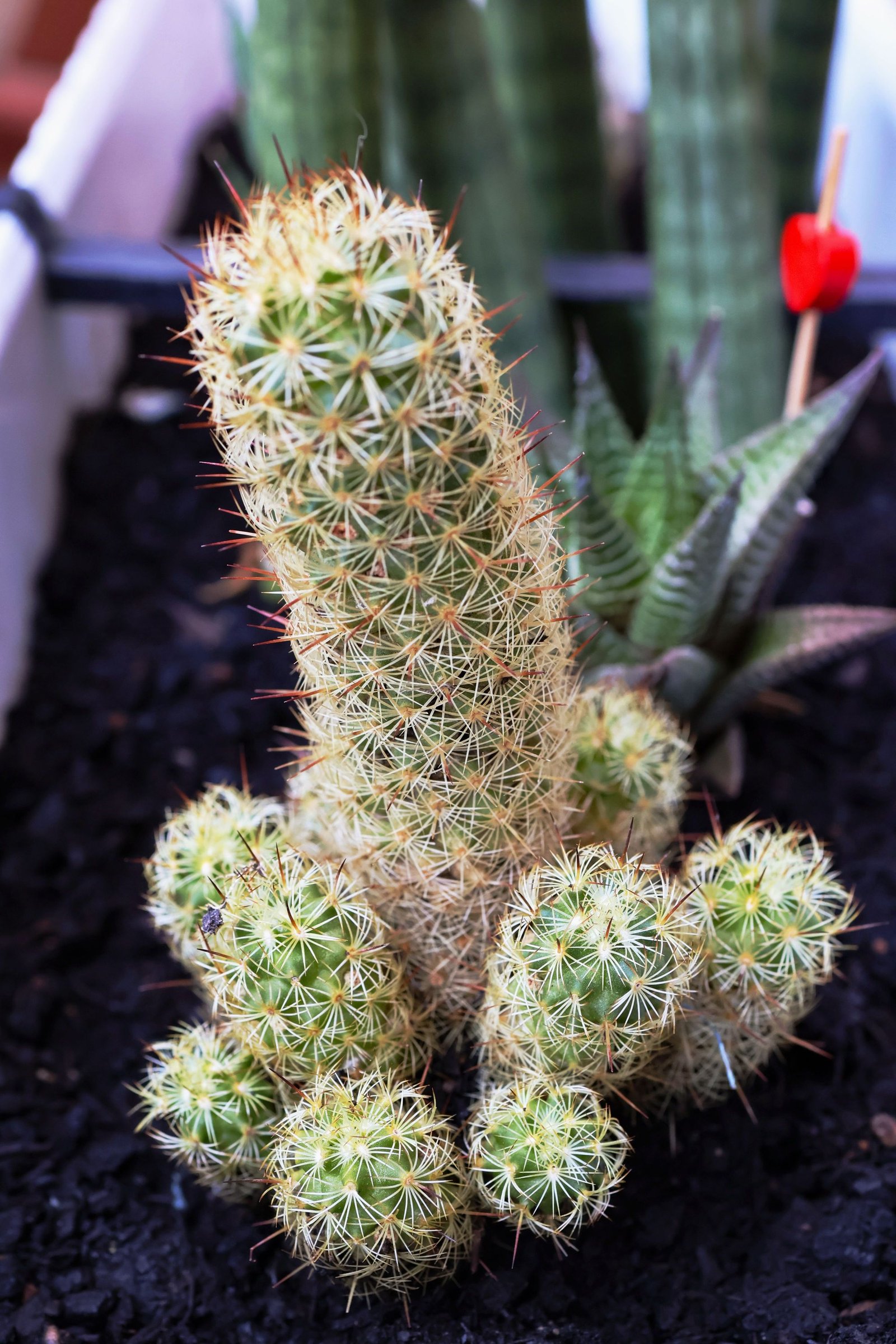
Ladyfinger Cactus builds a cluster of narrow, cylindrical stems covered in closely arranged spines. Small pale flowers may appear near the stem tips. Its compact, branching outline offers a very different cactus shape from the flat, jointed stems of a Christmas cactus.
This is a sun-loving cactus for a bright windowsill, not a shaded shelf. NC State Extension describes Mammillaria as non-toxic to pets, but the spines can still injure a mouth, eye or paw. Keep it out of reach of curious animals even though its toxicity flag is non-toxic.
Caring for Your Ladyfinger Cactus
Light. Provide several hours of direct light, introducing stronger sunshine gradually. A plant moved straight from a dim shop into a hot window can scorch.
Water. Let the whole mix dry before soaking it and emptying the saucer. Check below the surface and judge the weight of the pot; frequent little splashes are not a substitute for a proper drying interval.
Soil and pot. Use gritty cactus compost in a drainage pot only slightly larger than the roots. A deep reservoir of unused wet compost increases the risk of rot.
Winter. Keep it bright and frost-free. In a cool winter resting spot, watering should be minimal. An actively growing plant in a warmer room may need occasional water once thoroughly dry.
Feeding and handling. Use cactus fertilizer at the label rate during active growth. Stop feeding during rest. Support stems with folded paper or suitable tools when repotting rather than squeezing them with bare hands.
Common Problems & Fixes
Thin, stretched new stems. Increase light gradually. Existing stretched sections will not thicken back into their original compact shape.
Soft brown base. Suspect rot, especially in persistently wet compost. Check roots and drainage before watering again.
Dry pale patches. Sun scorch can follow a sudden exposure change. Protect it from the hottest light while it acclimates.
White deposits. Inspect closely: regular spines differ from irregular cottony mealybug clusters. Isolate an infested plant.
Propagating Your Ladyfinger Cactus
Separate a healthy offset during active growth using clean tools and protection from the spines. Let any cut surface dry and seal before placing the offset in a small pot of gritty compost.
Keep the new piece bright but protected from harsh sun, and water cautiously as roots establish. An unrooted cutting cannot use water at the rate of the parent plant. Seed is another option, but offsets are usually the more practical home method.