⚠Toxic to cats & dogs.
Polka Dot Begonia is poisonous if chewed or eaten —
keep it out of reach of pets and children.
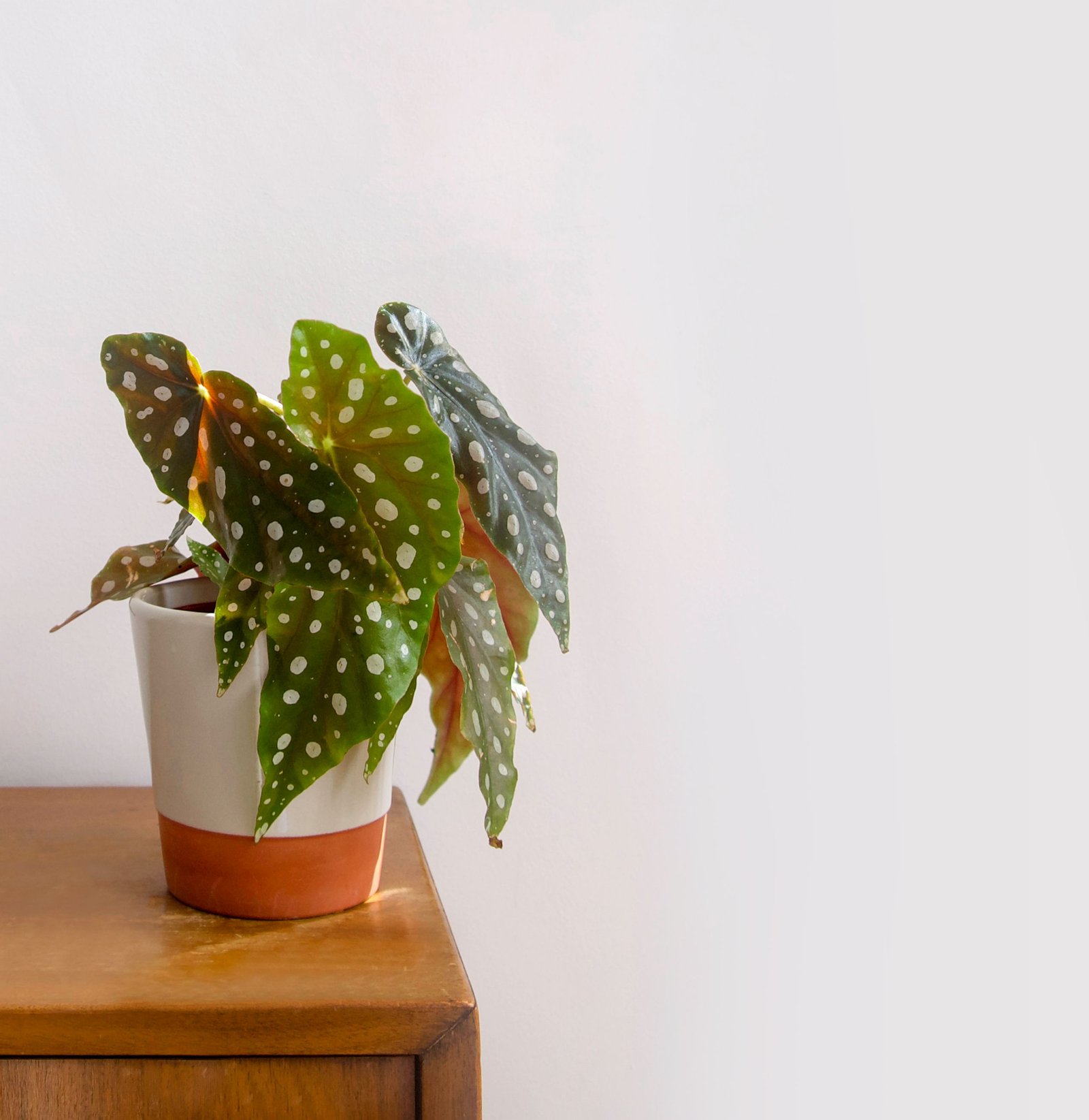
Polka Dot Begonia combines long, asymmetric leaves with silver-white spots and reddish undersides. Upright, jointed canes carry the foliage, and pale flower clusters add another feature when conditions suit it. It is a different plant from Hypoestes, the smaller Polka Dot Plant.
The decorative spots are normal markings, not mildew. This begonia rewards bright filtered light and steady care, but roots need air as well as moisture. ASPCA lists begonias as toxic to cats and dogs; keep the plant, fallen leaves and pruning scraps away from pets.
Caring for Your Polka Dot Begonia
Light. Choose a bright position protected from strong midday sun. Watch both leaf color and new growth rather than treating a compass direction as a guarantee of suitable light.
Water. Water thoroughly when the surface starts to dry, then let excess water escape. Avoid both prolonged drought and constantly wet compost. Reduce frequency when cooler conditions slow drying.
Humidity and warmth. Use a warm room with moderate to higher humidity. Avoid cold drafts. Increase humidity around the plant without leaving the leaves continually wet.
Potting. Use a loose, free-draining houseplant mix. Move up only one pot size when roots need space, keeping the crown at its previous depth.
Shaping and feeding. Support tall canes with a small stake. Trim above a node to manage height and encourage branching. Feed lightly during active growth, following the fertilizer label.
Common Problems & Fixes
Crisp margins. Check for dry compost, hot sun or very dry air before changing several care factors at once.
Yellow leaves with soft stems. Wet roots or poor drainage may be involved. Do not respond by automatically adding water.
Long bare canes. Improve filtered light and prune healthy growth to encourage a fuller plant.
Powdery or spreading patches. New deposits or expanding damage differ from the natural silver spots. Isolate the plant and check for mildew or pests, including mealybugs.
Propagating Your Polka Dot Begonia
Use a healthy stem-tip cutting with several nodes. Cut below a node, remove the lower leaves, and insert the lower part into a small pot of airy, lightly moist propagation mix.
Keep it warm in filtered light. A ventilated cover can limit water loss, but do not let condensation keep leaves soaked. Wait for rooted growth before potting on. For this cane begonia, a stem cutting is the dependable starting method; do not assume every begonia leaf-cutting technique applies equally.