Original photo by RadixPlants — photographed locally with the owner’s permission.
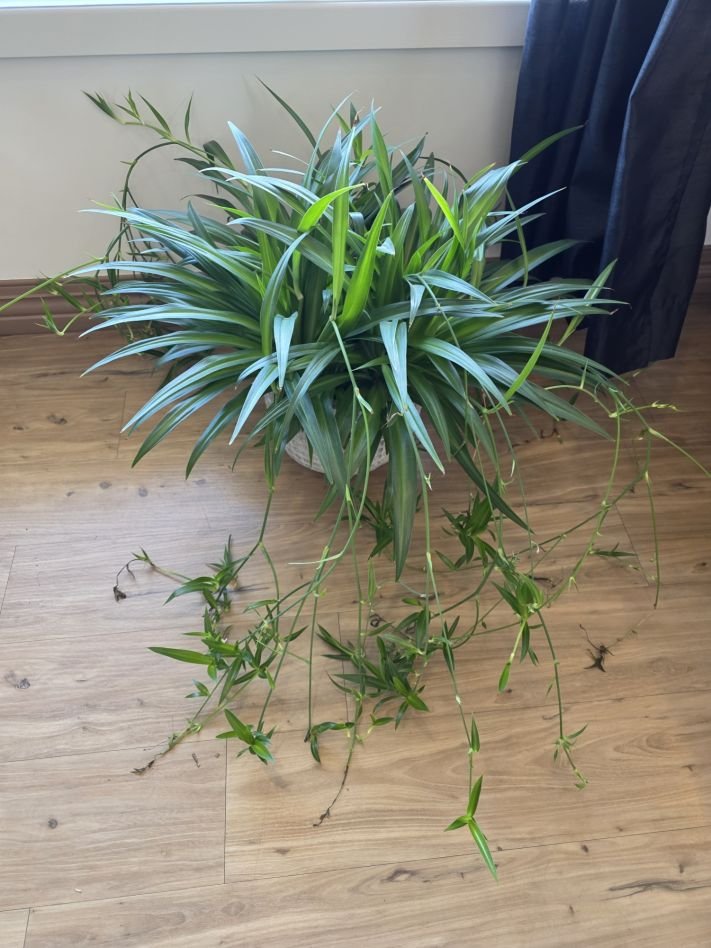
The Spider Plant is a genuine classic — one of those plants that seems to have been in every grandparent's kitchen and every 1970s macramé hanger, and for good reason. It's tough, fast-growing, safe for cats and dogs, and it produces charming little baby plants (called spiderettes or pups) that dangle from long stems like offspring on a mobile. Few plants are more rewarding for a beginner.
Its arching, striped leaves look great in a hanging pot or on a shelf where the plantlets can trail. And because it's non-toxic, it's one of the safest choices for homes with curious pets.
Caring for Your Spider Plant
Light. Bright, indirect light brings out the best growth and the crispest variegation, but spider plants tolerate medium light well too. Keep them out of harsh direct sun, which can scorch and bleach the leaves.
Water. Water when the top inch of soil dries out. Spider plants like to stay lightly moist during active growth but are forgiving of the occasional lapse. They're somewhat sensitive to chemicals in tap water, which we'll come back to under problems.
Humidity. Average household humidity is fine, though they appreciate a bit more. Dry air can contribute to brown tips.
Soil and potting. A standard well-draining potting mix in a pot with drainage. Spider plants grow vigorously and can become root-bound; repot every year or two when the thick white roots start crowding the pot.
Feeding. Feed monthly with a balanced fertilizer in spring and summer. Go easy — over-fertilizing can actually worsen brown leaf tips.
Common Problems & Fixes
Brown leaf tips. The signature spider plant complaint. Most often it's a reaction to fluoride and chlorine in tap water, or to over-fertilizing. Try watering with filtered water or tap water left out overnight, and ease off feeding. Low humidity and inconsistent watering can contribute too.
Pale, washed-out leaves. Usually too much direct sun.
No babies (spiderettes). Spider plants often produce plantlets when slightly pot-bound and getting enough light. A very young plant, or one in deep shade, may simply not be ready.
Limp or mushy base. Overwatering and possible root rot — let the soil dry more and check drainage.
Pests. Generally resilient; occasionally spider mites or aphids in dry conditions.
Propagating Your Spider Plant
Spider plants are one of the most satisfying plants to propagate because they do most of the work for you.
When the plant produces those dangling plantlets, you have two easy options. You can snip a plantlet that already has small nub-like roots at its base and pot it directly into moist soil. Or you can set the plantlet — still attached to the mother plant if you like — into a small pot of soil or a glass of water nearby, let it root while it's still drawing support from the parent, and then cut it free once established.
Either way, rooting is quick and reliable. A single healthy spider plant can produce a steady supply of pups to pot up or give away.